
Wout Just Led Out The Kid. Sprinting Has A New Food Chain.
Matthew Brennan has three Vuelta stage wins and Wout van Aert is the bloke opening the door for him. If that feels upside down, welcome to the new sprint economy.
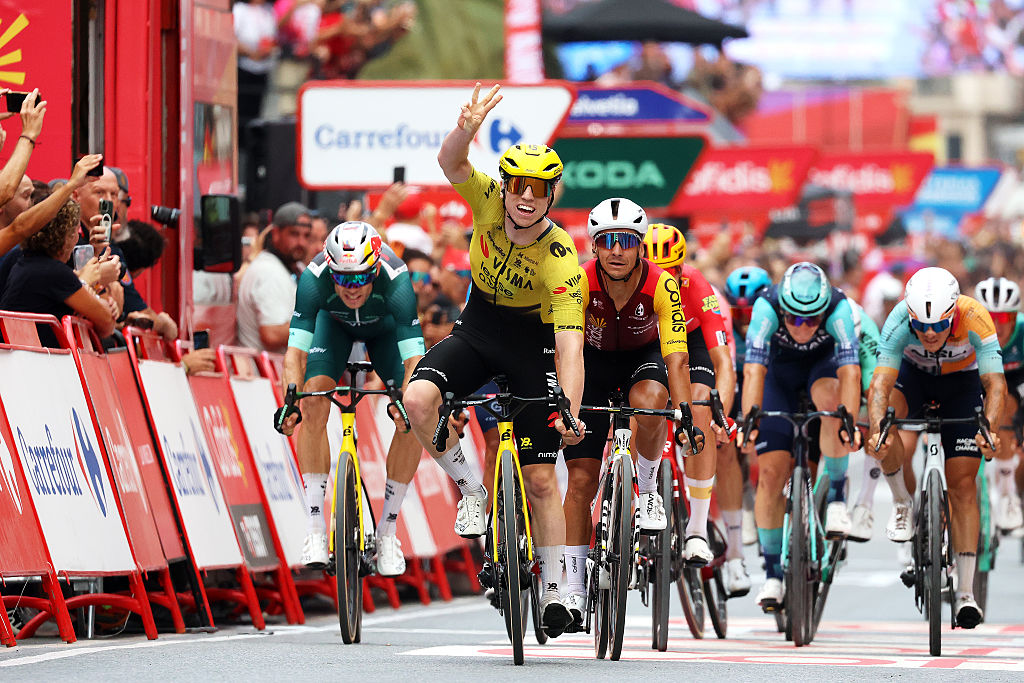
There are lead-outs, and then there is Wout van Aert doing the dirty work for a 21-year-old in a Grand Tour sprint. On Wednesday 2 September 2026, in Lorca, Matthew Brennan won stage 11 of the Vuelta a España ahead of Bryan Coquard and Jordi Meeus. That made it three stages in his debut Grand Tour. Three. Before the race has even reached its final week.
The predictable take is that Brennan is fast. Fine. So is every bloke with shoulders like a fridge and a contract clause full of bonuses. The sharper point is that Visma-Lease a Bike are not merely producing a sprinter. They are industrialising sprint wins with the same cold machinery they once used to grind Grand Tours into yellow, red and general classification dust.
The luxury lead-out has become the actual weapon
Van Aert was not freelancing. He was not accidentally near the front. He spent the stage covering danger, shutting down movement on the Alto de Aledo, reappearing in the final when Visma looked briefly misplaced, then dragging Brennan through the crucial U-turn inside the final 500 metres. He overcooked the bend, recovered, and still delivered the kid clean enough that the rest of the sprint looked like men trying to board a moving train with cleats full of mud.
“I’m a sprinter, but I can climb a bit.” That is Brennan’s modest version. The race version is uglier for everyone else: he sprints, climbs enough, and has a team that treats chaos like a spreadsheet.
This is why the old sprint taxonomy is starting to rot. We still talk as if there are pure sprinters, puncheurs, classics men and domestiques, as if someone at the UCI is handing out laminated character classes before the season starts. Brennan does not fit neatly. He has a track background, the junior pursuit pedigree, the punch to survive awkward days, and the finish to cash the cheque. More importantly, he has Visma. That last bit matters most.
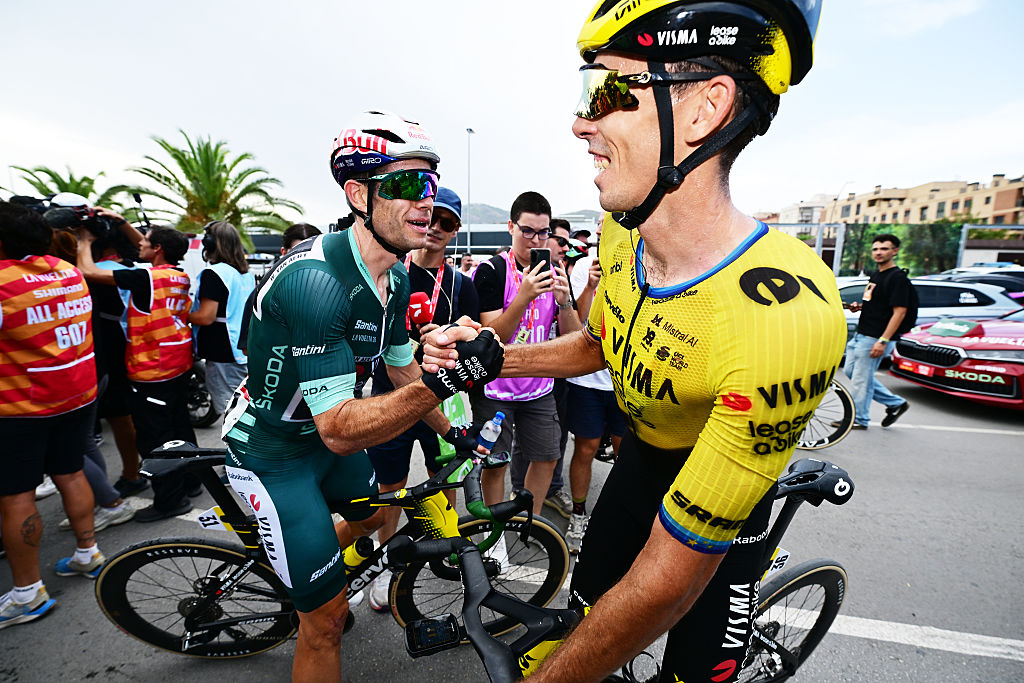
A star serving a kid is not humility. It is power.
Do not confuse this with cycling romance. This is not a heartwarming scene where the old champion graciously passes the torch while everyone cries into their bidons. It is more ruthless than that. Van Aert leading out Brennan tells every other team that Visma’s second or third option might be better organised than your entire A-plan. If you are Cofidis, Red Bull-Bora-Hansgrohe, Uno-X or anyone else trying to pinch a sprint at this Vuelta, you are not just racing Brennan’s kick. You are racing Laporte’s timing, Van Aert’s engine, the team’s numbers, and the knowledge that Visma can make the finale boring in exactly the way winners like.
That is the bit casual fans miss. The final 200 metres are not the sprint. They are the receipt. The sprint was the short leash on the break. The sprint was Van Aert marking the little attacks. The sprint was Laporte dragging the train back into position when the run-in got messy. The sprint was deciding, after wasting a chance on stage 10 by backing Van Aert, that sentiment could get in the bin and the fastest man would be the fastest man.
Australia should be paying attention, not just applauding
Brennan already showed himself to Australian eyeballs in January with a Tour Down Under stage win, on a week most of the country was busy pretending Adelaide is only relevant if there is a fringe festival attached. We saw enough then. Now the Vuelta has turned the hint into a verdict. He is not a promising fast kid. He is a Grand Tour weapon being deployed by the best-drilled squad in the sport.
And yes, this should make Australian cycling twitch. For years we dined out on Caleb Ewan’s acceleration, Michael Matthews’ versatility, and the comforting idea that if we kept producing hard men and aero helmets, sprint relevance would look after itself. It does not. The modern sprinter is not just born fast. He is packaged. Protected. Given a calendar. Given a train. Given older champions willing, or contractually wise enough, to burn matches for him.
- A fast finish is now table stakes, not a career plan.
- The lead-out is no longer a few big lads and a prayer, it is a whole-team operating system.
- Versatility matters because pure flat stages are becoming rarer and more nervous.
- Development teams are not nurseries anymore, they are factories with WorldTour delivery slots.
- Australia needs to stop hoping the next sprinter simply appears from track nationals wearing a skinsuit and a grin.
The Van Aert question is the uncomfortable one
Some will say Van Aert deserves his own chances. Of course he does. He is Wout van Aert, not a hired Derny. But stage 11 showed the brutal truth. His best chance of winning may also be Visma’s second-best chance of winning. Brennan is cleaner in the last 200 metres. Van Aert is more useful from 30 kilometres out to 200 metres out. That is not an insult. It is a job description written by results.
This is where cycling’s ego culture runs into performance culture. Plenty of riders would rather lose as leaders than win as the hand that launches someone else. Van Aert, whether by temperament or by team discipline, keeps making himself valuable. That may be less cinematic than a solo raid through the Ardennes, but it is why Visma can walk out of a supposedly transitional Vuelta stage with another trophy while everyone else explains why the corner was awkward, the wind was tricky, and the finish was harder than it looked.
The new sprint king might not look like Cavendish or Kittel
That is the cultural shift. Brennan is not arriving as the old-school drag-strip monarch who needs eight kilometres of straight road and a team drilled only for one purpose. He is arriving as a rider who can survive lumpier terrain, work when required, and still detonate a sprint after everyone else has had their legs sandpapered. He is closer to the modern classics-sprinter hybrid than the museum-spec pure sprinter. Less velvet rope, more multi-tool.
The peloton should be worried because Visma have worked out the most annoying possible version of sprinting: not chaotic enough for rivals to improvise, not pure enough for specialist drag racers to dominate, not selective enough to remove Brennan, and not sentimental enough to keep Van Aert as protected royalty when the numbers say otherwise.
So no, stage 11 was not just another bunch kick in Spain. It was a memo. The hierarchy has changed. The superstar can lead out the kid. The kid can win three stages before anyone has found a proper answer. And if you are an Australian sprinter, coach, selector or team boss watching from the other side of the world, the lesson is simple: speed is not enough anymore. Build the system, or enjoy fourth place.