
Vollering Won Worlds. The UCI Won The Footnote.
Demi Vollering finally got the rainbow jersey in Montréal, then the commissaires slapped a yellow card on the win like a parking ticket on a Ferrari. Cycling cannot keep asking for bigger stars while treating its biggest moments like paperwork practice.
Demi Vollering did the thing everyone said she should do, then the UCI found a way to make the thing about the UCI. That, in one sentence, is modern cycling administration.
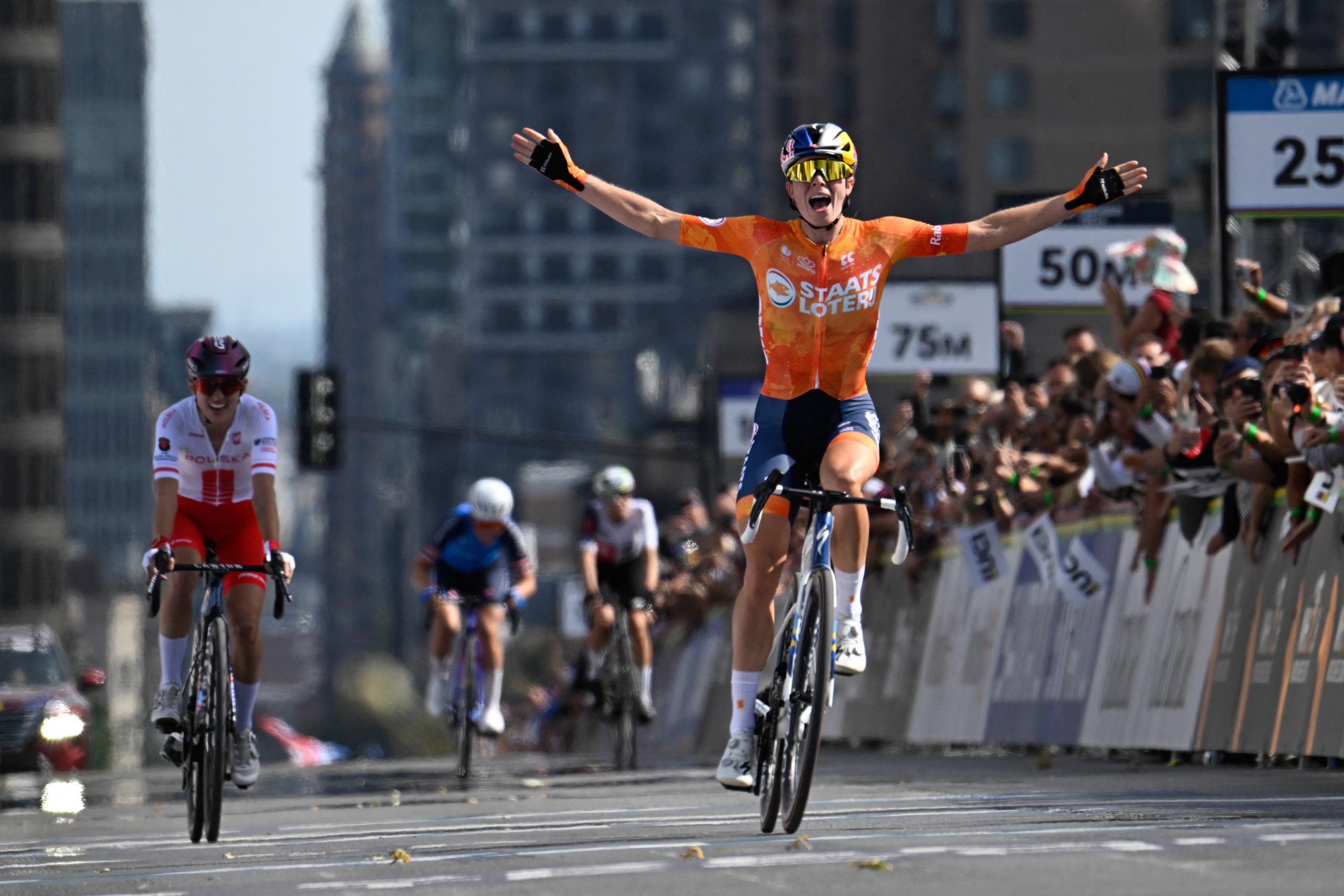
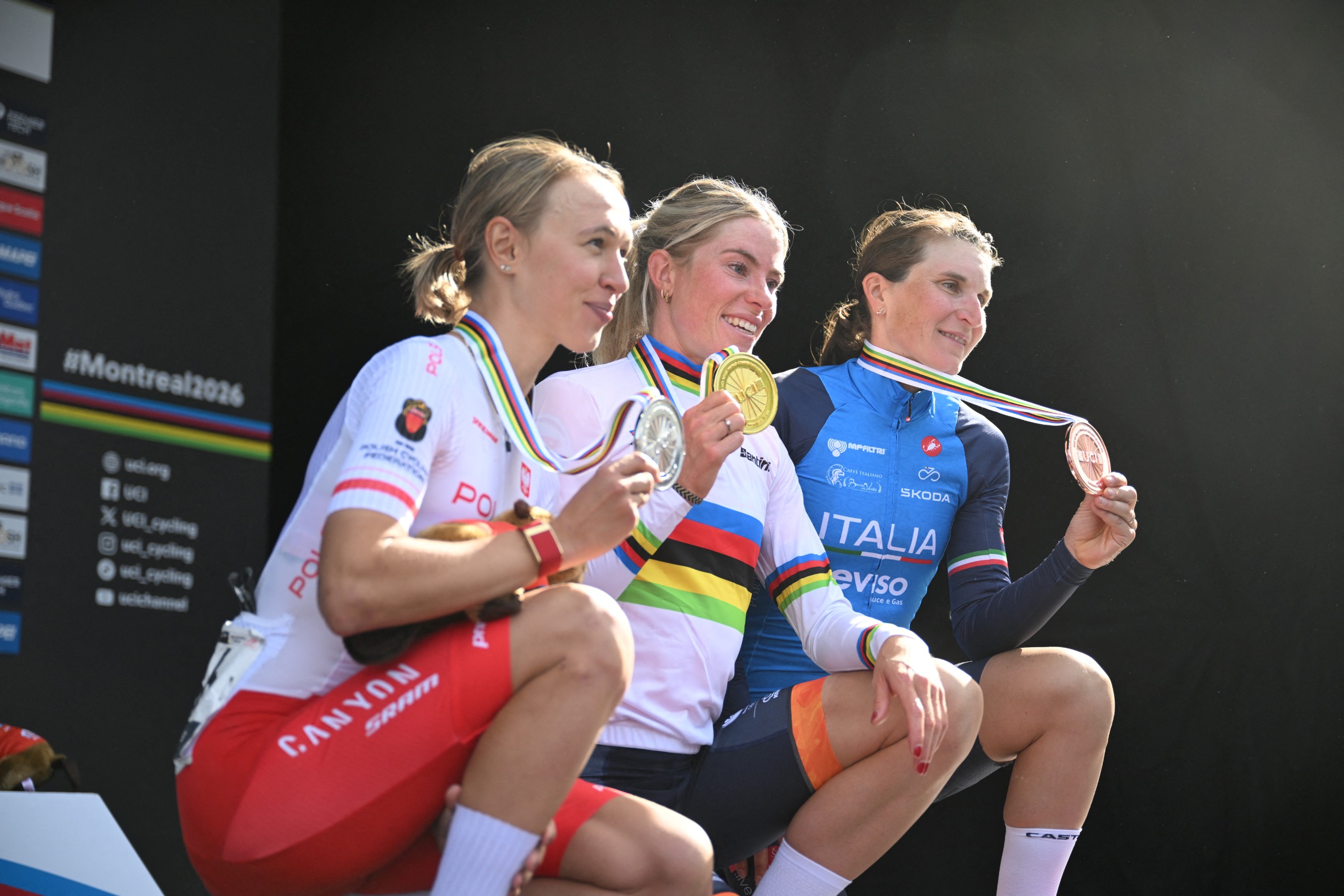
On Saturday 26 September 2026, over 180.1 kilometres from Brossard to Montréal, Vollering won the elite women’s road race at the World Championships. She attacked from long range on the Mount Royal circuit, was dragged back by Kasia Niewiadoma-Phinney and Elisa Longo Borghini, then still had the nerve and legs to win the two-up sprint. Niewiadoma-Phinney took silver on the same time, Longo Borghini bronze at four seconds, Marlen Reusser fourth at eight. It was not a procession. It was a proper championship race, ridden by adults, with consequences.
Then came the invoice. Vollering kept the rainbow jersey, but the post-race communiqué handed her a yellow card, a CHF 1,000 fine and a 25-point UCI ranking deduction for using a non-compliant position or point of support on the bike. In other words, the sport’s new world champion crossed the line as a hero and left the results sheet as a case note.
A great win should not need a rules seminar
Let us be clear before the comment section starts chewing bar tape. Illegal positions matter. Puppy paws, super tucks, forearms on bars during a road race, all of that is not just aero cosplay. It changes control, changes risk, and teaches amateurs exactly the wrong lesson when they try it on Beach Road, Centennial Park, Kings Park or the local bunch ride with one hand already reaching for the oat flat white.
The UCI should police dangerous riding. What it should not do is wait until after one of the best finishes of the season, issue a cryptic penalty, decline to make the offence obvious to the viewing public, and expect everyone to nod along like this is good governance. A rule nobody can identify in the moment is not a spectacle of fairness. It is an admin fog machine.
“That was mine.” Vollering’s finish-line mood was cleaner than the paperwork that followed.
The maddening bit is not that Vollering was punished. The maddening bit is that the punishment became the Sunday morning headline instead of the race craft. She went early with about 39 kilometres to go. She made everyone else panic. Niewiadoma-Phinney and Longo Borghini did not wave a white flag, they worked back, made contact with roughly 15 kilometres remaining, and forced the favourite to win again, not just defend a gap. Vollering had to absorb Longo Borghini’s bell-lap attack, climb again, mark Niewiadoma-Phinney’s late dig and still sprint. That is a race. That is what the rainbow jersey is supposed to reward.
The yellow card system has a theatre problem
Cycling loves a technical rule because cycling is built by people who can argue for 45 minutes about tyre pressure and then forget to eat during a five-hour ride. But the sport has never understood that rules are also performance. They have to be seen working. They have to make sense on television, on the finish straight, in the team bus, and later in the bike shop when the bloke buying a second-hand aero road frame asks whether the pros are allowed to ride like that.
A yellow card is meant to be a deterrent. Fine. But deterrence without clarity is just vibes in a blazer. If the offence was obvious, show it. If it was marginal, explain it. If the point is rider safety, say exactly what behaviour made the bike less controllable. Otherwise the message becomes: we reserve the right to downgrade your triumph emotionally, even when the result stands.
- Publish the exact moment of the breach with the communiqué, not just the article number.
- Explain whether the penalty came from a banned position, an unsafe support point, or repeated behaviour.
- Use the biggest races to educate riders and fans, not merely to demonstrate that commissaires own stationery.
This matters because women’s cycling is finally getting the scale it has earned. Montréal gave the elite women 180 kilometres, proper crowds, a hard circuit and a finale worthy of the jersey. Vollering is not some niche champion hidden behind a men’s undercard. She is the reigning Tour de France Femmes winner and now the road world champion. Niewiadoma-Phinney is not a supporting character. Longo Borghini is not a footnote. This was the sport’s top shelf.
And still, cycling could not resist shrinking it into procedure. We do this constantly. A rider wins, then we obsess over sock height. A bike launches, then we fight about whether the cable port offends tradition. A junior wins rainbows, then everyone asks if the development pathway is broken. Sometimes the sport is allergic to just letting greatness breathe.
Australia should be watching this bit closely
There is an Australian angle here, even if the medal table did not give us the neat headline. Our racing culture copies pro behaviour faster than it copies pro discipline. If the best riders in the world are being punished for position rules that fans cannot identify, what chance has a commissaire at a state open got of convincing a half-cooked A-grade rider that his forearms-on-the-tops descent is not genius, it is just stupidity with carbon wheels?
The answer is not fewer rules. Anyone who has watched a local bunch turn feral on a descent knows we need rules, and we need enforcement. The answer is better communication. Publish the evidence. Explain the danger. Make the professional penalty useful to the grassroots rider. Do that, and the yellow card becomes a teaching tool. Fail, and it becomes another reason for cyclists to mutter that the UCI is run by people who would neutralise a café sprint for excessive joy.
Vollering will be fine. The 25 points are a mosquito bite on a rider of her standing. The money hurts less than a set of premium tyres. The jersey stays. But symbols matter in this sport. Rainbow bands are the cleanest symbol we have. They say: on this day, on this course, against this field, you were the best.
Montréal gave us that answer. Demi Vollering was the best. The UCI should have made the rule breach clearer, faster and smaller. Instead it made itself part of the podium photo. Typical cycling, really. Even when the champion wins beautifully, someone in a blazer still wants the last wheel.