
The Vuelta Starts In Monaco. Of Course Pogačar Is Coming.
The Vuelta has not just landed a superstar. It has rolled the start ramp to his neighbourhood and called it destiny.
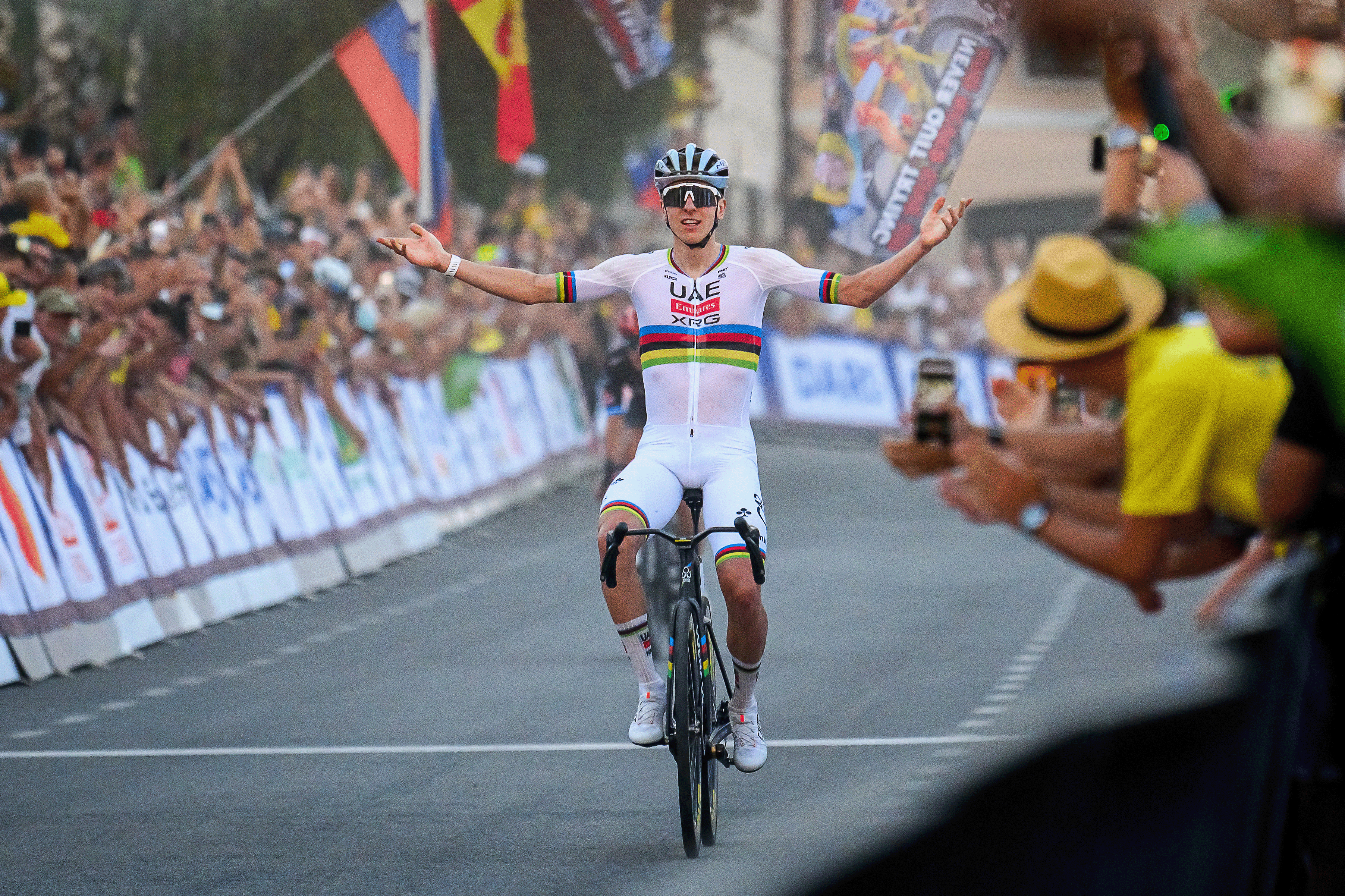
Tadej Pogačar is going back to the Vuelta a España for the first time since 2019, and the sport is already behaving as if red has been painted on his shoulders. Fair enough. He is the Tour de France champion, the reigning gravitational problem of men’s cycling, and the sort of rider who can make a three-week race feel pre-decided before the buses have even found the hotel car park.
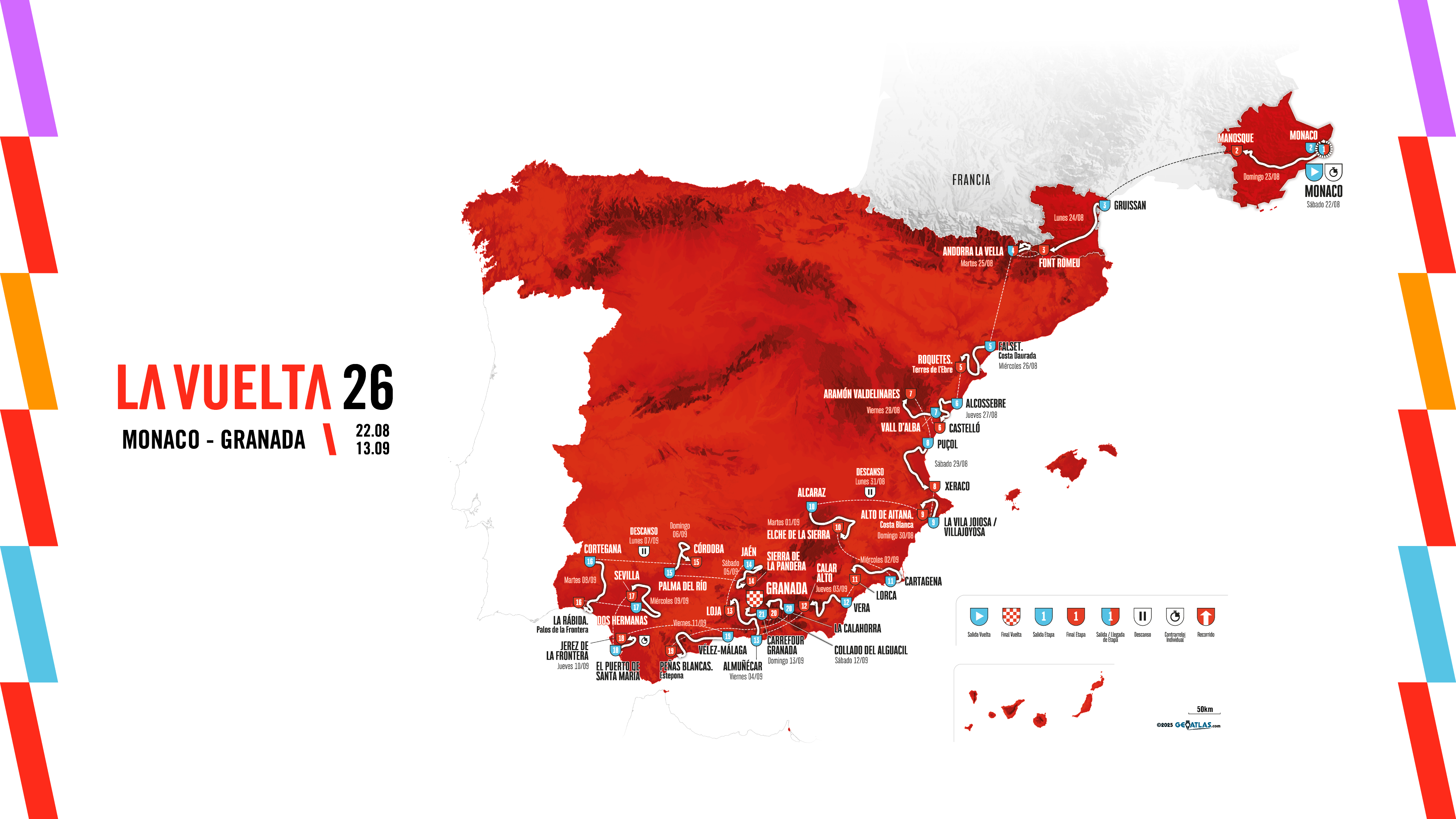
But the interesting part is not simply that Pogačar is riding. It is where the whole thing begins. The 2026 Vuelta starts on Saturday 22 August in Monaco with a 9.6-kilometre individual time trial, then loops through southern France, Andorra and Spain before finishing in Granada on Sunday 13 September. Monaco is where Pogačar lives. It is also where half the peloton seems to have a coffee loyalty card, a tax adviser and a balcony with better annual wattage than most Australian households.
This is not romance. It is real estate with timing mats.
The Vuelta has always sold itself as the weird Grand Tour. Steeper ramps, worse roads, stranger finishes, a broadcast window that feels like a late-night dare for Australians, and enough furnace-weather chaos to make a sports scientist start chewing through the team radio. That is why we love it. It is the race that throws etiquette in a bin and then asks if anyone brought a 34-tooth cassette.
Yet this year’s grand opening in Monaco gives the whole show a different smell. The Vuelta is not merely chasing scenery. It is chasing proximity to power. Sponsors, stars, managers, agencies, athletes, private wealth and media attention all orbit the same few glamorous postal codes now. Start a Grand Tour in Monaco and you are not just launching a race. You are ringing the doorbell of modern professional cycling’s gated community.
“Spain is a country I love to visit and race in.”
That was the polite line. The more accurate line is this: the Vuelta has just secured the rider every race director wants, and it gets to put him on a start ramp practically outside his home gym. Pogačar made his Grand Tour debut at the 2019 Vuelta, won three stages, took white, and finished third behind Primož Roglič and Alejandro Valverde. Seven years later he returns not as the child prodigy, but as the bloke everyone else has spent half a decade pretending they can tactically solve.
The course is not a coronation, thankfully
There is a danger in writing about Pogačar now. You either sound like a fanboy with a spreadsheet or a contrarian trying to shout at gravity. So let’s be clear: this route can still bite. Seven summit finishes, a southern Spanish heavy back half, a stage 18 time trial along the Cádiz coast, then Peñas Blancas and the Sierra Nevada horrors in the final mountain sequence. Stage 20 alone has been billed around 5,000 metres of climbing through the foothills of Sierra Nevada before Collado del Alguacil. That is not a bike race. That is a dehydration study with helicopters.
The early days are no parade either. Monaco’s opening time trial is short enough to tempt every GC rider into stupidity, the Pyrenees arrive almost immediately, Andorra is lurking by stage 4, and stage 6 even throws gravel into a category 1 climb before the finish in Castelló. The Vuelta’s organisers have not built a gentle red carpet. They have built a meat grinder, then placed it in late August Spain and asked riders to bring sunscreen.
That matters because the lazy take is already forming: Pogačar turns up, Pogačar wins, everyone else fights for photos. Maybe. But the Vuelta has a proud history of making the obvious look drunk. Heat changes brains. Short stages ignite panic. Spanish descents punish arrogance. Roglič, hunting what would be a fifth Vuelta title, knows this race like a mechanic knows a creak in the bottom bracket. João Almeida, nominally a lieutenant in this UAE squad, finished second last year and does not exactly ride like a man allergic to general classification.
Jay Vine is the Australian pressure point
For Australian eyes, the rider to watch is Jay Vine. UAE’s announced Vuelta roster puts him alongside Pogačar, Almeida, Pavel Sivakov, Pablo Torres, Kevin Vermaerke, Domen Novak and Ivo Oliveira. That is not support. That is a rolling private equity fund with bidons.
Vine’s 2026 has been ridiculous even by cycling’s usual standard of slapstick misery. He started the year by winning the Australian time trial title and the Tour Down Under, which should have been the cleanest possible statement that his engine was back. Then came the crashes, the wrist trouble, the Giro disaster in Bulgaria, concussion, a fractured elbow, and the sort of mental reset that never fits neatly into a team press release.
Now he is named in a Vuelta squad built around the most demanding job in cycling: helping Pogačar win a Grand Tour he has not yet won. Vine will not be there for a sentimental Aussie redemption arc. UAE does not do sentiment. It does function. If he is fit, he is there because he can climb, pace, rescue, cover, and possibly hunt if the red-jersey mathematics allows. If he is not fit, the Vuelta will expose it brutally by stage 9.
- Can Pogačar handle heat, altitude, late-season fatigue and the pressure of completing the Grand Tour set?
- Does UAE ride for one leader, or does Almeida become the most overqualified insurance policy in the race?
- Can Roglič turn experience into chaos before Pogačar turns watts into inevitability?
- Will Jay Vine get any freedom, or is he locked into the superteam service economy?
- Does starting in Monaco make the Vuelta look global, or just painfully close to cycling’s wealth bubble?
Cycling keeps pretending geography is neutral
It is not. Where races start says something. The Giro goes abroad to sell Italian softness with a harder passport stamp. The Tour guards its mythology while exporting just enough Grand Départ sparkle to keep governments bidding. The Vuelta, always the scrappier sibling, has become increasingly willing to begin outside Spain. Monaco is the cleanest version of that logic: photogenic, rich, compact, administratively neat, and dense with riders who can roll to sign-on without remembering where they parked the rental car.
The problem is not that Monaco is boring. It is not. A technical time trial through those streets will be terrific television, especially if someone clips a barrier with a disc wheel and a full TT lid. The problem is that pro cycling’s romance keeps being used as packaging for the same old gravitational pull: money first, narrative second, fans third, workers somewhere behind the soigneur with the rice cooker.
Australian cycling should pay attention. We love telling ourselves the sport is still built from local clubs, state opens, country roads and some poor kid flogging themselves up a climb before school. At the top end, though, it increasingly runs through Monaco apartments, Gulf sponsorship, super-agencies, and teams wealthy enough to bench riders who would lead anywhere else. Vine is good enough to matter deeply in this Vuelta, and still his race may be defined by whether he can make someone else’s greatness easier.
So yes, watch it. Just do not swallow the brochure.
Pogačar at the Vuelta is good for cycling. Anyone arguing otherwise needs a lie-down and a new chain. The sport is better when its biggest rider takes on the ugly, hot, unstable race instead of disappearing into altitude camp and social media sponsor obligations. A Tour champion turning up in Spain is not the problem.
The problem is the sport’s habit of dressing convenience as destiny. Monaco gets the start. Pogačar gets the spotlight. UAE gets the strongest roster. The Vuelta gets its headline. Everyone wins, except perhaps the idea that Grand Tours are still rooted first in place rather than in the commercial orbit of the people powerful enough to bend the calendar toward them.
Still, at 2am in Australia, when the road tilts up somewhere in Andalusia and Vine is on the front shredding the group to a dozen cooked faces, I will be watching. I will probably complain. That is allowed. Loving cycling and distrusting its sales pitch are not opposites. They are basically the same job.