
The Baby Tour Just Became A WorldTour Internship. Australia Should Be Nervous.
Tour de l’Avenir starts in ten days with a new format, a stack of WorldTour development teams, and no obvious Australian national squad on the confirmed list. The future of pro cycling is being privatised in plain sight.
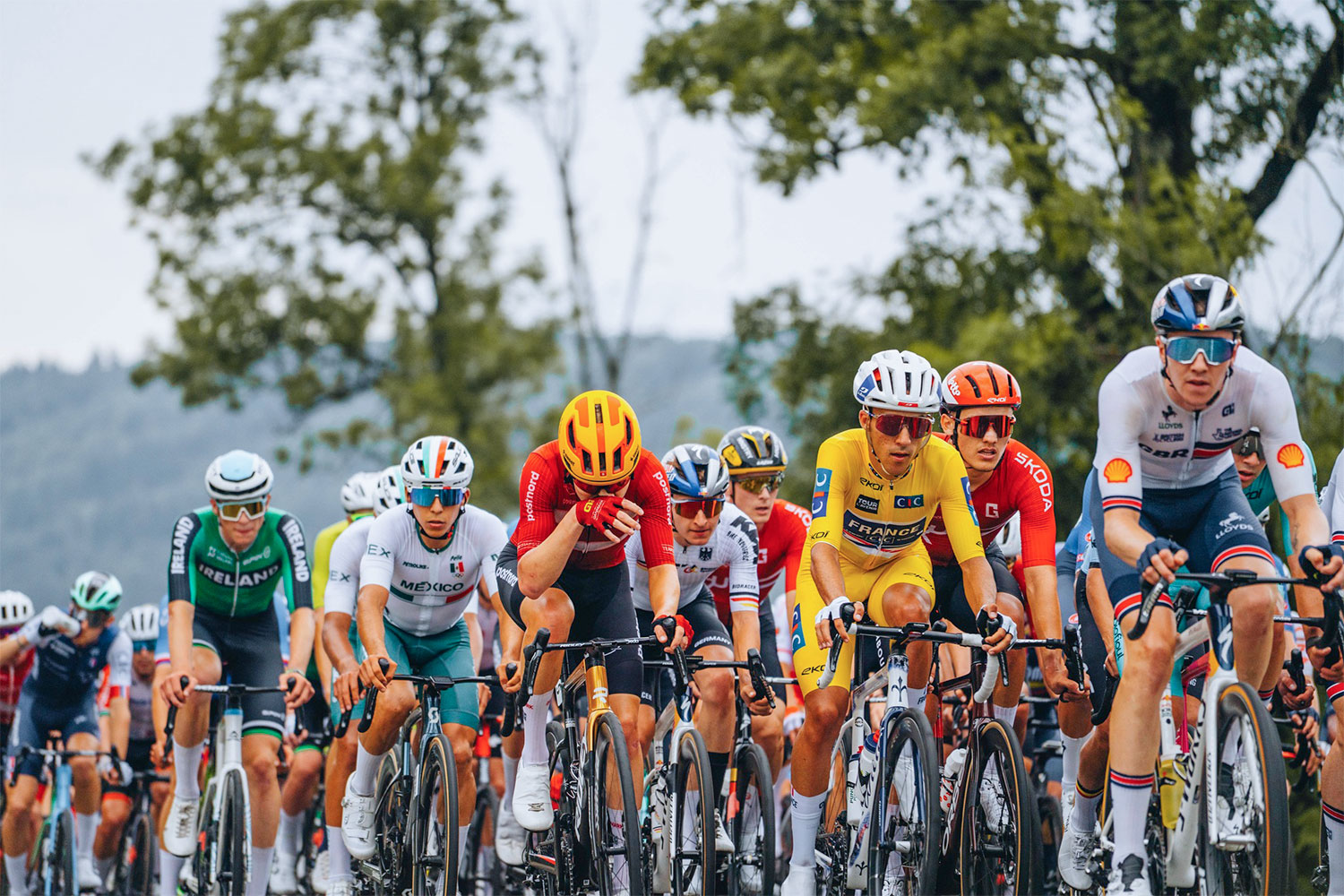
The Tour de l’Avenir is ten days away, and if you still think it is just the cute little Baby Tour where future Grand Tour stars wear national colours and learn how to suffer politely, wake up. The 2026 edition runs from 20 to 26 August, from Normandy to Italy, with seven days, 926 kilometres, 13,532 metres of climbing, a mountain time trial to Flaine, the Col de l’Iseran at 2,764 metres, and a final shove to Ceresole Reale above 2,200 metres. That is not a finishing school. That is a job interview with lactate.
The twist is not the route. The twist is who gets to sit in the exam room. The race that has been contested by national teams since 2007 is now open to development teams. Not theoretically. Actually. The confirmed list includes Lidl-Trek Future Racing, Ineos Grenadiers Racing Academy, Red Bull-Bora-hansgrohe Rookies, Visma Lease a Bike Development, UAE Team Emirates Gen Z, Soudal Quick-Step Devo, Bahrain Victorious Development, Picnic PostNL, Tudor U23, EF Education Aevolo, Hagens Berman Jayco, Movistar Team Academy, Groupama-FDJ United CT, and more. The future is no longer wearing a national jersey. It is wearing a sponsor deck.
This is not evolution. It is consolidation.
The organisers will sell this as realism, and they are not completely wrong. Modern cycling talent is being signed earlier, coached harder, tested more often and absorbed into professional structures before most riders have learned how to bluff a café stop. The best 19-year-olds are not hidden in club kits anymore. They are on long contracts, wearing aero socks issued by a service course and learning English press lines before they can rent a car.
But do not pretend this is neutral. Opening the Tour de l’Avenir to development teams shifts power away from national federations and towards WorldTour franchises. That favours countries, riders and families already close to the European machine. If your pathway runs through Belgium, France, Italy or the Netherlands, fine. If your pathway starts in Ballarat, Bunbury, Launceston or Orange, then suddenly the map looks a lot bigger and a lot meaner.
Australia has built pathways. Europe has bought elevators.
Here is the uncomfortable bit for Australian cycling. We have spent the past two years telling ourselves that the ProVelo Super League, revived domestic racing, Jayco-linked development opportunities and cleaner broadcast packages are building a proper road to the WorldTour. Some of that is true. The PSL has already moved riders into linked opportunities and given the local scene a shape that the old National Road Series was losing. Good. About time.
But the Tour de l’Avenir’s new start list shows the next problem. It is not enough to be good domestically. It is not even enough to win at home. The ladder now has corporate rungs. If you are not already attached to a development structure, you are not just racing other riders. You are racing recruitment departments.

Look at the confirmed teams list today and the point sharpens. There are 25 confirmed teams. Plenty of WorldTour-linked development outfits are there. France, Italy, Germany, Canada, the USA, Poland, Norway, Indonesia and the World Cycling Centre are there. Hagens Berman Jayco is there, which gives the article a familiar Australian-flavoured label, but that is not the same thing as a broad Australian national pathway. What is not obvious on the official confirmed list is an Australian national selection.
The Baby Tour used to ask: which country has the next champion? Now it asks: which corporation already owns him?
That distinction matters. National teams are imperfect, political and often conservative. Nobody who has sat near selection drama at a velodrome café needs a lecture on that. But national teams at least give federations a chance to parachute late bloomers and non-European outsiders into a race that scouts actually watch. Development teams, by contrast, are magnificent if you are already in one and merciless if you are not.
The women’s side is the warning siren
If you want the neatest proof that pathway reform can become pathway shrinkage, look at the women’s Tour de l’Avenir. It is not happening in 2026. The explanation was that women’s under-23 teams are not numerous or structured enough, and that too many already-established pros had been filling what was meant to be a discovery race. That is a real problem. It is also a damning one. The sport spent years congratulating itself for building the top of women’s cycling, then looked down and found the scaffolding missing.
Men’s cycling has the opposite issue. The scaffolding is not missing. It is being branded, fenced, priced and controlled. The under-23 race calendar is increasingly a feeder grid for the teams that can afford to keep a second squad. In theory, that produces better coaching, better equipment, better welfare and fewer kids sleeping five to a room above a kebab shop before a 180-kilometre flogging. In practice, it also lets rich teams pre-select the future, then call the selection process meritocracy.
- Are our best under-23 road riders getting enough European race days before the scouts make up their minds?
- Does the domestic calendar produce WorldTour-ready durability, or just good highlight reels?
- Are Jayco-linked pathways broad enough, or are we depending on one doorway while Europe builds a corridor?
- Can AusCycling still use national selections as leverage when the biggest development races invite trade-team academies?
- Are we prepared for a future where a rider’s agent matters as much as their threshold power?
There is no point whinging that the sport has changed. It has. The old romance of national squads and mystery climbers from small cycling countries was already being eaten by power files, junior contracts and data scouting. The Tour de l’Avenir is not betraying modern cycling. It is admitting what modern cycling already is.
But Australia should not clap like a seal just because the race looks more professional. Professional for whom? The big European development teams will arrive with polished bikes, nutrition plans, altitude files and riders who already know which WorldTour bus they want to sit in next year. Our riders need more than a nice domestic series and a few heroic winter kilometres on dead roads. They need systematic exposure, ruthless selection, proper European blocks and enough support that talent does not have to become wealthy, lucky or related to the right person before it becomes visible.
The race still matters. That is the problem.
Tour de l’Avenir winners include Felice Gimondi, Greg LeMond, Miguel Indurain, Egan Bernal and Tadej Pogačar. Recent winners include Isaac Del Toro, Joseph Blackmore and Paul Seixas. This is not some obscure undercard. It is one of the few races where the sport collectively admits it is watching the next decade being assembled.
So yes, watch it. Watch the mountain time trial. Watch the Iseran. Watch the final stage in Italy. Watch which development squads boss the race like mini WorldTour teams, because that is exactly what they are. Then ask the unpleasant question: if the future is being sorted before riders reach the top tier, how many Australian kids are even in the room when the sorting begins?
The Baby Tour has grown up. Good for it. Now Australia has to grow up too, because pathways are not press releases, and the WorldTour will not wait politely at the airport with a green and gold tracksuit.