
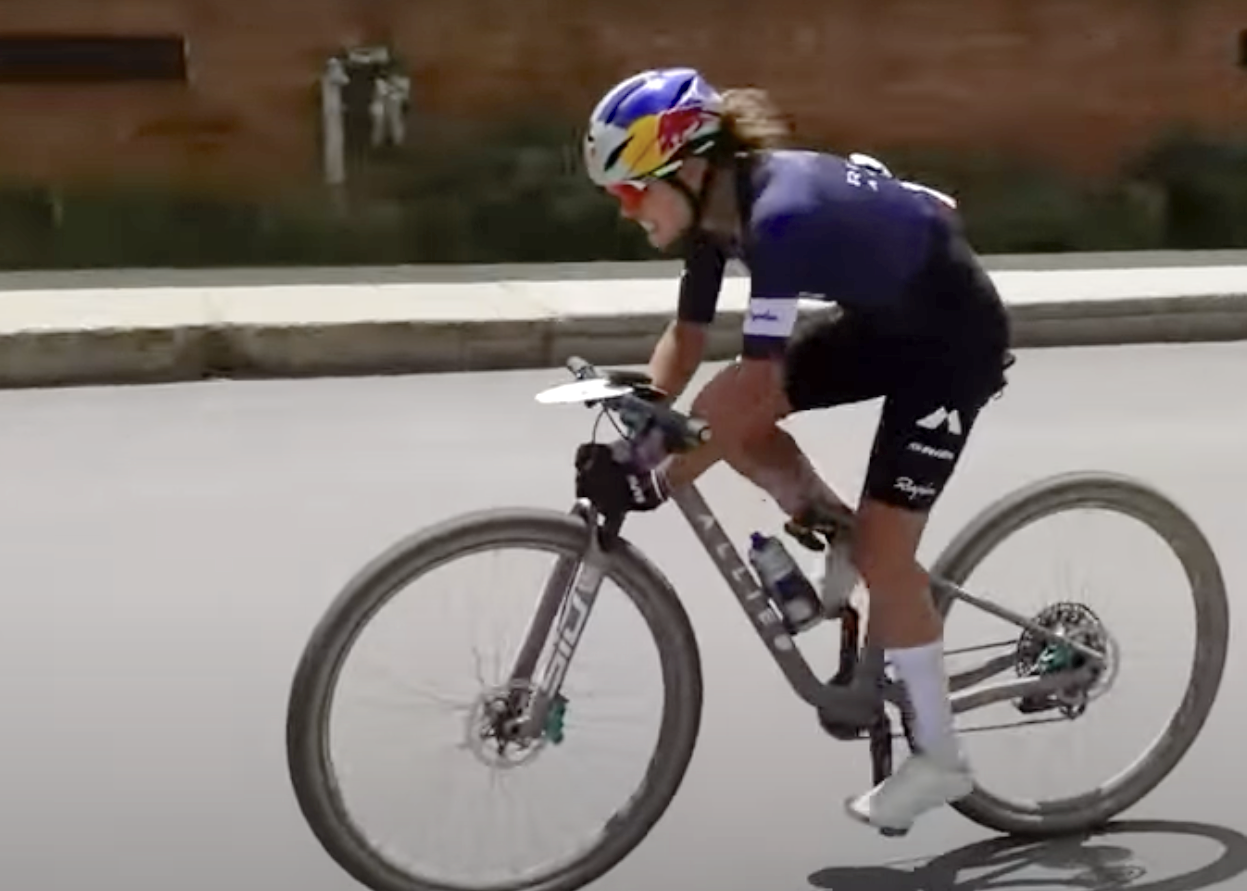
Leadville Banned Drop Bars. Good. Now Build A Course That Deserves Flat Bars.
The Race Across the Sky has outlawed drop bars for 2026, and the internet’s gravel libertarians are already frothing. They can calm down: the ban is defensible, but Leadville has accidentally confessed what modern off-road racing has become.
Leadville Trail 100 MTB returns on Saturday 15 August 2026, and the loudest argument is not about altitude, fire reroutes or Keegan Swenson’s latest appointment with inevitability. It is about handlebars. For this year’s race, Life Time has banned drop bars and required traditional flat bars for elite and age-group riders. The response from the gravel brain trust has been predictably operatic: freedom is dead, innovation is dead, everyone is a commissaire now, et cetera.
Spare me. The ban is not the end of off-road imagination. It is a belated admission that Leadville is trying to be three events at once: a mountain bike race, a gravel time trial and a mass-participation bucket-list sufferfest with a belt buckle at the end. When one course invites drop-bar optimisation and then gets nervous when riders optimise, the problem is not the rider. It is the course.
The aero loophole was real
Let’s not pretend drop bars appeared at Leadville because somebody mistook Colorado for Flanders. Swenson made the setup famous by winning there on drop bars, and once the fastest bloke in the room turns a mountain bike into a dirt-road weapon, everyone else either copies him or starts looking for excuses. That is how racing works. You do not get to celebrate marginal gains in July and then clutch your pearls in August when somebody brings a narrower frontal profile to a 100-mile race full of long dirt roads and high-speed pacing.
The 2026 edition only sharpens the argument. Wildfire impacts around Lake County forced a modified route, with the iconic Powerline section out for the first time, along with Hagerman Pass Road and Sugarloaf Mountain. The race is still brutal at 102.1 miles, or 164.3 kilometres, with 9,916 feet of climbing, and the Columbine climb remains the big ugly appointment in the middle. But if you remove some of the course’s defining roughness and leave enough fast dirt to reward aero discipline, don’t be shocked when riders bring equipment that looks suspiciously like a gravel accountant’s fever dream.
Drop bars did not break Leadville. They audited it.
The ban is still the right call
Here is the part that will annoy the handlebar anarchists: I think Life Time is right to standardise the cockpit. Not because flat bars are morally pure. Not because drop bars are cheating. Because a mixed field of tired riders descending loose terrain above 3,000 metres, using different hand positions, different brake leverage and different cornering habits, is a stupid way to discover the limits of privateer risk management.
Anyone who has ridden a fast bunch on the road next to a triathlete on extensions knows the feeling. It is not that the other rider is evil. It is that the system is mismatched. Different controls create different reactions. At Leadville, that mismatch is happening after hours of oxygen debt, with pros threading amateurs, cameras, feed-zone chaos and descents where confidence and stupidity can look identical for about three seconds.
The fairness argument matters too. A drop-bar MTB is not just a bar swap for most riders. It can mean a different frame size, hacked fit, new controls, altered braking, cable surgery and enough mechanic hours to make a shop owner start humming. The richest teams and best-supported athletes can chase that rabbit. The young privateer with one bike, one credit card and a mate holding bottles in the feed zone cannot. If the series wants proper competition, it cannot let the best-resourced riders turn every course into an equipment arms race before the gun even fires.
Gravel wanted freedom. It got governance.
This is the bigger story. Life Time is now functioning like the UCI for a large slice of elite North American off-road racing, except with better branding, bigger cheques and fewer awkward blazers. The Leadville purse has doubled to US$60,000, split evenly between elite men and women across the top five. The broader Life Time Grand Prix has a record US$590,000 attached across six events. Once that much money is on the table, romance gets a lanyard and starts writing regulations.
Gravel spent years selling itself as cycling’s escape hatch: no radios, no barriers, no WorldTour nonsense, no one telling you your sock height was a crime against humanity. Lovely story. Also temporary. As soon as sponsors, broadcast, prize money and athlete contracts arrive, rules follow. Feed zones get formalised. Media vehicles get managed. Bars get banned. The outlaw town gets a council ranger and a laminated risk assessment.
That does not make gravel fake. It makes it grown-up. The childish bit is pretending you can have professional stakes without professional constraints. You cannot. If you want the money, the livestream and the factory support, you also get the clipboard.
Australia should be paying attention
There is an Australian angle here, and it is not just that Nicole Frain is busy making Europe look like a training block. Frain won Gravel Tour Hlinsko in Czechia this week, her fourth UCI Gravel World Series win of the season after starting 2026 with a victory at RADL GRVL in South Australia. That matters because Australian gravel is no longer a side quest. With Nannup hosting the UCI Gravel World Championships later this year, our courses, tech choices and event standards are about to be examined by riders who know exactly how to exploit ambiguity.
If Nannup wants to be a gravel world championship rather than a road race with dust on its shoes, terrain has to do the policing. Do not write a dozen desperate rules to stop riders bringing the wrong bike. Build a course that makes the right bike obvious. If 45mm tyres, stable handling and proper braking are required, riders will choose them. If the route is fast, smooth and tactical, do not whinge when half the field turns up with aero cockpits, slammed stems and roadie habits.
What this means for the rest of us
For normal riders, the lesson is simple: stop buying bikes for loopholes. A drop-bar MTB can be brilliant in a very narrow window, but it is often a compromise with a marketing hangover. If your riding is mostly fire road, rail trail and fast gravel, buy a gravel bike and enjoy the efficiency. If your riding includes proper singletrack, sketchy descents, baby-head rocks and the sort of corner where your front wheel starts negotiating with God, buy the mountain bike. The industry loves selling category confusion because confusion moves inventory.
- Does my local terrain actually reward this, or am I cosplaying a race I will never enter?
- Can I brake, corner and fix the thing when tired, wet and hungry?
- Am I solving a real problem, or creating five new ones so Instagram thinks I am clever?
Leadville’s drop-bar ban is not anti-innovation. It is a promoter drawing a line after athletes showed exactly where the incentives pointed. Good. But the more honest fix is better course identity. If Leadville wants flat bars, it should build a race that flat bars win because they are the best tool, not because the rulebook has done the trail’s job for it.
That is the uncomfortable truth for gravel, MTB and every hybrid format currently trying to bottle authenticity and sell it back to us. Bikes do not lie. Courses do. Leadville just got caught.