
Canyon Let The Prototype Out. Now Your TT Bike Looks Old.
Marlen Reusser did not just win the Montréal Worlds time trial. She dragged time trial bikes back into the weird, expensive, rule-bending future where they belong.
There are two types of time trial bike launch. The first is the polished rubbish we get from brands in a studio, where a product manager says “holistic system integration” while a photographer lights a bottom bracket like it is a cathedral. The second is better. A rider turns up at Worlds, the fork looks like it escaped from a velodrome science project, the bike has not technically been launched yet, and then it wins the bloody rainbow jersey.
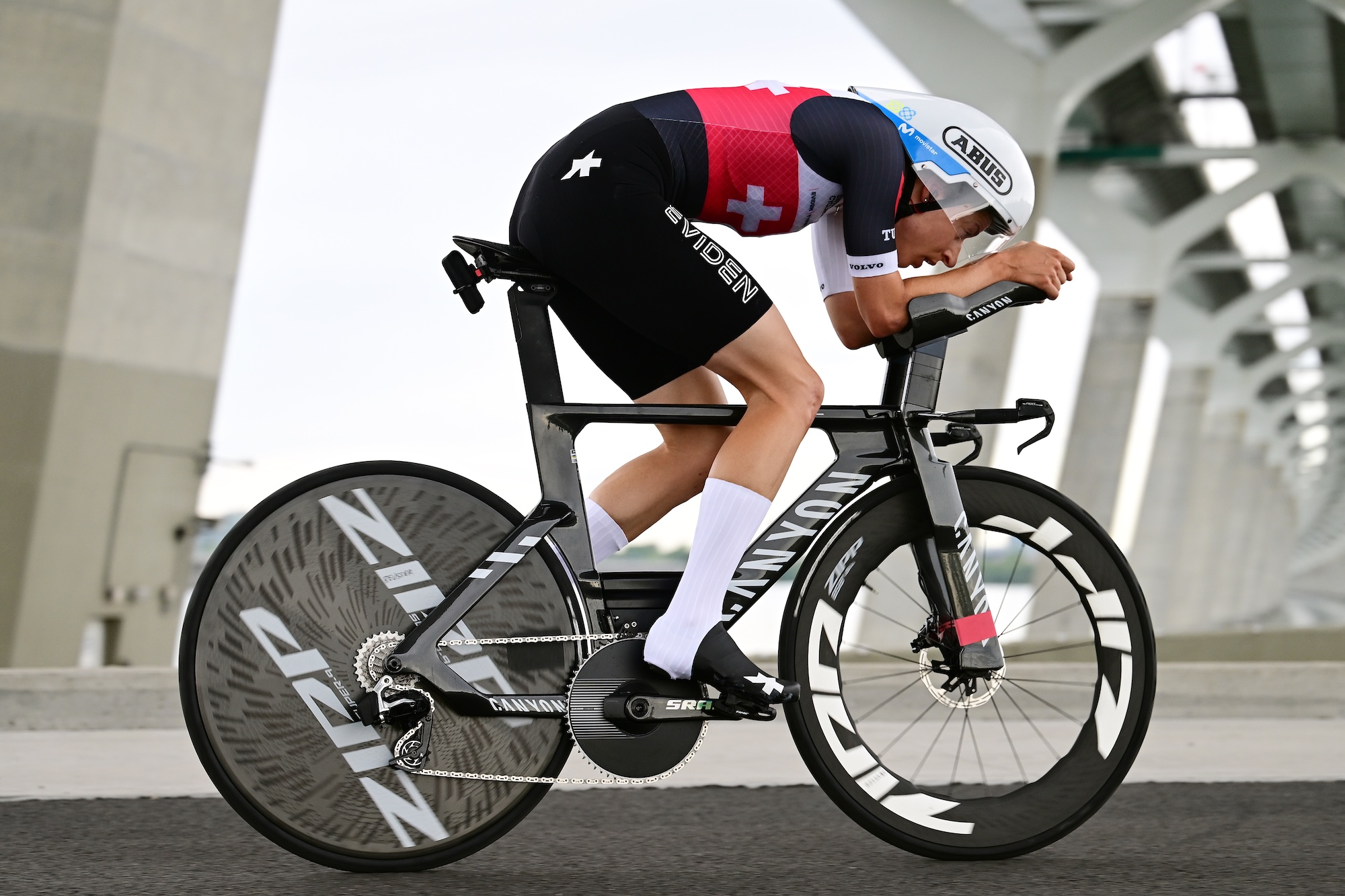
That is what Canyon has just done in Montréal. On Sunday 20 September 2026, Marlen Reusser won the elite women’s individual time trial on an unreleased Speedmax CFR TT. Zoe Bäckstedt, 21 years old and apparently allergic to respecting the normal career staircase, took silver on the same new platform. Franziska Koch rounded out the podium. Canyon did not sneak a prototype into the footnotes. It parked the thing on the front page of the sport and let everyone zoom in on the fork.
The fork is the argument
Look at the bike for longer than three seconds and the front end starts picking a fight. Wide stance. Double crown. Fork legs reaching up like scaffolding around the head tube. A cockpit that looks less like a handlebar and more like a bracket for turning a human being into a wind-management problem. This is not the tidy aero minimalism brands have been selling to nervous accountants with FTP subscriptions. It is properly strange. Good.
Canyon’s old public line on wide forks was not exactly enthusiastic. Now its Worlds bike looks very much like the industry has quietly accepted what the track nerds and British engineers have been screaming for years, the rider is the mess. The frame is not the main aerodynamic object anymore. You are. Your knees, shoulders, hands, bottles, computer mount, timing chip, number plate and emergency gel taped by a tired mechanic at 6am are the problem. The new Speedmax is not trying to make a pretty bicycle. It is trying to organise the dirty air around a contorted mammal.
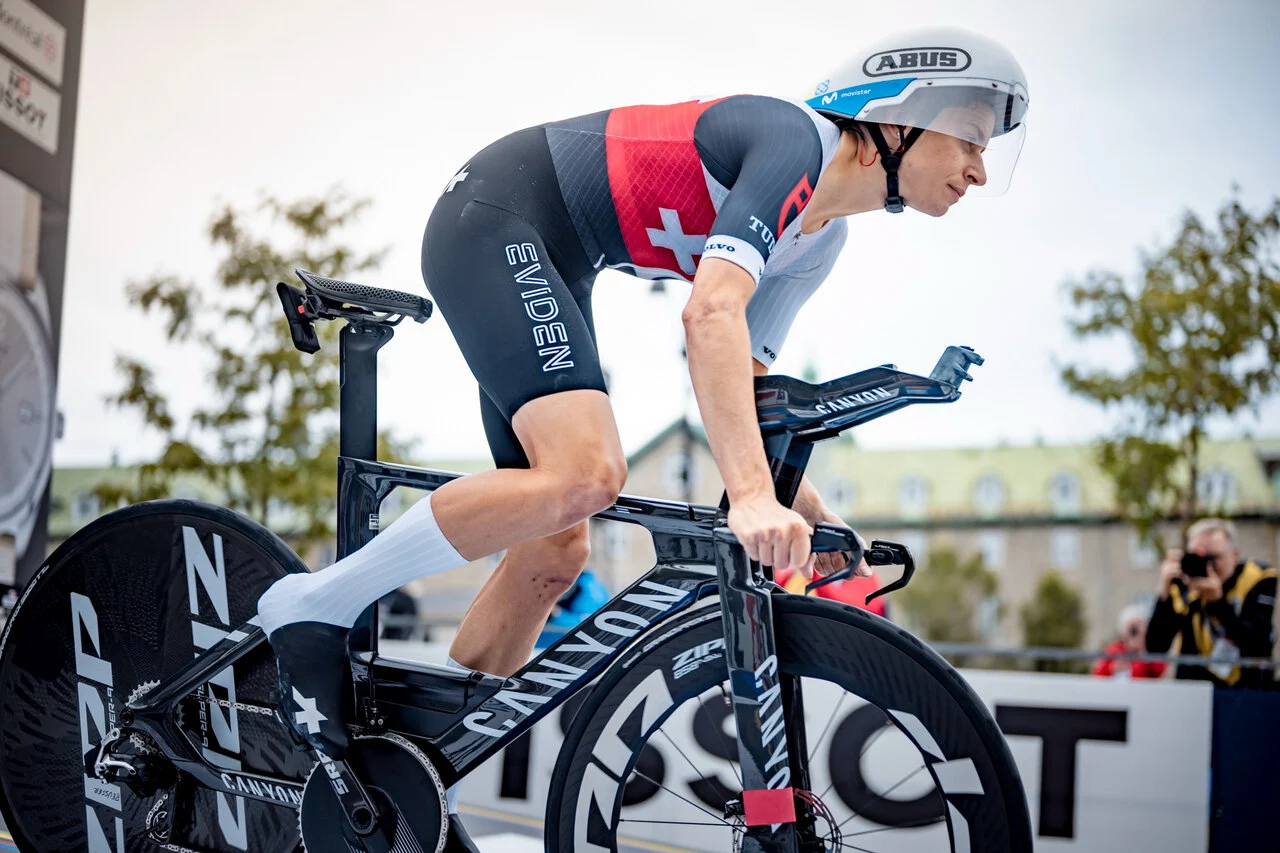
The UCI sticker is not romance. It is a loophole with paperwork.
Here is the annoying truth. The UCI does not kill innovation. It domesticates it. Every supposedly wild time trial bike now arrives with compliance documents, prototype stickers, commissaires peering at tube shapes, and engineers who know exactly how close they can walk to the fence without snagging their skinsuit. Canyon’s engineer reportedly called the new bike right on the edge of what is possible under the rules. That is not a confession. That is the sport working as designed.
Cyclists love pretending rules are an enemy of speed. Nonsense. Rules are the wall you bounce off to find the next stupid idea. The old 3:1 tube shape era gave us generations of polite carbon knives. Looser interpretations, smarter cockpit rules and a decade of track-bike madness have now pushed road time trial bikes into their mutant phase. If you wanted elegant, buy a steel randonneur. If you want to beat the clock, accept that your bike may soon look like a forklift kissed a fighter jet.
The best time trial bikes have always looked slightly illegal. If nobody in the café hates it, the engineers probably chickened out.
This was not a men’s race tech story with women attached
The pleasingly uncomfortable bit for the old guard is that the new Speedmax did not get its grand reveal under a male superstar with a documentary crew. It won under Reusser, then took second under Bäckstedt. The women’s elite time trial was the launchpad, not the showroom warm-up. That matters because bike brands still have a bad habit of treating women’s racing like a values statement until the serious prototype tubs roll out. Canyon did the opposite here. It put the sharpest toy under riders capable of humiliating the marketing department if the thing rode like a shopping trolley.
Reusser’s ride was not a bike commercial with legs. She trailed Bäckstedt through the early checks, then came home like someone had replaced her blood with battery acid and Swiss discipline. The course was long by modern women’s Worlds standards, technical enough to punish panic, and bumpy enough to expose bad integration. If the cockpit, fork and fit were a gimmick, Montréal would have found out. Instead, the bike left with gold, silver and a queue of rival mechanics pretending not to stare.
- The next arms race is at the front of the bike, not the rear triangle.
- Cockpits are now frame design, not accessories.
- Aero bottles have stopped being optional and started being structural theatre.
- Prototype racing is back because normal superbikes have become too similar.
- Your 2021 dream TT bike did not become slow, but it did become old overnight.
Australian buyers should be excited, then extremely cautious
For Australian riders, this is where the lust needs a handbrake. A bike like this is catnip for triathletes, club testers, aero obsessives and anyone who has ever said “free speed” before spending four grand. But a UCI-legal TT machine is not automatically the right machine for Australian use. Most local riders are not racing sanctioned time trials every second weekend. They are doing triathlons, flat club courses, the occasional state championship, or pretending their Sunday solo loop is a wind tunnel because the magpies are yelling at them.
That matters. UCI legality can make a bike narrower in usefulness even as it gets faster inside the rulebook. Triathlon versions may carry hydration and storage better. Older rim-brake TT bikes can still be brutally fast for the money if the fit is right. A second-hand superbike that accepts normal stems, normal extensions and normal mechanic language may beat a new aero sculpture that needs proprietary everything and a priest to adjust the pads.
This is the bit the launch coverage never says loudly enough. The fastest TT bike is the one you can hold. Not for a hero photo. Not for eight minutes in a fit studio while someone says your hip angle looks promising. For forty, fifty, ninety minutes, on dead chipseal, in crosswind, with sweat in your visor and your lower back filing a formal complaint. Reusser can use this thing because Reusser is a monster and Canyon clearly built a system around her position. You are probably not Reusser. I am definitely not Reusser. Most of us are one spacer stack away from turning superbike money into neck pain.
Still, bring on the ugly bikes
I want more of this. Not because every punter needs a double-crown TT bike, but because racing should occasionally produce equipment that makes normal people point and argue. Too much modern road tech has become tasteful, incremental and beige at twenty thousand dollars. Time trial bikes used to be the sport’s permitted laboratory. Then they got sanitised into catalogue shapes and wind-tunnel adjectives. Canyon has reminded everyone that the discipline is at its best when it looks faintly deranged.
Will the production version be cheap? Absolutely not. Will it be practical? Only in the way a greyhound is practical if your only household task is chasing rabbits. Will it make your current bike worthless? No, unless your ego is built from press releases. But it has done something valuable already. It has made time trial bikes interesting again.
Canyon did not just launch a bike in Montréal. It launched a warning. The next generation of speed machines will not care whether they look clean in your garage. They will care whether they can bend air around a suffering rider at race pace. That is exactly as it should be. Cycling has enough pretty bikes. Give me the ones that start arguments.