
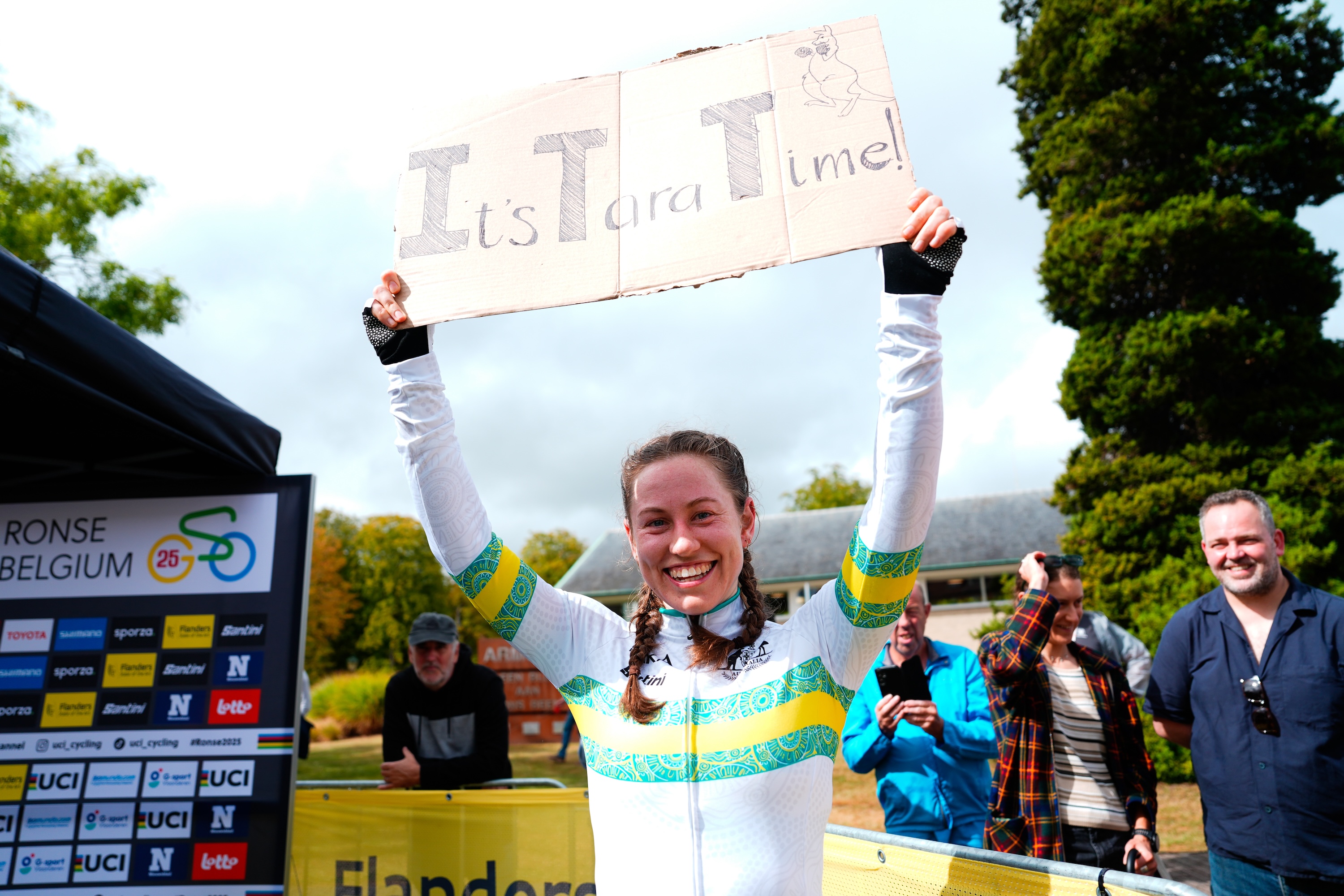
Australia’s Rainbow Factory Is Racing While You’re Asleep. That Is The Problem.
Lauren Parker, Tahlia Clayton-Goodie, Tara Neyland and Emily Petricola have put Australia back in the Para road Worlds medal business in Huntsville. If our cycling culture shrugs because it is not wrapped in Grand Tour noise, that says more about us than them.
The Vuelta is boiling, the transfer market is doing its annual fake-mystery pantomime, and every tech editor with a torque wrench is currently trying to decide whether another prototype derailleur cage counts as news. Fine. Enjoy the circus. But the most uncomfortable Australian cycling story this week is happening in Huntsville, Alabama, where our Para road team is again collecting medals while the broader cycling audience behaves as if the race is being held behind a curtain.
The 2026 UCI Para-cycling Road World Championships run from September 4 to 7 at Cummings Research Park. That timing is brutal for Australian viewers, with Monday’s road races and mixed H1-5 team relay kicking into our night, but do not pretend inconvenience is the same as irrelevance. Australia sent 11 riders. Four of them arrived as dual road and time trial world champions from last year. That is not a feel-good participation squad. That is a weapons-grade high-performance unit wearing green and gold.
Stop Calling This A Niche When The Results Are This Loud
Lauren Parker opened the Australian account properly, winning the women’s H3 time trial over 14.6 kilometres in 23:03.620, averaging 38.0 km/h and beating France’s Anaïs Vincent by 33 seconds. Read that again before filing Para cycling under inspiration content. Thirty-eight kilometres an hour on a handcycle, on an undulating course, at a world championship, in Alabama heat. If that was a road pro doing a solo at the Vuelta, half the internet would be drawing little flames around the power file.
Tahlia Clayton-Goodie then won the women’s C1 time trial in 22:47.220, more than a minute clear of China’s Wangwei Qian. Alana Forster took silver in the women’s C5 time trial behind Heidi Gaugain. Tara Neyland, another rider defending major honours from 2025, took silver in the women’s C4 time trial behind Samantha Bosco, with Meg Lemon fifth. Emily Petricola grabbed bronze in the women’s C3 time trial, only four seconds off Xiaomei Wang’s winning time. These are not crumbs. These are world medals against deep, specialised fields.
Being here is already the win. Everything that follows is a bonus.
That line from Tara Neyland is generous. Too generous, probably. The rest of Australian cycling should not be let off that easily. We have a sport that can find room to argue for three days about sock height, tyre inserts, aero bottles and whether a washed classics rider still has one more contract year in him, yet Para cycling only seems to enter the main room during the Paralympics or when someone wants a wholesome montage before the ad break.
The Bike Industry Loves Adaptation Until It Has To Mean Something
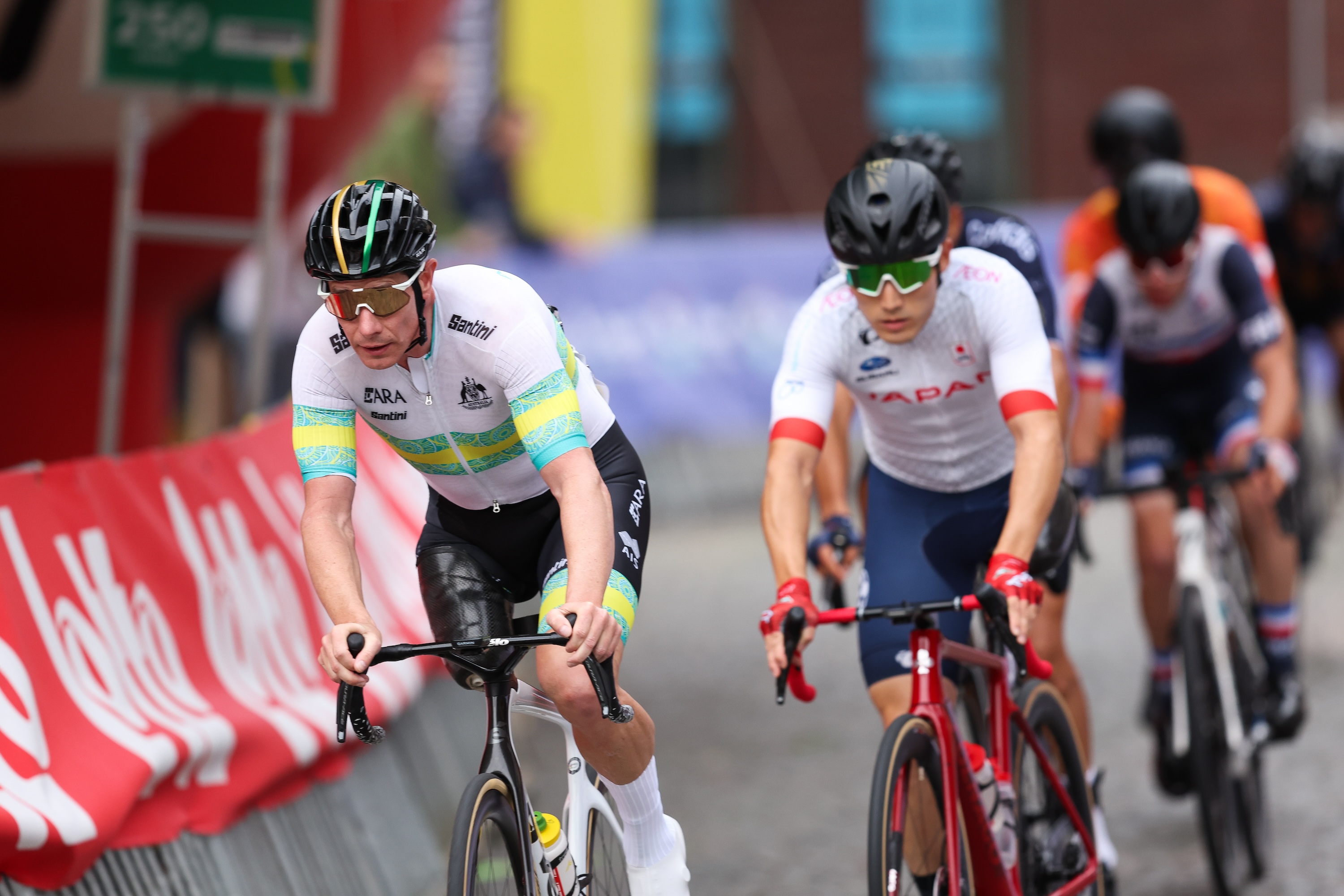
Here is the part that should sting bike shops, brands and the weekend warriors who claim to love clever equipment. Para cycling is one of the most technically interesting parts of the sport. The classifications are not marketing categories dressed up as science. C riders use conventional bikes with modifications. T riders race tricycles. H riders use handcycles. B riders race tandems with sighted pilots. Fit, leverage, drivetrain access, steering, braking, cockpit geometry and cooling are not marginal gains here, they are entry tickets.
And yet the industry mostly treats adaptive cycling like a charity annex, while pouring its loudest money into another limited paint scheme for people who already own four carbon bikes and a neurosis about valve caps. That is not just morally thin. It is commercially dumb. Any shop that can help a rider solve a genuine access problem is building a customer for life. Any brand that can engineer around real bodies instead of wind tunnel mannequins is doing harder, better work than whatever passes for innovation in the latest aero road launch.
Huntsville is not a sideshow. It is a reminder of what performance actually looks like.
The Huntsville course has not been some decorative parade loop. The time trials used laps of a 14.6 kilometre circuit with 74 metres of climbing per lap. The road races are on a 13.8 kilometre loop with 76 metres of elevation each lap. The relay is nine laps of a punchy 2.1 kilometre circuit. Add heat, humidity, multiple equipment platforms and classification-specific race dynamics, and you have a tactical and mechanical puzzle that would make plenty of able-bodied road squads look like they had left the homework in the team van.
Parker backed up her time trial rainbow with bronze in the women’s H3 road race on Sunday, finishing in the same time as winner Anaïs Vincent and Brazilian silver medallist Jady Martins Malavazzi. Grant Allen was tenth in both the men’s H4 time trial and road race. Alex Welsh finished ninth in the men’s H3 time trial and 13th in the road race, only eight seconds off Johan Quaile’s winning time after 69 kilometres. That is bike racing. Not symbolic bike racing. Actual bike racing, with selections, missed moves, timing, suffering and the usual cruelty of the line.
- Para cycling is not a Paralympic-only product. It deserves regular race coverage, not a four-year conscience cleanse.
- Adaptive equipment belongs in serious shop culture. Mechanics should know more than how to say, ‘We don’t really do that here.’
- AusCycling has a genuine medal program in Para road. Sponsors should be fighting to stand near it, not treating it as CSR wallpaper.
- The mixed handcycle team relay matters. Australia won its first medal in the event last year and is back with Grant Allen, Lauren Parker and Alex Welsh.
- Cycling media needs to stop confusing visibility with value. If the audience has not been taught to care, that is on us too.
The Standard Is Higher Than The Spotlight
The laziest response is to say the public only follows what it knows. Of course it does. That is why sports media exists. Nobody was born knowing the difference between a gutter, a lead-out and a false flat into a cross-headwind. We learned because someone bothered to explain why it mattered. Para cycling deserves that same seriousness, not the hushed voice, not the soft piano, not the little patronising pat on the helmet.
There is a harder truth here too. Para racing embarrasses a lot of mainstream cycling’s vanity. It strips the sport back to what we pretend to worship: problem solving, durability, handling, training, nerve and craft. No lifestyle fog machine required. When Parker is averaging 38 km/h in a world title time trial, when Clayton-Goodie is putting more than a minute into a world-class rival, when Petricola is four seconds from gold, the appropriate response is not warm applause from the margins. It is attention.
So yes, watch the Vuelta highlights. Argue about transfers. Drool over the gear launches if you must. But tonight, while Australia is winding down and Huntsville is still racing, the green and gold will be chasing more rainbow jerseys in road races and the mixed relay. If you call yourself a cycling fan and cannot make room for that, the sport is not too niche. Your idea of cycling is too small.