
Australia Has A U23 Rainbow Jersey. Stop Calling It A Surprise.
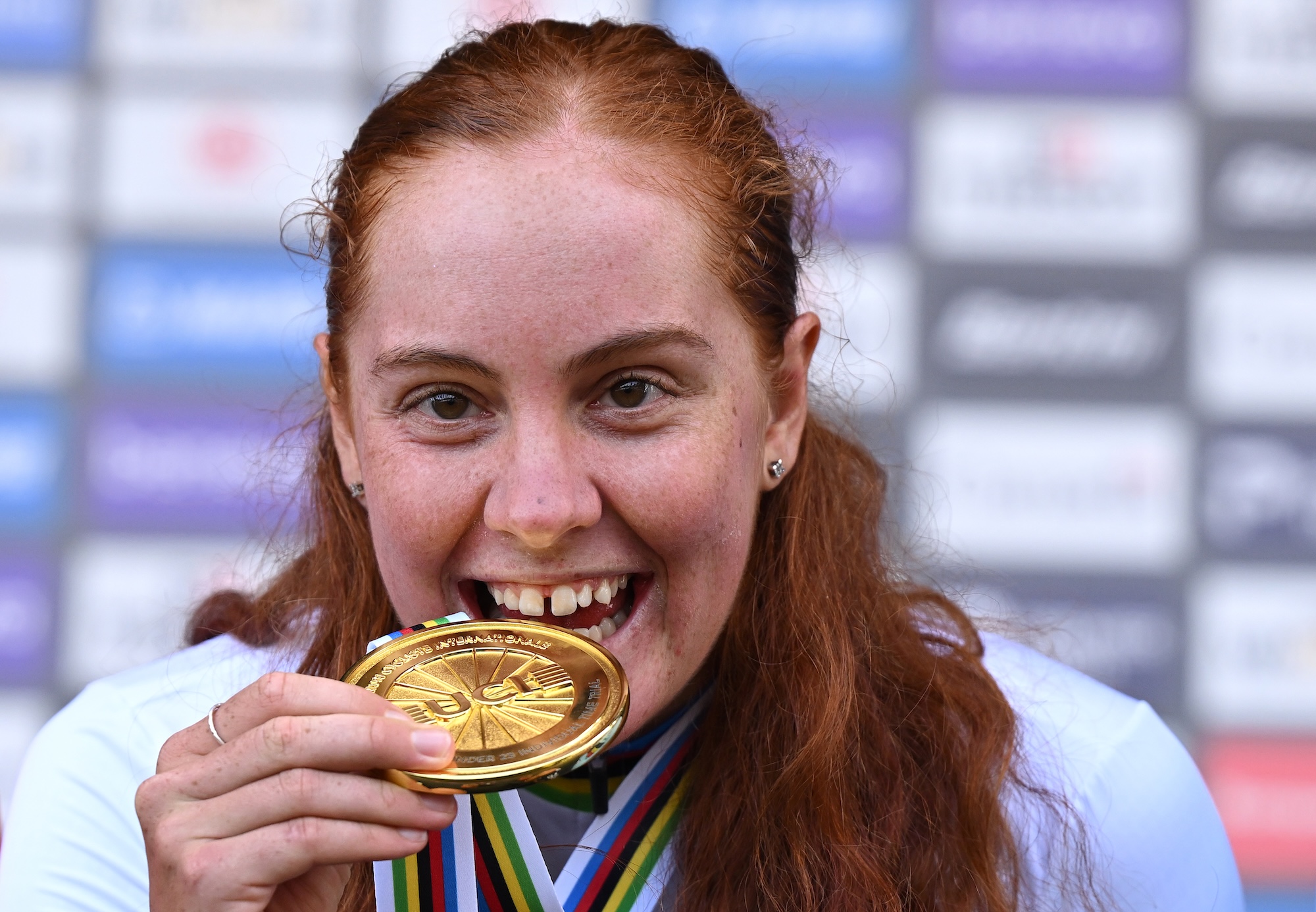
Felicity Wilson-Haffenden did not fall out of the sky into Montréal with a gold medal around her neck. Australia’s under-23 women are now good enough that pretending their success is accidental has become the real embarrassment.
Felicity Wilson-Haffenden won the under-23 women’s time trial world title in Montréal and immediately cycling reached for its favourite lazy word: surprise. It was not a surprise. It was a rider who had already been junior time trial world champion, already worn rainbow bands in the mixed relay, already been cruelly close in Kigali, and already carried the sort of engine Australian cycling too often notices only after Europe has put a contract under it.
On Monday, September 21, she rode 20.3 kilometres in 27:40.72, averaged north of 44kph, and beat Nienke Vinke by 28 seconds. Mackenzie Coupland, another Australian, finished fifth, barely two seconds off bronze. That is not one kid having the day of her life. That is a system, however underfed and awkward, producing riders who can hit a World Championships and make the scoreboard look uncomfortable for everyone else.
The jersey is real. The pathway still looks improvised.
Here is the irritating bit. Australia loves a rainbow jersey once it is already zipped up for the podium photo. We love the montage, the proud press release, the club-name roll call, the sleepy family watching from Hobart or Perth or Mansfield at ridiculous hours. What we are much worse at is admitting that riders like Wilson-Haffenden, Coupland, Talia Appleton, Sophia Sammons, Tully Schweitzer and Emily Dixon need something more serious than applause after the fact.
The under-23 women’s category is no longer a token line on a start list. Montréal is only the second year the women have had a separate under-23 road race at the Worlds, after Kigali finally broke the absurd habit of stapling their title onto the elite race and pretending that was development. On Thursday, September 24, the U23 women get 134 kilometres, 10 laps of the Montréal circuit, and more than 2,600 metres of climbing. In other words, a proper bike race, not a polite waiting room.
A rainbow jersey is not a miracle. It is a receipt.
Wilson-Haffenden’s receipt has plenty written on it. She was fastest when it mattered, she paced a technical course with just enough restraint, and she turned last year’s Kigali pain into a Montréal finish she had apparently been visualising the night before. Her own line about dreaming there was a rainbow at the top is charming. The more important part is that she had the legs and nerve to meet it when the gradient arrived.
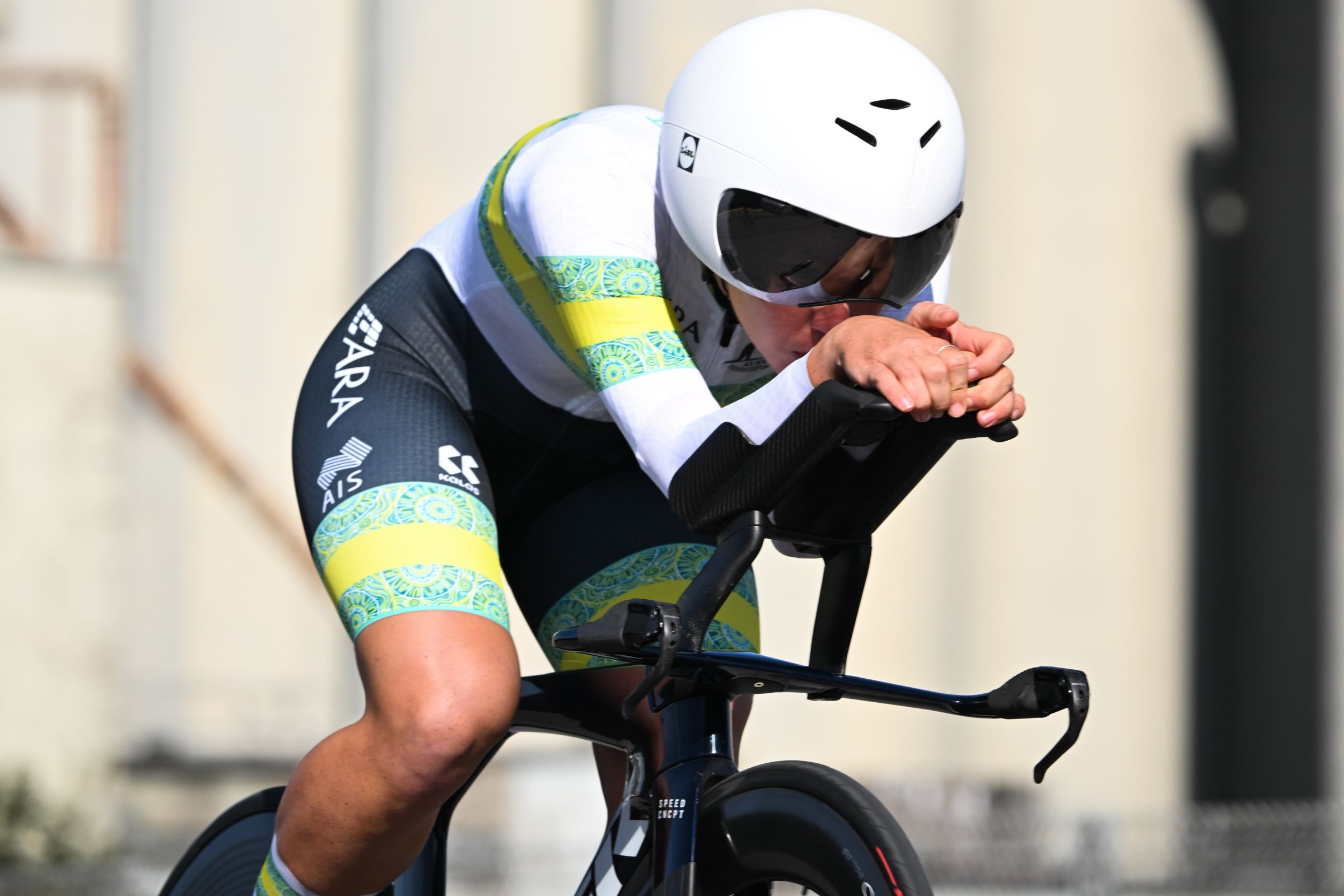
Australia’s women are not depth. They are firepower.
The easy story is Felicity alone. The better story is that Australia suddenly has options. Coupland is not just a support act. She is the elite national road race champion and was fifth in the Worlds U23 time trial. Sammons arrived as under-23 Australian and Oceania time trial champion and ProVeloSuper League winner. Appleton was Australia’s top finisher in last year’s U23 road race. Schweitzer brings an Oceania road title. Dixon gives the squad another card to play.
That matters because Thursday’s road race will not be won by a federation with one rider and a nice Instagram graphic. The Montréal circuit is a wearing, nasty thing, all repetition and punishment. Voie Camilien-Houde comes back again and again like a debt collector. The drag to the line will reward riders who can still produce force when everyone else is bargaining with their calves. Canada has Isabella Holmgren at home. France has Marion Bunel. Belgium has Fleur Moors. The Netherlands has Vinke looking for payback. This is not a development race in the patronising sense. It is a preview of who will be annoying the elite peloton for the next decade.
The lazy Australian habit is to wait until riders succeed overseas, then claim them as proof the local system works.
Sometimes it does. Sometimes it works because families, clubs, state institutes, stubborn coaches and half-broke race organisers patch together a ladder out of whatever timber is lying around. But let’s not confuse survival with design. The women’s under-23 pathway still has fewer race days, fewer headlines, fewer domestic stages that feel like stepping stones to the WorldTour, and far too much reliance on riders getting themselves to Europe before anyone at home decides the project is serious.
That is why Wilson-Haffenden’s gold should make Australian cycling proud and slightly ashamed at the same time. Proud because this is a magnificent ride by a Tasmanian who has converted talent into discipline at terrifying speed. Ashamed because too much of the broader sport will still treat the under-23 women as a pleasant subplot until they are already wearing rainbow bands.
Do not turn the road race into a victory lap.
The worst thing Australia could do now is ride Thursday as if Monday settled the bill. Time trial gold changes the mood, but it does not neutralise the race. If anything, it paints a bigger target on green and gold shoulders. The other nations will know Australia has form, confidence and numbers. Good. That is what serious cycling looks like.
- Back the U23 women’s road program with proper international blocks, not occasional heroic selections.
- Treat domestic women’s racing as talent infrastructure, not calendar garnish.
- Give these riders tactical race days together before they are thrown into Worlds chaos.
- Stop making every Australian woman prove she is exceptional before giving her ordinary professional support.
Wilson-Haffenden has already done the exceptional part. She has three rainbow jerseys and, absurdly, is still only 21. Coupland has shown she can sit close to a world podium. The road squad has enough quality that calling it stacked is not hype, it is description. If Australian cycling cannot build around that, it is not because the talent is missing. It is because the imagination is.
So yes, celebrate the gold. Bite the medal. Post the podium. Enjoy the fact an Australian rider went to Montréal and made a World Championships time trial look like a national selection trial she had already outgrown. But do not insult her by calling it a surprise. The surprise is that it took this long for the sport to give riders like her a stage big enough to show us what was already there.