
Zwift Built A Better Indoor Bike. The Trap Is The Ecosystem.
Zwift Ride V2 looks like a sensible fit update. Look closer and it is the clearest sign yet that indoor cycling is being dragged from bike ownership into platform dependency.
Zwift did not just launch a tidier indoor bike this week. It put a neat orange bow on the direction the whole indoor market is taking, and anyone with a shed full of standards, adaptors and dead apps should be paying attention.
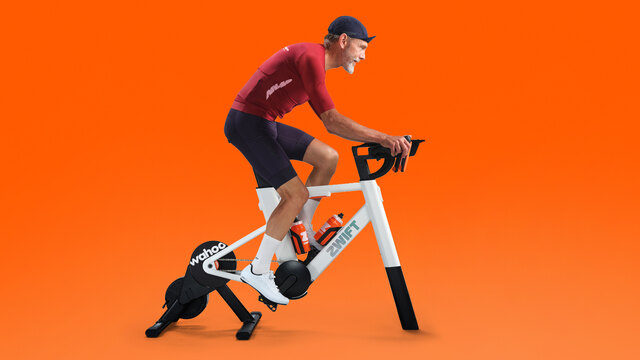
On 9 September, Zwift announced Ride V2, a revised version of its smart-frame-and-trainer setup. The headline improvements are sensible rather than sexy: a more compact frame, more saddle adjustment, handlebars with broader tops, and adjustable cranks covering 160, 165, 170, 172.5 and 175 mm. The claimed fit range now stretches from 4 foot 10 to 6 foot 6, which is the sort of change that actually matters if your household contains more than one rider or one person who has ever had knee pain.
The price, at least in the US, UK and Europe, stays the same as before: US$1,299.99, £1,099.99 or €1,199.99 with a Wahoo Kickr Core 2. That is not pocket money, but compared with the traditional premium smart bike market, it is a properly disruptive number. It also arrives with Zwift’s latest seasonal push: new Watopia roads, a home screen refresh, WHOOP integration, Watt Lock for ERG-style free riding, more in-game bikes and fresh racing formats.
The clever bit is not the crank length
A lot of cyclists will look at Ride V2 and see an improved training tool. Fair enough. The original Ride made indoor cycling less annoying by removing the sacrificial winter bike, the cassette compatibility faff and the awful domestic negotiation where your partner asks why there is a sweaty aluminium road bike permanently installed beside the washing machine.
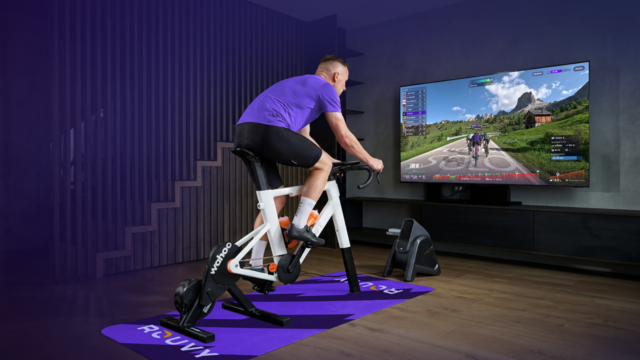
But the important move is not the shorter crank option. It is the tightening loop between hardware, game, training data, identity and payment. Zwift bought Rouvy in April, and by September the two ecosystems are already touching in meaningful ways. Zwift hardware now works with Rouvy. Rouvy has added support for Zwift Cog and Click, virtual shifting from the bars, and a Rouvy edition of the Ride setup. Zwift says both platforms will remain independent. Of course it does. Every acquisition begins with soothing noises about independence. Then one morning your favourite button moves, your subscription changes and the thing you liked becomes a feature tier.
The old turbo trainer was dumb in the best possible way. It did not know your recovery score, your drop balance, your platform loyalty or whether you had renewed annually.
This is where cyclists need to stop clapping like seals just because the product is good. Ride V2 probably is good. The fit updates are overdue and welcome. The Wahoo trainer base is proven. A ready-to-ride indoor setup that suits a shorter rider, a taller rider and everyone in between is a win, particularly for households where the old indoor bike was really just one person’s road bike held hostage by a rear axle.
Compatibility is not the same as freedom
The industry loves the word compatibility because it sounds pro-consumer. Your trainer talks to your app. Your app talks to your watch. Your watch tells the app you are cooked. The app reduces the workout. Your avatar keeps pedalling. Lovely. Except compatibility can also be the first step in capture.
Zwift’s new WHOOP integration is a perfect example. On paper, it is useful. If your recovery score is in the bin, Zwift can adjust recommendations so you do not smash yourself into paste on a day meant for endurance. That is better than the average club rider’s internal coach, which usually says, ‘You’ll be right,’ five minutes before detonating on the first rise.
But it also pushes indoor riding further into a mediated world where the ride is not just effort, route and time. It becomes a managed behavioural product. The platform decides what is appropriate. The wearable supplies the mood ring. The smart trainer enforces the prescription. The cyclist, supposedly the customer, becomes the soft bit between the sensors.
Why Australians should care in spring
Yes, the timing is very Northern Hemisphere. Zwift’s whole September drumbeat is built around autumn, winter and riders retreating indoors while the roads get wet and miserable. Here in Australia, spring is turning up, bunch rides are getting faster, magpies are entering their sociopathic interval block, and half the country is looking at the trainer like it owes them an apology.
That does not make this irrelevant. Australians use indoor setups differently, but we use them plenty. Shift workers, parents, apartment riders, triathletes, bushfire-smoke refugees, heat-dodgers, crash returners and time-poor roadies all know the value of a bike that is ready in five minutes and cannot be ruined by a tradie in a ute. Indoor riding is no longer just a winter punishment. It is infrastructure.
And once something becomes infrastructure, ownership matters. If your indoor fitness depends on a frame, a trainer, a shifting protocol, a subscription, a software identity, a racing category and a data-sharing chain, then you do not simply own a bike. You inhabit a system. That system can improve quickly, which is exciting. It can also change terms, bury rivals, lift prices or strand hardware, which is less exciting unless you enjoy paying rent on your own legs.
The bike industry has seen this movie
Cyclists are not paranoid for worrying about closed ecosystems. We have lived through proprietary seatposts, orphaned headsets, axle standards that bred like rabbits, app-dependent lights, motor systems that need dealer software, and GPS units that behave like sulky printers. The difference with indoor riding is that the lock-in is not just mechanical. It is emotional and social.
- Hardware that works best inside one ecosystem
- Virtual shifting that relies on software support
- Training recommendations shaped by wearable data
- Routes and racing formats tied to subscription access
- Social identity, badges and history that discourage leaving
That is why Zwift’s Rouvy move matters more than the Ride V2 spec sheet. Rouvy was the place riders went when they wanted real roads instead of neon lava. It had a different feel, closer to reconnaissance than arcade. Zwift buying it was not just a competitor being absorbed. It was the market leader buying an alternative imagination of indoor cycling.
To be fair, the early integration is not anti-rider. If you already own Zwift hardware and can now ride Rouvy properly, that is useful. If Rouvy users get better hardware support, that is useful too. The problem is not today’s convenience. It is tomorrow’s leverage.
Buy the good product, but keep your eyes open
Would I recommend something like Ride V2 to the right rider? Absolutely. If you want a clean indoor setup, share a trainer with another person, hate drivetrain faff, and actually use Zwift or Rouvy consistently, it makes more sense than pretending your rim-brake race bike from 2014 is a dedicated training appliance. Adjustable cranks as standard are not marketing fluff. Fit range is not fluff. A lower-cost smart bike that normal people can assemble is not fluff.
But do not confuse a better product with a healthier market. Zwift is not a charity with handlebars. Garmin has bought TrainingPeaks and TrainHeroic. TrainingPeaks had already absorbed indieVelo into TrainingPeaks Virtual. Strava has pushed further into coaching. The serious money is not chasing your rear derailleur. It is chasing the recurring relationship with your training life.
That is the real story this week. Not that Zwift made its indoor bike fit more bodies, although good. Not that Watopia gets more roads, although the faithful will grind every badge before breakfast. The story is that the indoor bike is becoming less like a bicycle and more like a console, gym membership, coach, race licence and data broker rolled into one.
Cyclists should demand the boring stuff now: clear app compatibility, replaceable parts, open standards where possible, honest subscription terms, exportable ride history and hardware that does not become landfill when a boardroom discovers a new revenue model. If the industry wants our garages, spare rooms and credit cards, it can start by treating indoor riders as owners, not captive avatars.
Ride V2 looks like a better bike. The question is whether the next version of indoor cycling lets you ride away when you feel like it.