
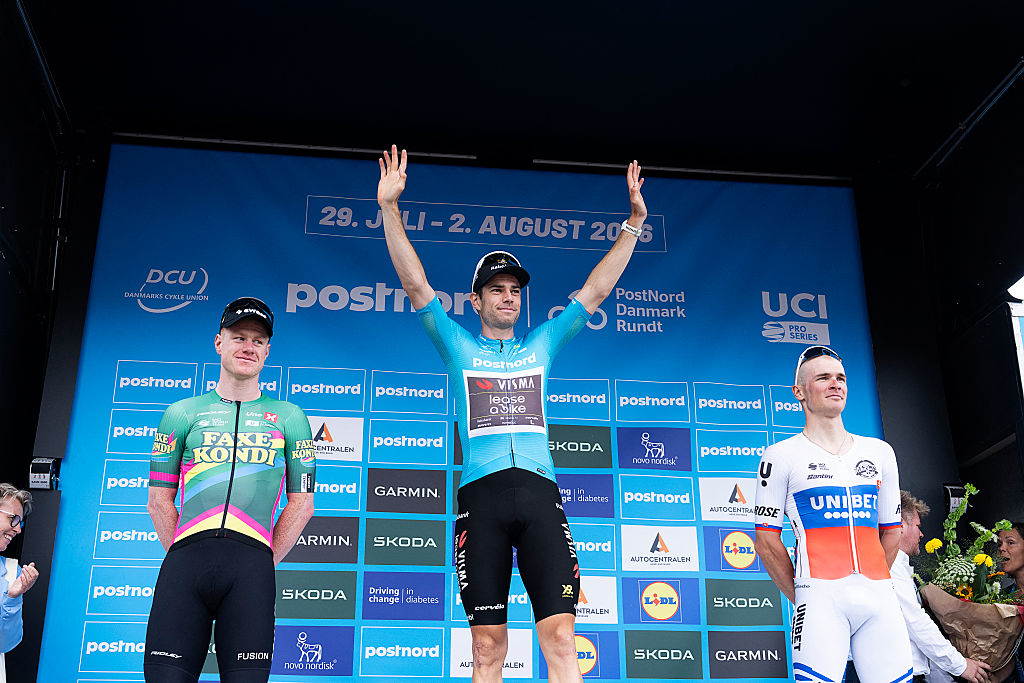
Wout Van Aert Just Won The Race Everyone Was Too Busy To Watch
While cycling stared at the Women’s Tour and argued about transfers, Wout van Aert quietly mugged the Tour of Denmark. That is not a footnote, it is a warning to every rider who thinks July is the only month that matters.
There is a particular kind of cycling fan who goes into hibernation the moment the men’s Tour de France podium is packed away. They have exhausted themselves posting about watts, transfers, salary caps and whatever aero sock scandal briefly made them feel alive. Then August arrives, the racing continues, and they act as if anything outside France is a criterium behind a sausage tent.
Bad news for them. Wout van Aert just won the Tour of Denmark, and it was more interesting than half the sleepy prestige nonsense we are told to revere because a chateau happened to be in the helicopter shot. Five days, three stage wins to start, one GC win to finish, and a final podium that said plenty about where Van Aert sits now: not as a tragic nearly-man, not as a luxury domestique, not as an endlessly memed Swiss Army knife, but as a rider who can still turn a mid-calendar race into his personal workshop test.
Denmark Was Not A Comeback Ride. It Was A Hostile Takeover.
Van Aert came into the race after being kept out of the Tour de France by an infected elbow wound, which sounds like the sort of grim cycling detail that should come with a smell warning. He returned in Aalborg on 29 July, hit the deck in a mass crash, bridged across to the winning move on a hilly circuit, and still won the sprint. That is not easing back in. That is kicking the door open with your cleat covers still on.
Stage 2 was even more annoying, if you are Australian. Jensen Plowright, riding for Alpecin-Premier Tech, looked to have pinched the win in Skive. Then the photo finish did what photo finishes do best, which is ruin someone’s afternoon with forensic cruelty. The result was reversed, Van Aert got the stage, and Plowright was left with the kind of second place that feels like being charged rent for someone else’s house. For a young Australian sprinter, it was still a serious ride. For Van Aert, it was evidence that even his ugly wins have polish.
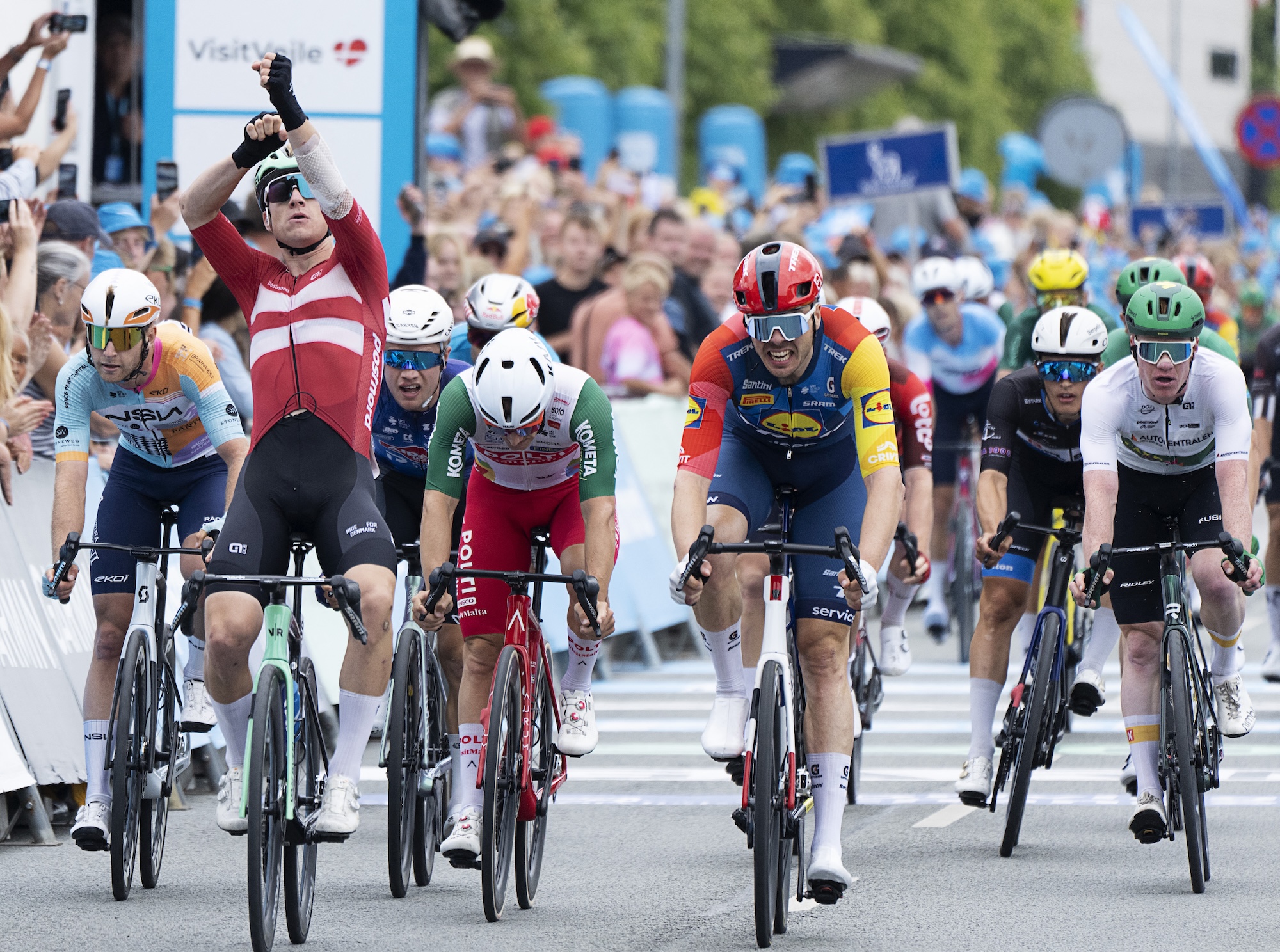
Then came Stage 3 to Vejle, wet, hard and exactly the sort of day where the peloton’s marketing categories dissolve. Is Van Aert a sprinter? A classics rider? A time triallist? A cyclo-cross mutant accidentally issued a road licence? Yes. He rode the finale as if the answer was boring and won again, this time uphill, extending his lead while his rivals got a reminder that versatility is not a vibe. It is a weapon.
The peloton keeps trying to file Van Aert into a neat drawer. He keeps riding like the whole toolbox is his.
Stop Treating August Like Cycling’s Hard Rubbish Collection
The great lie of modern road cycling is that everything after the Tour is either transfer theatre, training for Worlds, or rehabilitation content. Denmark proved otherwise. The racing was twitchy, tactical and weirdly intimate, with WorldTour engines dropped among ambitious ProTeams, national squads and local riders who absolutely did not turn up to admire a Belgian celebrity.
That mixture matters. The sport spends too much time pretending it wants unpredictability, then ignores the races where hierarchy gets messy. In Denmark, Visma-Lease a Bike could not simply ride the whole thing like a grand-tour train. They had to deal with small teams throwing elbows, breaks going long, wet circuits, nervous crosswind zones and sprint finishes that looked like everyone had agreed on a plan and then immediately forgotten it. That is cycling. Not every race needs a mountain deity doing altitude-camp mathematics on a 12 per cent ramp.
And Yes, The Australian Angle Stings
Plowright’s near miss should bother Australian cycling in the best possible way. Not because he failed, but because he was close enough to make the result hurt. We spend a lot of time demanding Australian GC messiahs, then underappreciate riders who can survive chaos, read a finale and throw a bike at the line against one of the most complete racers of the century. Sixth on the final stage and second by a sliver earlier in the week is not a press-release triumph. It is a reminder that sprint craft still matters, and that the next Australian win in Europe may come from someone who can surf carnage better than they can recite altitude numbers.
- Van Aert’s elbow problem did not blunt his explosiveness, at least across short, violent efforts.
- Visma still has one of the few riders who can win without the race being designed for him.
- Jensen Plowright is close enough to the pointy end that Australian fans should stop acting surprised when he appears there.
- The Tour of Denmark deserves more respect than being treated as a post-Tour recovery ride with Danish pastries.
- August racing is not filler. It is where tired riders, hungry riders and overlooked riders finally collide.
Van Aert Still Refuses To Be Convenient
This is the thing about Van Aert. He irritates tidy analysis. If he wins Roubaix, he is a Monument man. If he hauls a GC leader through a mountain stage, he is the world’s most overqualified domestique. If he wins a sprint, he is suddenly a sprinter again. If he misses July, the discourse starts quietly putting him in the nostalgia cabinet, beside old yellow jerseys and those horrible team-issue sunglasses we all pretended looked good.
Denmark should pause that nonsense. He has not become smaller because he missed the Tour. If anything, the race showed the value of not measuring every rider by how useful they are to someone else’s July campaign. Van Aert winning a stage race is not the same as him winning a grand tour, spare me the pub argument, but it does prove that a rider with his range can still own a week outright. No caveat required.
The final day went to Rasmus Søjberg Pedersen after a crash-marred sprint, while Van Aert rolled in safely enough to seal the overall ahead of Lukáš Kubiš and Henrik Pedersen. His finishing time was 19:22:23, with Kubiš at 21 seconds and Pedersen at 28. Numbers like that look clinical on a results sheet. The race itself was anything but.
The Lesson For Bike Racing, And For The Rest Of Us
Cyclists love pretending we value depth. We say we admire craft, resilience, versatility and proper racing instincts. Then we ignore anything without a yellow jersey, a cobbled Monument plaque or a gravel influencer’s drone reel. Denmark was a useful slap. It reminded us that form is not a press conference, recovery is not a social post, and a race does not need to be enormous to reveal something true.
Van Aert did not rescue his season in Denmark. That would be too neat, and frankly too insulting. He already had the pedigree. What he did was remind the sport that his best trick is not winning from every kind of finish. It is making every kind of finish feel legitimate once he has won it.
So yes, watch the Women’s Tour. Watch the transfer market if you must, though half of it is just agents jingling keys at journalists. But do not sleep through the rest of the calendar and then complain the sport feels predictable. Wout van Aert just turned a Danish August week into a statement. If you missed it, that is not cycling’s problem. That is yours.