
Why Melbourne Cyclists Are Hopelessly, Beautifully Obsessed With Café Stops
In Melbourne, the café stop is not a break from the ride. It is the ride’s courtroom, confession booth and finish line, and frankly, the city’s cycling culture would be poorer without it.
Melbourne cyclists are not obsessed with café stops because they are soft. That is the lazy ute-comment-section diagnosis. They are obsessed because the café stop is where Melbourne cycling actually happens. The ride may be on Beach Road, Yarra Boulevard, the Capital City Trail, the Dandenongs or some gravel ribbon out west, but the culture is made afterwards: helmet hair steaming, cleats clacking, someone lying about their watts, someone else pretending they did not get dropped before Mordi.
This city has built a strange and excellent bargain with the bike: we will tolerate the rain, the tram tracks, the magpies, the murderous patience-testing of hook turns and the occasional tradie telling us to “pay rego”, provided there is a flat white at the end. That is not a weakness. It is civilisation in carbon shoes.
The café stop is Melbourne’s unofficial club constitution
Look at how the city’s actual ride culture is advertised. Birrarung Cycling Club’s regular rides are not coy about it: Tuesday, Wednesday and Thursday rides are followed by coffee; Saturday bunches end at a café. The Cappuccino Club, yes, Melbourne has a club literally named after the post-ride beverage, describes itself as a recreational cycling club united by a “love of cycling & coffee” and traces its history back to 1987. This is not a fad invented by Instagram gravel bros with moustaches and frame bags. It is institutional memory in a demitasse. (birrarungcc.org)
The café stop solves the problem every cycling city faces: how do you turn an individual endurance habit into a community? Racing does it with numbers pinned on. Commuting does it badly, mostly by traumatising people together at intersections. Melbourne does it with a table for six becoming a table for twelve, a half-hour debrief becoming a friendship, and a new rider learning that the bunch is not just about holding a wheel, it is about being invited to the next one.
Coffee is not fuel. It is sorting hat.
Melbourne’s broader coffee scene gives cycling’s café fixation unusually fertile soil. The city’s espresso culture is tied to post-war southern European migration, then supercharged by the more recent rise of micro-roasteries, single-origin beans and independent cafés. Roadbook’s 2025 Melbourne coffee guide calls the city’s coffee love a cliché “embedded in truth” and notes that bad coffee is now rare if you know your neighbourhoods. That matters because cyclists are snobs. We will spend five grand saving 400 grams, then pretend the difference between a burnt latte and a proper flat white is a moral issue. (roadbook.com)
The Melbourne café stop is where the ride’s real classifications are decided: who pulled turns, who wheelsucked, who overdressed, who underfuelled, and who is absolutely buying the next round because they attacked over the top of Kew Boulevard like a goose.
And here is the thing non-cyclists miss: the stop is not laziness interrupting athleticism. It is the reward mechanism that keeps people riding through winter. You can sell interval plans, waxed chains and aero socks all day; nothing gets a normal adult out of bed at 5.45am in July like knowing there will be a hot cup and public character assassination at the end.
The bike shop café is the new town square, sometimes brilliant, sometimes insufferable
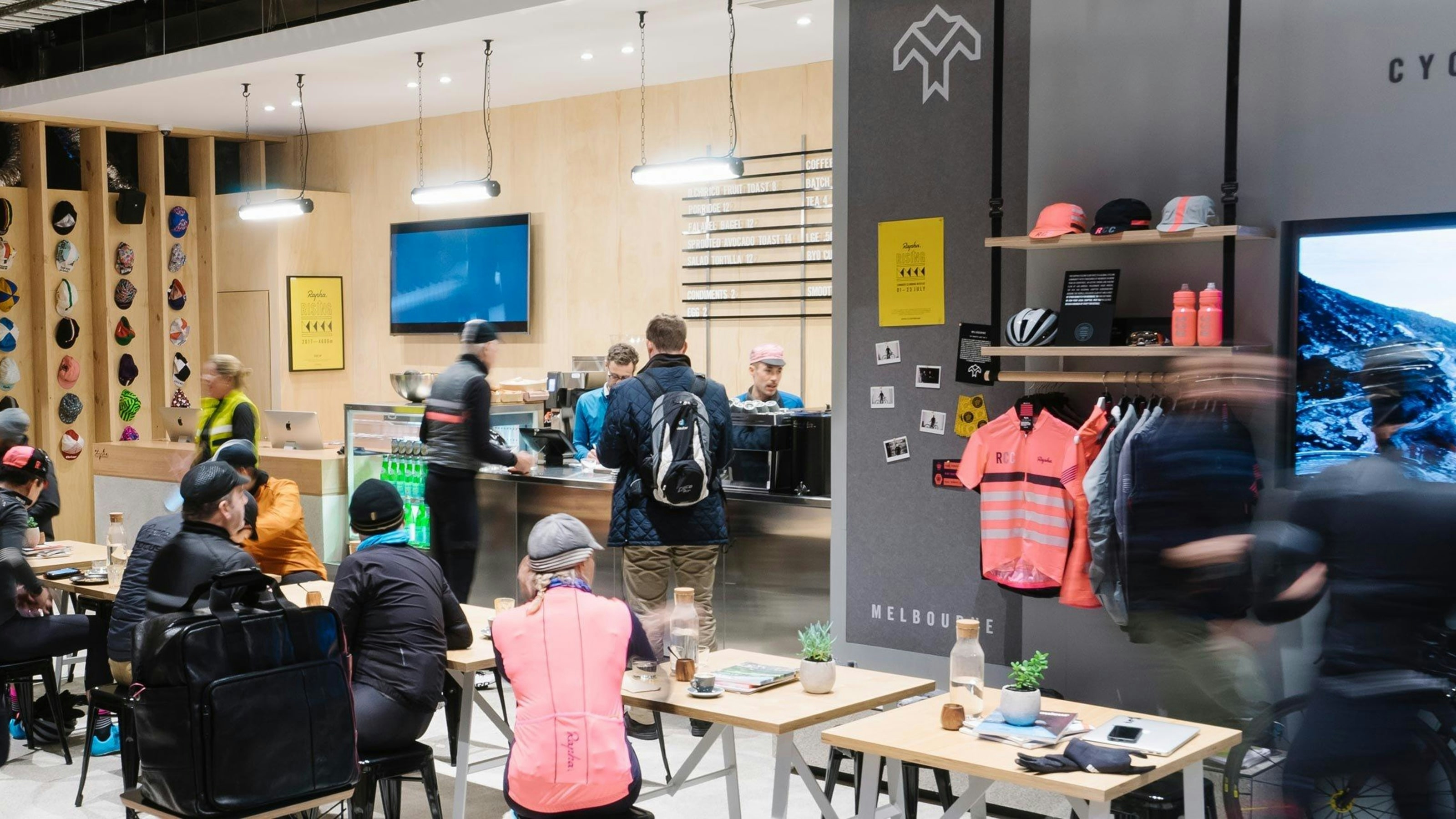
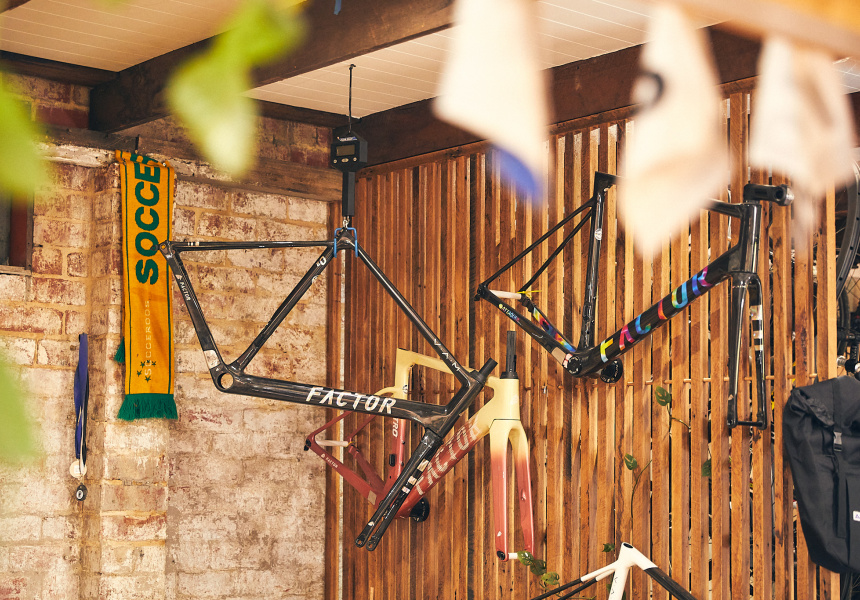
Melbourne did not invent the bike-shop café, but we have embraced it with religious intensity. Velo Espresso at Velo Rapport in Ormond pairs servicing with coffee and scones, and Broadsheet reported that groups of cyclists regularly mix with locals around the communal table. À Bloc in Prahran was described years ago as a “lycra-loving social hub” where bikes and coffee combine. Rapha Melbourne, at 32 Guildford Lane, explicitly positions itself as a home for open group rides, events, coffee and watching cycling on the big screen. (broadsheet.com.au)
I can already hear the anti-Rapha faction muttering into their bidons. Fair enough. Some clubhouse culture can feel like a $280 jersey cosplaying as inclusivity. But dismissing these places entirely is lazy. A good cycling café lowers the barrier between “I ride a bike” and “I belong somewhere”. A bad one just sells espresso to people who confuse expensive socks with personality.
Rapha is at least honest about the model: its Clubhouse Cafes page says coffee is integral to cycling culture and frames cafés as the heart of its clubhouses, where riders follow the Spring Classics and grand tours. Its RCC benefits even list complimentary coffee with your ride. That is capitalism, yes, but it is also an accurate diagnosis of the sport. Cycling has always run on ritual, gossip and tiny cups. (content.rapha.cc)
Right now, the café is also where the season gets argued into shape
As of 28 June 2026, Melbourne riders are about to enter prime café-debate season. The Tour de France starts in Barcelona on 4 July with a team time trial, and the Australian angle is hotter than usual: Cyclingnews reported this week that Melbourne-based MAAP is producing limited-edition Tour kits for Jayco AlUla and Liv AlUla Jayco. That means every decent cyclist café in town is about to become a tribunal on whether the kit is genius, ghastly or both. (letour.fr)
Then there is Around the Bay, locked in for Sunday 18 October 2026, with routes from family-friendly options through to the 220km Classic. It remains Melbourne’s grand mass-participation rite: thousands of riders, variable skill levels, too much optimism, not enough chamois cream, and at least one person at the café afterwards declaring they are “never doing that again” while already checking next year’s date. (raceroster.com)
The café stop also keeps bunch culture from becoming feral
Melbourne bunch riding has always had a split personality: beautiful when smooth, obnoxious when it mistakes public roads for a closed circuit. Monash University’s review of bunch riding notes that weekend on-road cycling is mainly about training, fitness and shared experience, but also records the messy reality of fast groups, informal organisation and safety concerns. The café stop, oddly enough, is part of the safety valve. It is where riders are absorbed into norms: hold your line, call hazards, don’t surge like a caffeinated kelpie, don’t half-wheel strangers, don’t be the hero who turns a social ride into a coroner’s exhibit. (monash.edu)
The best bunches use coffee as onboarding. The worst use it as a private school common room with nicer eyewear. If Melbourne cycling wants to grow, and it should, the café table needs fewer gatekeepers and more spare chairs. The new rider on an alloy bike deserves the same welcome as the bloke on the superbike who says “easy roll” then averages 38.
Infrastructure gets you there; coffee makes you come back
Melbourne’s café obsession is also a map. Beach Road has its rituals. The inner north has its Clifton Hill, North Carlton, Westgarth and Collingwood loops. The west is getting more compelling too: the Dixon Veloway opened in December 2025 as a 2.5km separated route from Footscray toward the city, removing six road crossings and giving riders a rare taste of infrastructure that treats bikes as transport rather than an afterthought. (bicyclenetwork.com.au)
But infrastructure alone does not create culture. Paths move bodies; cafés hold stories. A protected lane may get a commuter into the CBD, but the café is where that commuter becomes the person who signs up for a gravel ride, buys a second-hand steel roadie, volunteers for a club session, or finally learns that “no-drop” should mean no-drop, not “we’ll wait after the climb if we remember”.
- It turns training into belonging, especially for newcomers who do not yet know the unwritten rules.
- It gives roadies, gravellers, commuters, e-bike riders and shop rats a neutral zone where the bike is the passport.
- It rewards consistency through winter, when motivation is mostly rain radar and spite.
- It creates accountability: ride like a menace and someone will tell you before the second piccolo.
- It lets Melbourne do what Melbourne does best, turn a simple pleasure into a mildly competitive art form.
So yes, Melbourne cyclists are obsessed with café stops. Good. We should be. The café stop is where the performance fetish gets humanised, where the loner finds a bunch, where the bunch remembers it is not a race unless there is a number on, and where the city’s cycling culture renews itself one over-extracted argument at a time.
Ride hard. Stop properly. Buy your own coffee. And if you sprint for the sign on a social ride, at least have the decency to shout the table.