
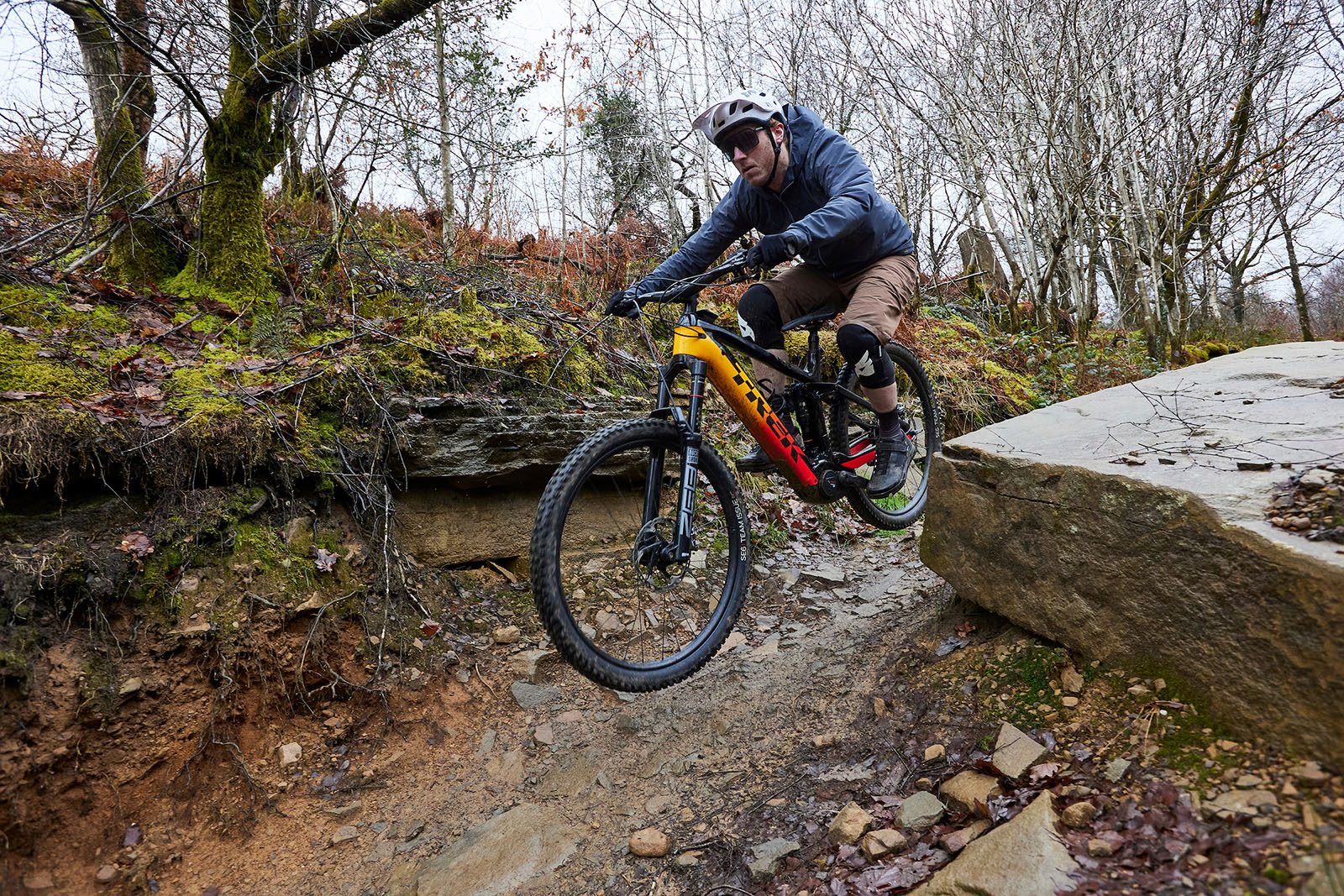
Trek Just Put A Speed Limit On The E-MTB Arms Race. About Time.
Trek has blinked first in the e-MTB horsepower war, and good. The future of electric mountain bikes was never going to be won by making them more motorbike-adjacent.
Trek has done something the e-bike industry usually treats like a flat tyre at a product launch: it admitted that limits matter. On 27 July 2026, the Wisconsin giant published a voluntary speed standard for the United States, saying its electric mountain bikes will be Class 1 only, pedal assist up to 20mph, and no throttle. Not 28mph because the brochure looks better. Not a cheeky firmware wink. Not a mode hidden behind an app and a user agreement nobody reads. Just pedal assist, capped, on trails.
This will be sold by some as brand caution, regulatory positioning, or a boring American classification story. It is bigger than that. Trek has looked at the e-MTB arms race, the online thirst for more torque, more peak watts and more speed, and worked out the obvious: trail access is the product. Not the motor. Not the battery. Not the suspension kinematics. Access. Lose that and your $12,000 electric trail bike becomes a very expensive garage sculpture with Bluetooth.
The industry finally said the quiet part out loud
For years, the respectable end of the e-MTB market has tried to keep a clean line between proper pedal-assist mountain bikes and the throttle-equipped, high-powered chaos machines being punted online as bicycles. The problem is that land managers, walkers, horse riders and council risk officers do not always see the distinction. They see speed. They see weight. They see conflict. They hear the word e-bike and picture the worst thing that buzzed past them on a shared path.
That is unfair to the rider on a legal pedal-assist e-MTB grinding up a fire road to get another descent before sunset. It is also reality. Cycling is brilliant at arguing definitions inside its own little shed. The outside world only cares whether people feel safe and whether the trail surface is being chewed into porridge.
The e-MTB debate is not really about motors. It is about whether mountain bikers can be trusted to police themselves before councils, insurers and land managers do it for them.
Trek’s move is blunt because it has to be. In the US, the brand says its electric mountain bikes will stick to Class 1 assistance: pedal assist only, no throttle, and 20mph maximum assisted speed. Its pavement-oriented e-bikes can still live in the 20mph or 28mph world where permitted, which is where the hypocrisy police will begin warming up. Fine. There is a difference between a road or commuter e-bike mixing with traffic and an e-MTB threading shared dirt, blind corners and volunteer-built singletrack.
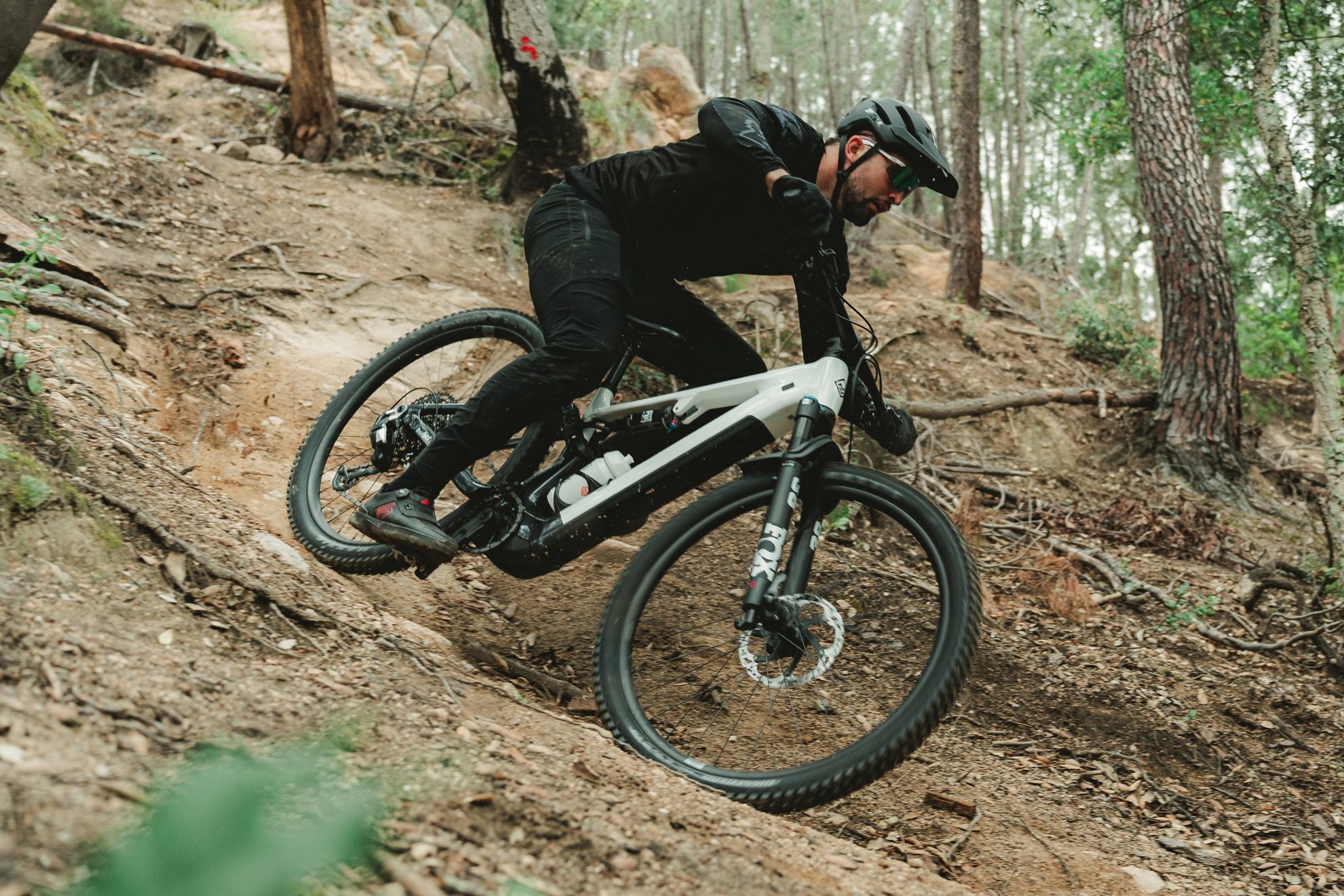
Australia should pay attention, not gloat
Australians can be smug here for about five seconds. Our legal e-bike settings are already tighter in the way most riders understand them: pedal-assist e-bikes are generally capped at 250 watts continuous rated power and assistance up to 25km/h, with anything beyond that drifting towards the motor vehicle bucket. AusCycling’s mountain bike technical regulations also define E-MTB assistance around that 25km/h ceiling. Queensland sharpened its public-use rules from 1 July 2026, with devices needing to meet the European EPAC standard or be verified by 28 February 2027, and police powers aimed at the illegal high-power stuff.
But do not mistake regulation for culture. Anyone who rides shared paths in Brisbane, Melbourne, Sydney or Perth has seen the problem: the legal bike shop e-bike is not the villain, but it is being judged in the same public court as the delivery missile with a dead throttle, a fake compliance sticker and brakes that sound like a possum in a ceiling fan. Mountain biking has the same exposure. Derby, Maydena, Stromlo, Nerang and every local club trail network depend on permission. Permission is fragile. It takes years of working bees to build and one viral near-miss video to poison.
The boring limit is the clever limit
Here is the part that will upset the horsepower crowd: a capped e-MTB is still ridiculously capable. If you cannot have fun on a modern pedal-assist trail bike limited to sensible speeds, the problem is not the bike. It is your imagination, or your Strava addiction, or the fact you secretly wanted a motorbike but did not want to buy boots.
The genuine technical race should not be about making trail bikes quicker under assist. It should be about lighter systems, better battery longevity, quieter motors, safer charging, more natural torque delivery, repairable electronics, and replacement parts that do not require a dealership séance. That is where e-MTBs become better bicycles. More speed is the laziest engineering brief in the room.
- If you want trail access, stop letting the worst products define the category.
- If a bike needs a throttle to be exciting, it is not solving a mountain biking problem.
- Peak power bragging is marketing for people who confuse acceleration with skill.
- The shop floor needs clearer language, because customers deserve to know the difference between legal assistance and future landfill with pedals.
- Self-regulation is not noble. It is what you do when the alternative is a blanket ban.
This is not anti e-bike. It is pro mountain biking.
The stupidest response to Trek’s decision is to frame it as e-bike surrender. It is the opposite. It is a defence of e-MTBs as bicycles. The category has brought older riders back into the bush, kept injured riders connected to their mates, allowed more laps in less time, and made brutal climbs less of a membership test. That is all good. Anyone pretending e-MTBs are not part of mountain biking now is still yelling at disc brakes in 2012.
But the category only survives if it can look land managers in the eye and say: these are bicycles, they are pedal-assisted, they are limited, they are appropriate for this trail. Once the industry starts mumbling about unlock modes, throttle exceptions and regional firmware, it loses the argument before the first environmental assessment is printed.
Trek is not doing this out of pure moral sunshine. Big companies do not usually wake up brave, they wake up liable. But motive matters less than signal. A major brand has drawn a line and invited others to stand on the sensible side of it. Specialized, Giant, Canyon, Cube, Merida, Norco, Focus, Santa Cruz and the rest should not need a regulatory bonfire to follow.
The next e-MTB war should be fought over ride feel, reliability and access, not who can sneak closest to a dirt bike while keeping a pair of cranks for legal camouflage. Trek has put a speed limit on the argument. Good. The riders who actually care about trails should be relieved, even if the comments section is already revving.