

The UCI Just Banned Aero Snack Bras. Good. Now Stop Pretending Your Garmin Is The Danger.
From 1 July, the UCI has outlawed front jersey pockets stuffed with gels for aero gain. It is right to kill that nonsense, but its next target, the bike computer, shows cycling still confuses looking busy with making racing safer.
The funniest thing in cycling today is not another lurid Tour de France special kit or a wind tunnel video with a bloke in white socks pretending he has discovered time. It is the UCI, on Wednesday 1 July 2026, drawing a line through the peloton’s latest tailoring scam: front jersey pockets stuffed with nutrition products that are apparently too awkward to eat but very useful for reshaping a rider into a slightly faster sausage.
From today, pockets on the front of a jersey are banned in UCI road, track, cyclo-cross and mountain bike racing, except for a radio-specific pocket. The timing is deliciously pointed. The Tour de France starts on Saturday 4 July in Barcelona with a team time trial, and before anyone has even clipped in, the commissaires have effectively told the sport: no more pretending your emergency buffet is there for fuelling.
The pocket ban is not the stupid bit
Let’s be honest, the pocket ban is sensible. Not romantic, not heroic, not the sort of thing that will make a kid in Bendigo ask for a race licence, but sensible. If a pocket is positioned where a rider cannot realistically access it at 55km/h, and it is full of gels that mysteriously never get eaten, it is not a pocket. It is a fairing with a barcode.
Cycling has always had a grubby genius for laundering performance gains through innocence. Tall socks are for comfort. Narrow bars are for fit. TT helmets in road stages are for ventilation, apparently. Now a front panel full of Maurten and rice cakes is for nutrition, even though the rider would need the dexterity of a pickpocket octopus to retrieve anything from it while in a crosswind. Give me a spell.
The UCI says the practice changes rider body shape, follows studies showing aerodynamic benefit, and raises fairness and safety questions. That is the rare UCI sentence where the logic actually lands. If kit turns the rider’s torso into a regulated design surface, then the sport has entered costume engineering. At that point, the strongest team is not the one with the best legs, but the one whose clothing supplier can sneak a belly bulge through scrutineering.
A jersey pocket you cannot reach is not storage. It is an aero part pretending to be lunch.
And yes, before the gravel romantics start howling into their moustache wax, this matters outside WorldTour road racing. Once a trick wins on television, it migrates. It lands at gran fondos, local crits, masters racing and eventually the Sunday bunch, where someone with a mortgage, a 360-watt ego and no bottle-handling skills decides he needs a skinsuit with hidden bosom storage for the Port Melbourne loop. That is how nonsense becomes normal.
But the bike computer crusade smells wrong
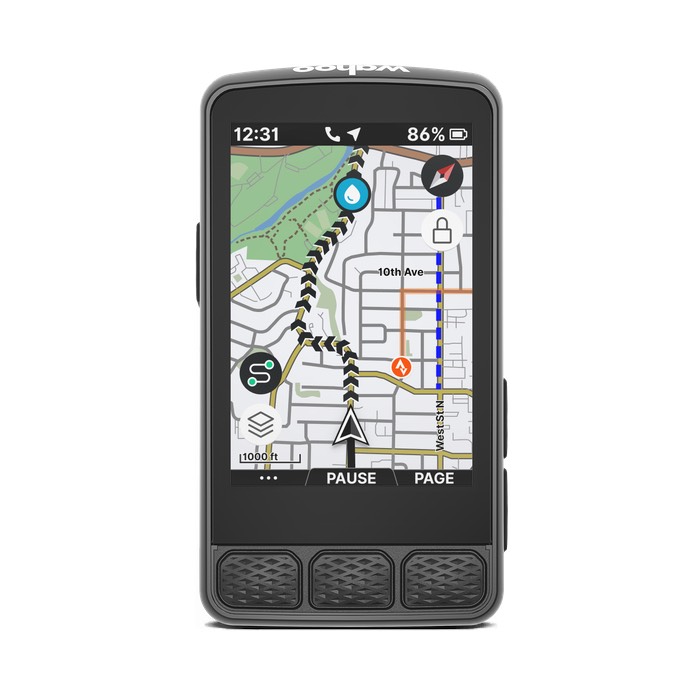
The second half of the UCI’s move is where the governing body starts wobbling like a neo-pro in a tram track. From 1 January 2028, bike computers in professional racing will be limited to 126mm by 71mm. The stated concern is cognitive load, the idea that riders are being fed too much information and that this can contribute to crashes. The UCI is not entirely mad here. Modern head units have become mini cockpits. Power, speed, gradient, wind, nutrition prompts, route warnings, climb profiles, live gaps, radar alerts, messages, Strava ghosts, probably your tax return if you tap deeply enough.
But limiting physical size is a lawyer’s solution to a software problem. A tiny screen can still shout at you. A large screen can show one clean number. If distraction is the enemy, then regulate alerts, pages, race-day data streams and what information teams are allowed to pipe to riders. Do not pretend a rectangle becomes safe because it is 125mm wide instead of 127mm.
Garmin’s Edge 1050, the obvious reference point in this argument, measures under the future limit and already offers a bright 3.5-inch touchscreen, road hazard alerts, GroupRide features, messaging, maps, a speaker and payment functions. Wahoo’s ELEMNT ROAM 3 is sold in Australia with a 2.8-inch display and the sort of mapping interface that would have looked like NASA kit to riders brought up on Cateye computers and vibes. None of this is inherently evil. In fact, for normal riders, commuters, bikepackers and anyone who has been spat out of a bunch in unfamiliar suburbs, it is often brilliant.
The problem is the pro race environment, not the consumer device. A head unit on Beach Road showing you the turn back to Black Rock is useful. A head unit in the Tour peloton, while 184 riders are fighting through a nervous first week from Barcelona towards the Pyrenees, is another voice in an already overloaded cockpit. There are radios in the ear, directeur sportif panic, motos, road furniture, fans, bottles, corners, fatigue and that special Grand Tour anxiety where everyone rides like the road owes them money.
The UCI loves measuring things because measuring looks like governing
This is the pattern. Sock height? Measure it. Bar width? Measure it. Rim depth? Measure it. Fork width? Measure it. Now screens and pockets. The UCI is most comfortable when the safety problem can be attacked with a ruler. Course design, downhill finishes, furniture in the final kilometres, sketchy barriers, convoy behaviour and broadcast motos are harder, messier and more politically annoying. You cannot fix those with a commissaire holding calipers at sign-on.
That does not mean equipment rules are pointless. The sport needs boundaries, otherwise the richest teams will happily turn riders into blended bike-human prototypes and call it innovation. But safety is not an aesthetic code. If the UCI bans front aero pockets because they are fake storage and a real aerodynamic advantage, excellent. If it caps computers because it wants to be seen doing something about crashes, that is theatre.
- Ban race-day data displays that create constant prompts, not just big screens.
- Publish clearer evidence linking specific equipment choices to crash risk.
- Force organisers to meet tougher standards on barriers, traffic islands and final-kilometre furniture.
- Make equipment rules proportional across men’s and women’s racing, rather than punishing smaller riders with one-size-fits-all thinking.
- Stop pretending every safety issue can be solved at the mechanic’s workstand.
For Australian riders, the lesson is simple. Do not read UCI rules as gospel for how your own bike should work. If a bigger computer helps you navigate safely, use it. If your bar width suits your shoulders, good. If your jersey has a normal front pocket for commuting keys, nobody should care. But if you are taping gels to your sternum for the club championship because you saw a WorldTour team do it, perhaps take a deep breath, buy some dignity, and put the food where cycling has always intended it to go: in the back pockets, like a civilised degenerate.
The pocket ban is a win because it calls out cheating cosplay dressed as nutrition strategy. The computer cap is weaker because it attacks the shape of distraction rather than the behaviour of distraction. Cycling does need fewer stupid aero loopholes. It also needs fewer performative rules written by people who seem to think the peloton crashes because a rider glanced at a screen, not because the sport keeps firing them at street furniture like carbon confetti.
So yes, ban the aero snack bra. Good riddance. But if the UCI wants to be taken seriously on safety, it needs to stop measuring gadgets and start measuring courage. The dangerous thing in modern cycling is not always the rider’s computer. Often, it is the governing body mistaking neat regulation for actual responsibility.