
The Tour’s Dumbest Marginal Gain Is Back On Riders’ Faces
Nasal strips are back in the Tour peloton, which is hilarious, ugly, and more revealing than another €15,000 aero bike. Cycling has reached the point where even breathing has a product manager.
The funniest tech story of this Tour is not hidden in a bottom bracket, buried in a wind tunnel PDF, or whispered by a mechanic with chain wax under his nails. It is stuck across riders’ noses like a pharmacy aisle cosplay badge.
Nasal dilators are back. Not back in the way steel frames are “back”, meaning cherished by people with beautiful taste and suspicious lower-back flexibility. Back as in visible across the 2026 Tour de France peloton, where L’Équipe has just given them the full treatment and Cycling Weekly has been asking the obvious question: why are riders taping their noses? Kévin Vauquelin has been spotted with them. Mattéo Vercher too. Victor Campenaerts, naturally, has been an early adopter, because if there is a marginal gain that makes you look like a man who has over-read a science forum, Campenaerts will be there first, probably with a spreadsheet.
Cycling has made breathing marketable
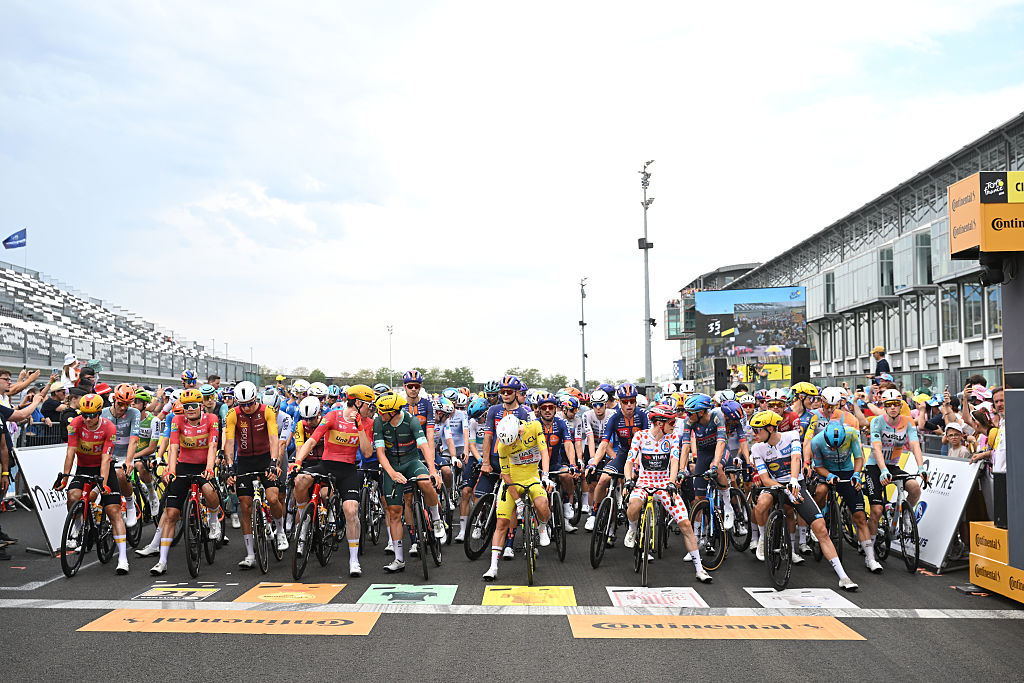
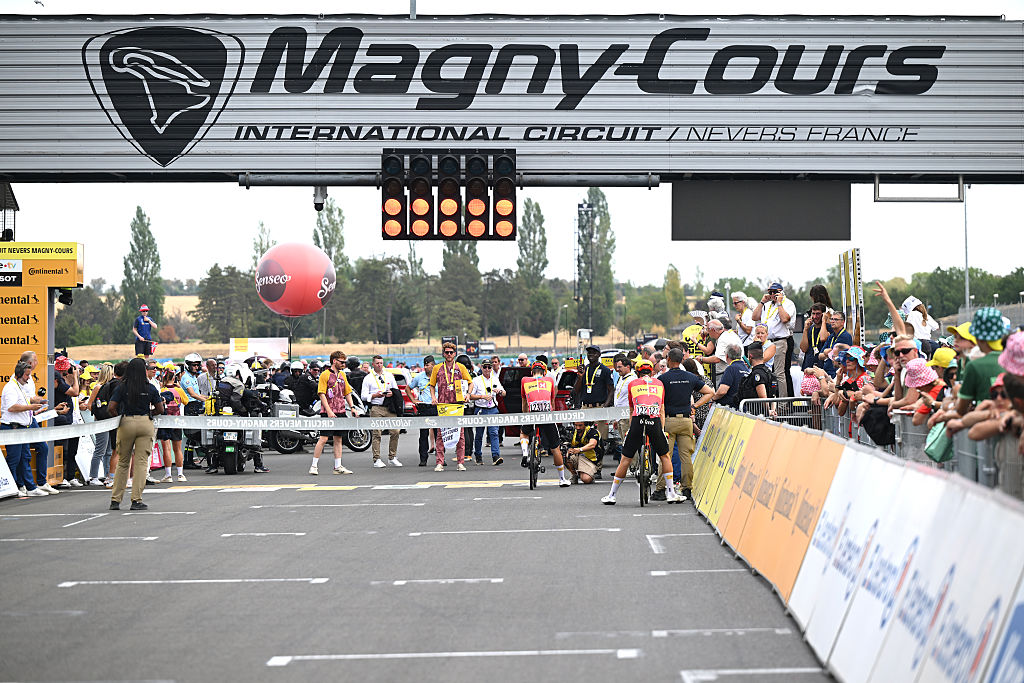
On Thursday 16 July, the Tour rolled from Circuit Nevers Magny-Cours to Chalon-sur-Saône, a stage that started on a motor racing circuit and ended with Tim Merlier taking his third win of this Tour in a bunch sprint marked by another nasty final-kilometre crash. That is modern cycling in one tidy little package: Formula 1 scenery, pharmaceutical-adjacent styling, terrifying speed, and a rider on the podium looking like he has just beaten the world’s fastest checkout queue.
Here is the thing. I am not here to sneer at nasal strips because they look ridiculous. Road cyclists surrendered that moral ground the first time someone paid full retail for white bib shorts. If a rider thinks a bit of plastic on the bridge of the nose helps them settle, breathe, focus, or simply feel less clogged after four hours inhaling French crop dust and diesel fumes from the race caravan, fine. Pro cyclists are paid to be desperate. The problem is not the strip. The problem is what it represents.
The modern cyclist does not want to get fitter. He wants to buy evidence that he is the sort of person who might be getting fitter.
EF Education-EasyPost doctor Jon Greenwell told Cycling Weekly that when riders are working at high intensity and breathing through the mouth, a nasal strip is not going to make a meaningful difference. That is the most quietly devastating sentence in sports tech. It says: yes, you may wear the thing. No, it is not turning your club’s B-grade sprint into Milan-San Remo.
The strip is not science. It is signalling.
The nasal strip is perfect cycling culture because it is visible. Nobody can see your mitochondrial density. Nobody on Beach Road knows whether your threshold has improved or you just found a tailwind. Nobody at the café can tell whether your 30mm tyres are actually faster than your old 28s, unless they are the sort of bore who brings callipers to brunch, in which case please move tables.
But a strip across the nose? That announces commitment. It says you watched the Tour, noticed the pros doing something strange, and decided that by Saturday morning you too would be a laboratory mammal in Rapha. It is the cheapest possible entry into the marginal gains economy. Cheaper than ceramic bearings. Less embarrassing than an altitude tent. Easier than sleeping eight hours and doing your intervals properly.
And yes, bike shops will sell them
Do not pretend the market will resist. Cycling retail has monetised almost every anxiety a rider can have: drag, weight, sweat, tyre pressure, saddle sores, chain friction, carbohydrate timing, sock height, and the haunting possibility that someone in the bunch has a nicer computer mount. A pack of nasal strips is not the corruption of the sport. It is the logical endpoint of it.
- Aero socks worn at 27km/h into a headwind while sitting upright on the hoods.
- A slammed stem on a rider whose hamstrings have not touched daylight since 2009.
- Aero bottles on a bike with three spacers and a saddlebag the size of a kelpie.
- Nasal strips for the final sprint to the pastry cabinet.
- Refusing mudguards because they are not pro, then sitting on the wheel spraying strangers for 80 kilometres.
The pro peloton has always been a bad shopping guide
This is where Australian cyclists should pay attention. We are suckers for imported pro habits, partly because our racing season is upside down and partly because a Melbourne winter bunch ride has just enough suffering to make delusion feel earned. If a Tour rider puts tape on his nose in July, someone in Hawthorn will be wearing it by August. If a sprinter says it makes him feel open and ready, a masters rider in Sydney will be testing it up Akuna Bay while ignoring the fact he had three beers and six hours’ sleep.
The pro peloton is a fascinating place to steal ideas from, but it is a terrible place to steal priorities from. Those riders live in a world where one per cent can be the difference between a contract and unemployment. You live in a world where one per cent is usually less important than pumping your tyres, lubing your chain, eating breakfast, and not attacking into a red light because you once won a C-grade crit in 2018.
That is not anti-tech. I love good equipment. Good tyres change a bike. Good lights save skin. Good shoes can make a long ride feel civilised instead of judicial. A well-fitted bike is not marketing fluff, it is mercy. But cycling has a nasty habit of confusing performance with performance theatre. The nasal strip is theatre with adhesive backing.
Still, I hope they stay
Here is the twist: I am glad nasal strips are back. They are silly, but they are human. In an era of anonymous aero frames, algorithmic fuelling, internal everything, identical helmets, and riders so optimised they look like they were assembled from a position chart, a stupid little strip on the face is refreshingly obvious. It gives us something to argue about that is not another lawyerly UCI equipment clause.
The Tour does not need more invisible marginal gains. It needs more visible weirdness. Give me Campenaerts looking like he has just been unboxed from a sleep apnoea clinic. Give me Vauquelin turning up at sign-on with a face accessory that makes half the peloton curious and the other half smirk. Give me amateur cyclists trying it for one weekend, then quietly discovering that the real limiter was never nasal airflow. It was the engine.
So yes, laugh at the strips. Buy them if you must. Wear one to the bunch ride and cop the abuse like an adult. But do not confuse the sticker for the work. The pros can get away with looking absurd because they have already done the training, the dieting, the altitude camps, the suffering, and the terrifying sprint through Chalon-sur-Saône. The rest of us should probably start with the boring gains first.
Then, and only then, may we tape our faces and pretend to be fast.