
The Tour Knocked At 2am, Then Wondered Why Everyone Was Angry
Jonas Vingegaard’s Tour did not end because of one anti-doping officer with a clipboard. But if cycling wants clean sport, it has to stop treating rider sleep like a disposable bidon.
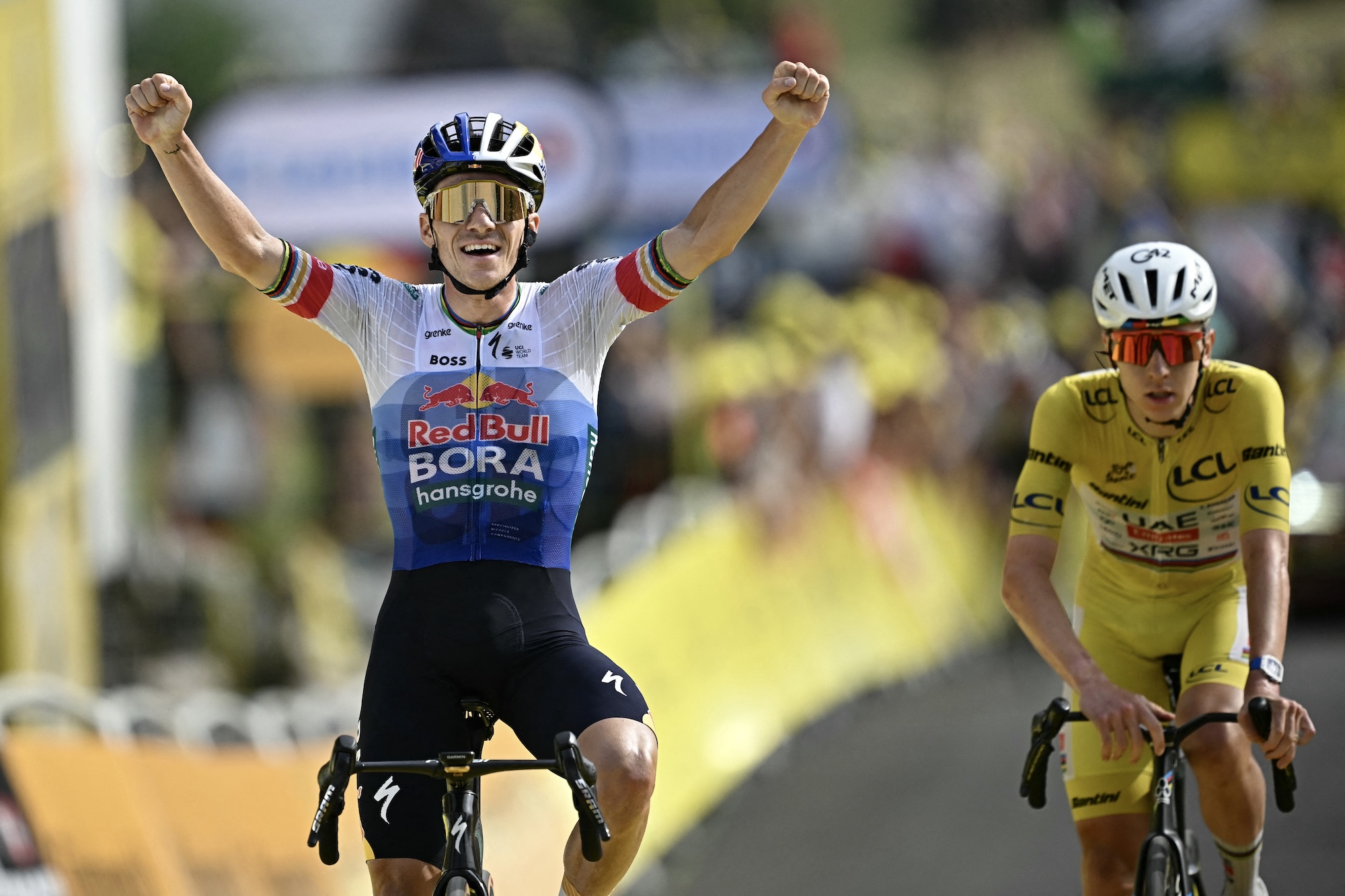
The Tour de France had a perfect sporting headline on Sunday, 19 July 2026. Remco Evenepoel finally won the kind of mountain stage people said he could not win, outsprinting Tadej Pogačar on the Plateau de Solaison after 183.9km from Champagnole. Isaac del Toro rolled in third, UAE tightened its grip on the race, and the final week suddenly had a proper podium fight.
Instead, the race woke up to a different argument. Jonas Vingegaard was dragged out of sleep for an anti-doping control at 2am. Pogačar was tested at 5am. Hours later, Vingegaard crashed on a roundabout exit with about 21km to go, hit the deck, broke his collarbone, climbed into an ambulance, and abandoned a Grand Tour for the first time in his career. If you think those facts are unrelated, fine. If you think they prove the anti-doping test caused the crash, slow down. But if you think a 2am control before a decisive mountain stage is sensible, you have probably never tried to ride hard after a ruined night.
Clean sport is not the enemy. Stupid timing is.
Let’s get the obvious bit out of the way before the comment section starts frothing into its recovery shake. Cycling needs anti-doping. Not soft anti-doping. Not theatre. Not a little wink from the hotel corridor. Proper, independent, uncomfortable, intelligence-led anti-doping. The sport’s past is not a skeleton in the cupboard, it is the cupboard. Anyone arguing riders should be left alone because they are tired has learned nothing from the sport’s most radioactive decades.
The International Testing Agency came into this Tour promising a big operation: hundreds of pre-race out-of-competition tests, around 600 in-competition samples, long-term storage, biological passport work, power-data monitoring, the whole modern clean-sport arsenal. Good. The yellow jersey and stage winner being tested every day is not scandalous. Targeted controls are not scandalous. The scandal is that a supposedly advanced system still seems capable of confusing toughness with cleverness.
Testing riders is essential. Waking a Grand Tour contender at 2am between mountain stages is not bravery, it is bureaucracy with a head torch.
The crash was complicated. The sleep loss was not.
Visma-Lease a Bike did not pin the whole thing on the night knock. Their sports director pointed to a strange roundabout, a motorbike braking, and riders suddenly squeezing through a messy piece of road furniture at speed. That matters. Cycling crashes usually have more ingredients than a dodgy servo pie. Course design, convoy behaviour, fatigue, pressure, team tactics, surface, line choice, all of it goes into the blender.
But that is exactly why sleep matters. Grand Tour riders are not machines being plugged into a wall overnight. Recovery is not optional luxury. It is the only reason they can back up mountain stages, transfers, interviews, meals, massage, physio, team briefings and the daily circus. Evenepoel, who had just taken one of the biggest wins of his career, still used his post-stage oxygen to say the riders’ association should act. Pogačar, hardly a man in need of excuses, said the timing may have played a small part in Vingegaard’s crash, while still accepting that testing is necessary if it proves the racing is clean.

Cycling has become brilliant at measuring everything except common sense
This is the same sport that will spend a winter arguing over whether a rider’s computer mount is 3mm too far forward, then shrug when a Tour favourite gets a 2am hotel visit before a mountain stage. We have wind-tunnel sock panic, carbon lay-up sermons, ketone whispers, tyre-pressure spreadsheets and aero hoods policed like state secrets. Yet the human operating system, the tired bloke actually steering the bike at 70km/h through traffic islands, is still treated as an inconvenience.
And yes, this applies beyond the Tour. Australian high-performance riders know the deal too. If you are in a testing pool, your life is not entirely yours. You file whereabouts. You live with the doorbell anxiety. You explain where you are when normal people are still deciding whether to ride Beach Road or sleep in. That surveillance is part of the bargain elite sport has made with credibility. But bargains can be renegotiated without handing dopers the keys to the team bus.
- Keep surprise testing, including targeted testing, because predictable anti-doping is basically an invitation card.
- Treat the deepest sleep window as protected unless there is a clearly documented, exceptional reason.
- Use post-stage and early-evening controls more aggressively, especially for the jersey leaders already obliged to appear after the finish.
- Publish clearer protocols for night testing so riders, teams and fans know this is not random midnight theatre.
- Make rider sleep part of safety policy, not a wellness buzzword for team press releases.
Do not pretend this is only about Vingegaard
Vingegaard’s broken collarbone gives the argument a brutal hook, but the issue is bigger than one Dane in an ambulance. It is about how cycling balances suspicion, performance and basic occupational health. The peloton has spent years asking for safer finishes, better barriers, improved convoy discipline and fewer stupid road obstacles. Sleep belongs in the same conversation. A rider with five hours of bad rest is not just slower. He is more exposed, and so is everyone around him.
The lazy reply is that riders are pampered. Spare me. These are workers doing one of the most dangerous jobs in sport while being watched by drones, motorcycles, commissaires, blood passports, journalists, fans with flares, fans with phones, and now occasionally a knock in the small hours. Wanting that job to be clean and wanting it to be humane are not opposing positions. They are the same position if you actually care about the sport rather than just the mythology of suffering.
The Tour got its drama. It should hate how it got it.
Evenepoel’s Stage 15 win should have been the whole conversation. It was a career-shaping ride, the kind that drags a rider out of one box and throws him into another. Pogačar still looks in control. Del Toro is becoming less a future star than a present problem. The race is alive in ways that do not require conspiracy boards or hotel corridor outrage.
But cycling never wastes a chance to trip over its own shoelaces. On the morning after Stage 15, the sport’s clean-sport system looked both necessary and absurd. That is a dangerous combination. Fans already struggle to know what to believe when performances go thermonuclear. If anti-doping becomes visible only as disruption, not reassurance, it loses moral authority precisely when it needs it most.
So test them. Test them hard. Store the samples for a decade. Follow the data. Chase the cheats until they stop sleeping for entirely different reasons. But do not pretend a 2am wake-up before a mountain stage is just part of the show. The Tour de France is hard enough without the guardians of fairness turning up in the dark and making the racing less safe in the name of making it clean.