
The Tour Just Rode Its Fastest Stage Ever. Stop Calling Flat Days Easy.
Søren Wærenskjold won in Nevers, but the real headline was the speed. A 50.9km/h Tour stage is not a recovery day, it is cycling’s arms race with a number pinned on.
There is a particular lie cyclists tell themselves about flat stages. We call them transition days, sprint days, television-on-in-the-background days. The pros know better. Stage 11 of the 2026 Tour de France, 161.3 kilometres from Vichy to Nevers on Wednesday 15 July, just took that lazy little myth and fired it into a ditch at 50.9km/h.
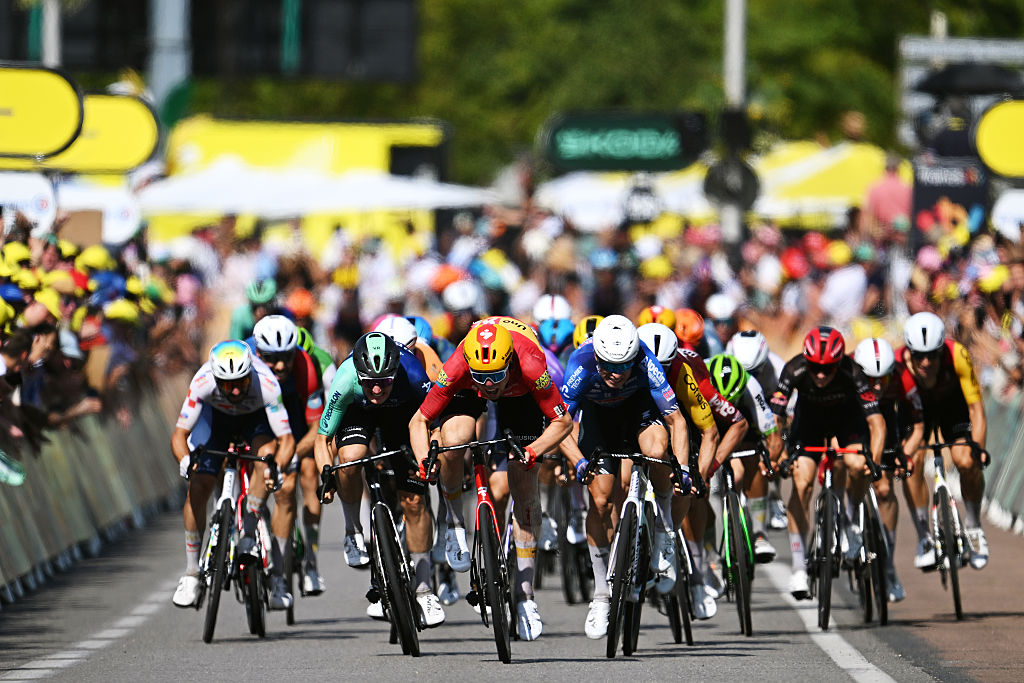
Søren Wærenskjold, the huge Norwegian from Uno-X Mobility, won the stage in 3:10:06, beating Olav Kooij and Jasper Philipsen in a sprint that looked less like a drag race and more like someone had shaken a cutlery drawer at 70km/h. Good on him. It was a clever, brutal, beautifully timed win. But the result sheet is almost the least interesting part. The peloton just completed the fastest stage in Tour de France history, faster than the 50.3km/h Stage 4 benchmark from 1999 and faster than the 50.0km/h madness of Stage 9 last year.
The ‘easy day’ is dead
The day after Pogačar had carved everyone open at Le Lioran, you might have expected the bunch to perform the traditional Grand Tour theatre of mutual mercy. A break goes, the peloton drinks, everyone pretends the first two hours matter, the sprint teams wake up near the end. Instead, the race went full suburban tradie in a tailwind. Four riders, Julian Alaphilippe, Mathis Le Berre, Nelson Oliveira and Anthon Charmig, were never gifted enough rope to make the day soft. They were kept under two minutes, then hunted down like an overdue café bill.
This is the modern Tour’s dirty little secret. The climbing days are theatrical pain. The sprint days are industrial violence. The mountains give riders time to explode one by one. Flat stages make them explode together, in traffic, while half the peloton is trying to sit 14th wheel because 38th wheel is basically a medical appointment.
A 50.9km/h average does not describe a bike race. It describes a workplace hazard with sponsors, disc wheels and a finish gantry.
That is not anti-sprint snobbery. The sprint is one of cycling’s great skills, and Wærenskjold’s win was a cracker precisely because it broke the script. He did not just out-watt the obvious names. He read the mess, used Kooij’s lead-out, found the barrier side, and held off riders who make a living from bullying lesser men at 1,500 watts. This was not a lucky win. It was the sort of win that makes directors pretend they had planned it all along.
Speed has become the whole business model
Here is where it stops being just a Tour story and starts being a bike industry story. The peloton did not suddenly discover motivation in Nevers. It is being engineered, trained and sold into this speed. Aero socks, narrower frontal positions, tubeless tyres that roll like tax evasion, deeper wheels, skinsuits with fewer wrinkles than a Bondi influencer. Every team talks about marginal gains, but the margin has become the race itself.
And then those ideas come to us. Not the legs, obviously. If most bunch riders in Melbourne, Brisbane or Perth tried to hold a WorldTour pull, they would be found later behind a servo with a gel wrapper stuck to their cheek. But the products arrive. The 65mm wheels. The one-piece bars. The tyres pumped low because someone on YouTube said hysteresis. The slammed position you cannot actually hold past the first coffee stop. We buy the fantasy of speed without buying the handling required to survive it.
The uncomfortable bit is that the pros barely survive it either. Stage 11 included a crash involving Ben O’Connor, Georg Zimmermann and another rider. The day also began with the news that Australian Chris Harper had abandoned after a Stage 10 crash left him with a serious thumb injury requiring surgery. That is the Tour in miniature: yesterday’s descent, today’s feed zone, tomorrow’s bunch sprint. The danger does not politely stay in one category.
The UCI keeps arguing with gadgets while the race gets faster
The UCI can keep measuring sock heights and tutting about clever clothing pockets, and some of that policing is fair enough. But if the sport is serious about safety, it has to stop treating speed as an accidental by-product. The whole ecosystem rewards it. Teams need points. Sponsors need screenshots. Race organisers want television tension. Bike brands want to sell the thing that looks like it won on Wednesday. Nobody in that chain is paid to say, ‘Maybe 50.9km/h across a Tour stage is a bit cooked.’
- Do flat Tour stages now need route design that breaks speed before the final ten kilometres, not just prettier postcards?
- Should sprint finishes be judged less by how straight the final road looks on television and more by how riders enter the final five kilometres?
- Are teams making racing safer with better equipment, or simply making crashes happen at higher speed?
- Why do we still talk about ‘rest’ stages when the bunch is averaging faster than most amateurs can descend?
- How much of this arms race should weekend cyclists copy before their local bunch becomes a carbon-fibre demolition derby?
Australian riders know this better than most because we grow up racing on wide roads, wind, traffic furniture and nervous bunches that think every roundabout is a Monument. The Tour is not your Saturday smash up Beach Road, the River Loop or West Head, but the behavioural disease is familiar. Everyone wants shelter. Everyone wants position. Everyone thinks they can move up for free. Then a bottle rolls, a shoulder twitches, a rider overlaps a wheel, and suddenly six months of training is being examined by someone in nitrile gloves.
Wærenskjold’s win was brilliant. The number is the warning.
None of this should flatten Wærenskjold’s moment. Uno-X Mobility keep riding like a team that refuses to accept its invitation as decorative. A Norwegian winning a Tour sprint ahead of Kooij and Philipsen is not a footnote, it is a proper result. It also helps that Wærenskjold looks like he was assembled in a shipyard and taught to sprint by anger. Cycling needs more of that, not less.
But Stage 11 should change the way we talk about the Tour. The GC fight may be drifting toward Pogačar inevitability, and yes, the mountain stages will still get the oil-painting treatment. Yet the most revealing number of this race so far might not be a time gap on Le Lioran. It might be 50.9km/h from Vichy to Nevers, the day the so-called transition stage became the purest expression of modern cycling’s obsession.
Fast is beautiful. Fast is why we ride. Fast is also a rubbish substitute for thinking. The Tour just showed us the future at record pace, and it looked thrilling, profitable and faintly insane. In other words, exactly like the bike industry keeps promising.