
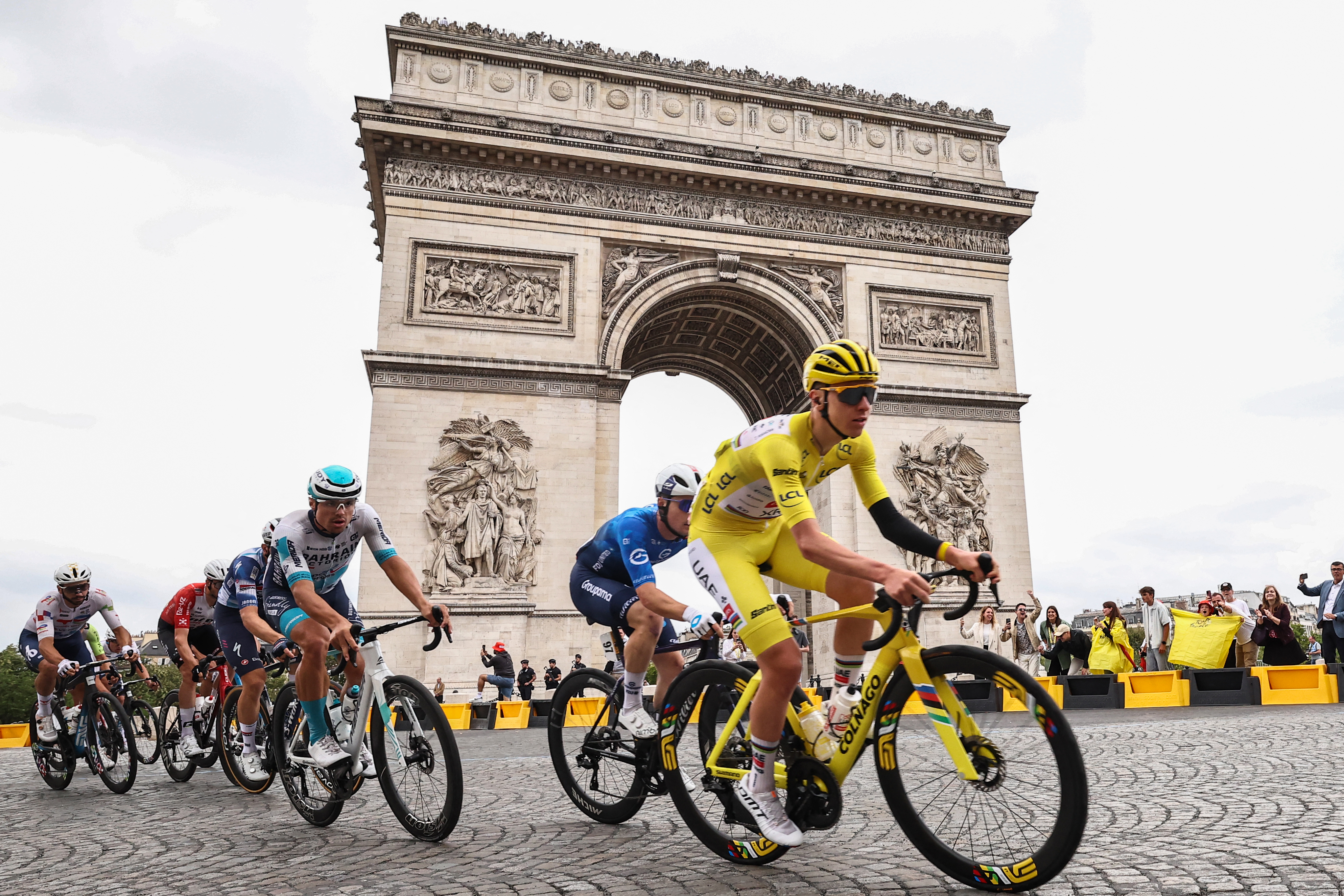
The Tour de France Has Stopped Pretending It’s Fair, And That Might Be Exactly Why We’ll Watch
The 2026 Tour de France is not a neutral race route. It is a three-week ambush built for superstars, television, and pain, and the sprinters should be furious.
The 2026 Tour de France has not even rolled out of Barcelona yet and already the route tells you exactly what ASO thinks of modern cycling. It thinks flat stages are a tax. It thinks sprinters are useful mostly for sponsor photos and the occasional Bordeaux postcard. It thinks the puncheur-climber mutant, the rider who can win Flanders, drop everyone uphill, time trial like a machine and still look fresh on a café ride, is the future of the sport.
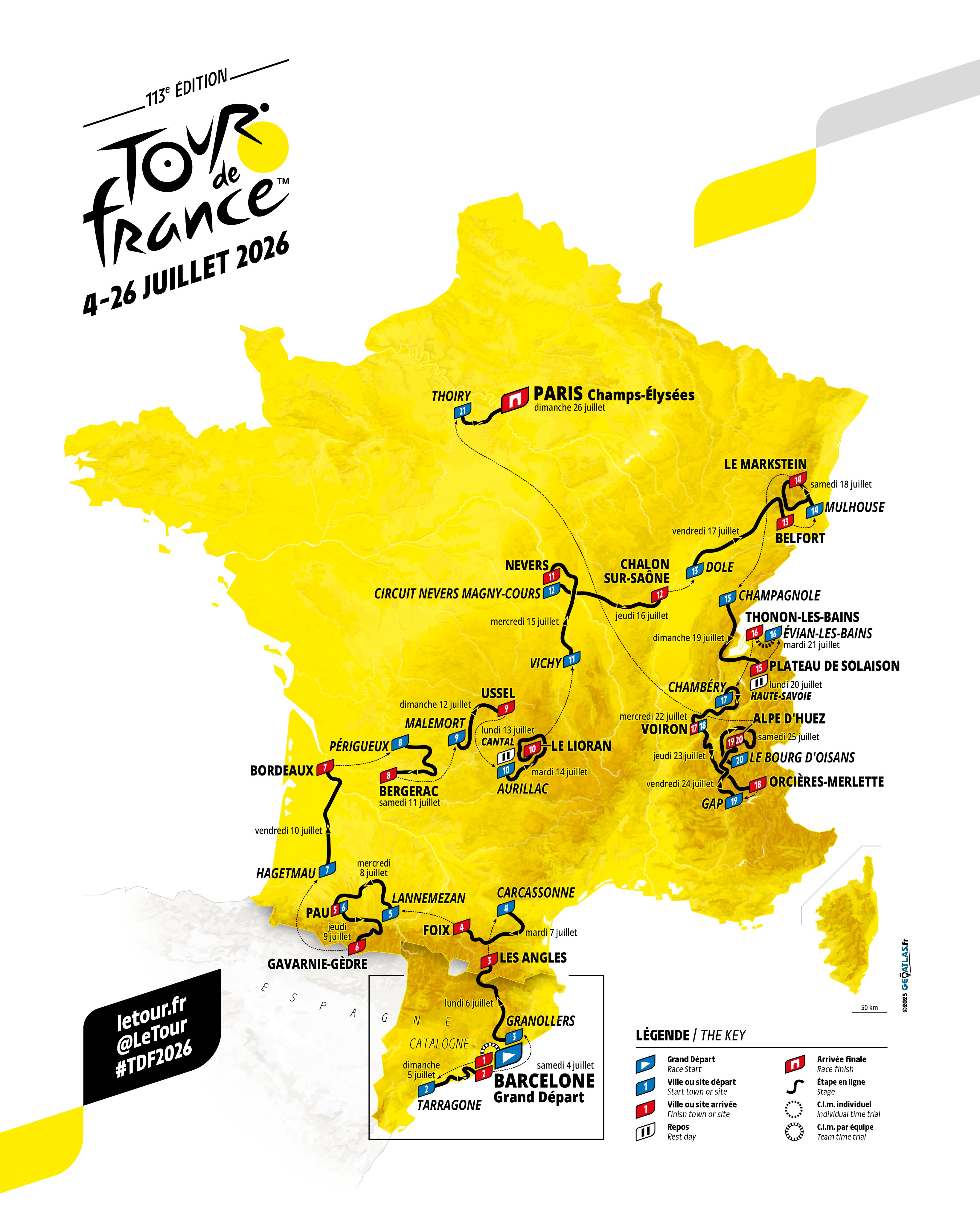
And, annoyingly, ASO is probably right. This Tour is a festival of structural violence. It begins on 4 July with a team time trial in Barcelona, hits the Pyrenees on stage three, serves up Gavarnie-Gèdre by stage six, crosses through the Massif Central and Vosges, then finishes the serious business with Orcières-Merlette and two consecutive Alpe d’Huez stages before Paris on 26 July. There is an individual time trial on stage 16, a Montmartre-flavoured final day, and only seven stages officially wearing the “flat” badge, which in Tour-speak increasingly means “good luck if your lead-out train weighs more than a wet whippet”.
This is not a route, it is a verdict
For years the Tour sold itself as the complete cycling examination. Sprinters got their drag races. Time triallists got their laboratory. Climbers got their theatre. Rouleurs got crosswinds, breakaways and a grim afternoon chewing bar tape across northern France. The 2026 course still contains those ingredients, but the ratios have changed. This is not a balanced meal. It is a protein shake with chilli in it.
The opening weekend says everything. A Barcelona team time trial is glamorous, technical and made for drone shots. The day after, Tarragona to Barcelona is not a ceremonial coastal cruise, it is a hilly stage for puncheurs. Then stage three goes Granollers to Les Angles, straight into the mountains before half the peloton has properly found its Tour legs. The old Tour let tension simmer. This one throws the lid across the kitchen.
The Tour used to ask who could survive three weeks. Now it asks who can make chaos look marketable by dinner time in Europe.
The sprinters have a legitimate grievance
Here is the unfashionable defence of the fast men: sprint stages are not boring when you understand them. They are not just four hours of helicopter vineyards followed by men in enormous sunglasses yelling into radios. They are positioning, nerve, weather, intimidation, traffic management and violence at 65 km/h. Anyone who thinks a sprint stage is easy has never sat fifth wheel into a roundabout with a bar-end in their ribs.
But the Tour has clearly decided the casual audience does not want tension disguised as patience. It wants visible jeopardy, preferably uphill. Seven flat stages across 21 days sounds reasonable until you look at where the race spends its emotional budget. The headline moments are Barcelona, Pyrenees early, Tourmalet territory, Le Lioran, the Vosges, Plateau de Solaison, Orcières-Merlette, Alpe d’Huez twice, then Montmartre in Paris. The green jersey fight is still there, but it is no longer one of the main characters. It is a subplot with a good agent.
Yes, this suits Pogačar. Stop acting surprised
The lazy take is that this route has been designed for Tadej Pogačar. The sharper take is worse: modern route design has been Pogačar-ised because he has changed what the public expects from a Tour winner. Pogačar arrives after a dominant Tour de Suisse, where he won overall by a margin big enough to make everyone else’s pre-Tour optimism look like fan fiction. He is chasing a fifth Tour victory, which would shove him into the sport’s most sacred statistical lounge alongside Anquetil, Merckx, Hinault and Indurain.
Jonas Vingegaard is no decorative rival either. He won the 2026 Giro d’Italia in May, completed the set of Grand Tour victories, and brings Visma-Lease a Bike’s cold, methodical menace back to July. Remco Evenepoel is there with Red Bull-Bora-Hansgrohe firepower. Paul Seixas gives the French public a reason to lose its collective mind before the first rest day. There are 184 riders from 23 teams, which means 184 different versions of hope, fear and contractual obligation.
Still, the route screams for riders who can punch, climb, descend, recover and attack again the next day. That is not anti-cycling. It is very cycling. It is just anti-specialist. If your business model depends on hiding all July then appearing for 180 metres, the Tour is politely showing you the service exit.
The Alpe d’Huez double is shameless, and brilliant
Two finishes on Alpe d’Huez in two days is not subtle. It is ASO walking into the pub, putting both elbows on the bar and ordering the most expensive spectacle available. Stage 19 from Gap to Alpe d’Huez is short enough to be explosive. Stage 20 from Le Bourg d’Oisans back to Alpe d’Huez is the final mountain judgement. This is theatre built on repetition: same myth, different route, fresh legs ruined twice.
Purists will complain, because purists are legally required to complain. They will say the Tour is overusing icons, flattening history into content, turning sacred climbs into recurring set pieces. Fine. But the Tour has always been a circus with better scenery. Henri Desgrange was not designing gentle sporting fairness, he was inventing suffering people would buy newspapers to read about. The difference now is that the newspaper is a global broadcast package and the suffering comes with bike computers, aero socks and a nutritionist counting rice grains.
What Australian viewers should actually watch
- The Barcelona team time trial, because individual timing inside a team event will create weird incentives and immediate hierarchy.
- Stage three to Les Angles, because early mountains punish nervous teams before their routines settle.
- Stage six to Gavarnie-Gèdre, because a bad day there could turn GC ambition into stage-hunting by the first Friday.
- Stage 16, the 26 km individual time trial from Évian-les-Bains to Thonon-les-Bains, because this is where Evenepoel can force everyone else to stop bluffing.
- Stages 19 and 20, because back-to-back Alpe d’Huez is either genius or excess, and cycling is usually best when it is both.
For Australian fans, this is also the annual sleep-deprivation tax. We will pretend we are only watching the final hour, then somehow end up awake at 1.37 am arguing about whether a domestique should have pulled through on a valley road. The Tour does this to us because no other race is as good at making logistics feel like destiny. You know the tactics are partly choreographed by budget, altitude camps and carbohydrate science, but then someone attacks 60 km from home and your rational brain goes straight into the bin.
The Tour’s unfairness is the point
I do not want every Grand Tour to become a Pogačar playground, and I do not want sprinters treated like a nostalgic inconvenience. Cycling needs its contradictions. It needs nervous flat days, doomed breakaways, ugly transitional stages and the occasional sprint so chaotic the overhead camera looks like spilled cutlery.
But I also refuse to pretend the 2026 Tour route is some betrayal of tradition. It is tradition with the volume turned up. The Tour has always followed the money, the mountains and the myth. This year it is simply less embarrassed about doing so. It has built a race that favours the strongest, most versatile, most watchable riders in the world, then sprinkled just enough cruelty around the edges to make everyone else matter.
That is unfair. That is manipulative. That is not how you would design a perfectly balanced sporting contest. And on 4 July, when the first team drops into formation in Barcelona and the whole machine starts humming, we will watch anyway, because fairness has never been the Tour’s real product. The product is doubt, pain and the possibility that even the best rider on earth might crack before Paris.