
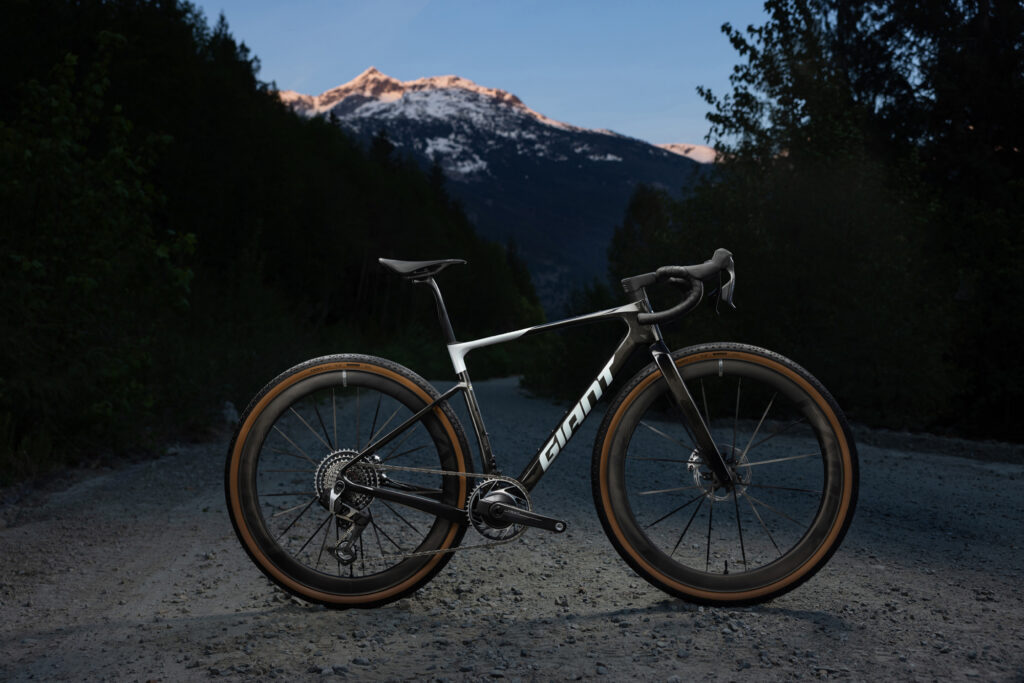
The New Giant Revolt Is A Race Bike With Dust On It. Finally, Gravel Has Stopped Pretending.
Giant and Liv have just done what the rest of the gravel market has been hinting at for years: they have built proper race bikes, not adventure bikes with nervous marketing copy. Some riders will hate that. Good.
While the Tour de France is busy swallowing every cycling conversation on earth, Giant and Liv have quietly dropped one of the more honest bike launches of the year. The new Revolt Advanced SL and Devote Advanced SL are not pretending to be bikes for discovering yourself on a misty fire road with a half-frame bag full of organic dates. They are race bikes. Expensive, aggressive, aero-conscious, 1x13, 50 mm wheel, 45 mm tyre-optimised race bikes. And that honesty is the interesting bit.
For years, gravel brands sold us the fantasy that one bike could be a weekender, a race rig, a commuter, a bikepacking mule, a café flex, and a spiritual escape from road cycling’s shaved-leg neurosis. Lovely idea. Also nonsense. The same bike that feels brilliant loaded with a bivvy and two litres of water is rarely the same bike you want when the front group is punching 38 km/h across corrugations and everyone is pretending not to be at threshold. Giant has finally stopped winking. The Revolt Advanced SL is not a do-everything bike. It is a do-one-thing-fast bike.
This is not adventure gravel. This is bunch-race gravel.
The numbers say plenty. Giant’s Australian site lists the Revolt Advanced SL range from $8,999 to $13,999, with the top model running SRAM RED XPLR AXS 1x13 and CADEX Max GXR hookless carbon wheels in a 50 mm depth. The frame is optimised around 45 mm tyres, clears up to 53 mm, and Giant claims a 288 gram total system weight saving over the previous generation. More telling than the grams is the posture. Size medium is longer and lower, with a 557 mm stack, 395 mm reach, a 74.5 degree seat tube angle, 433 mm chainstays, and a wheelbase of 1,033 mm. That is not a geometry chart written for noodling to a bakery.
Giant says the new bike is shaped around aero performance at gravel race speeds of 30 to 45 km/h. That is the giveaway. Not “comfort over mixed terrain”. Not “confidence on the unknown road”. Race speeds. The company claims 18.99 watts of total resistance reduction compared with the previous Revolt Advanced Pro, bundled from frame, cockpit, wheel, tyre and rolling gains. Yes, brand wattage claims should be handled like a bidon found in the gutter, with suspicion and preferably gloves. But the direction is undeniable. Gravel has discovered drag, and now everyone is doomed to hear about yaw angles in the feed zone.
The new gravel superbike is not a mountain bike for roadies. It is a road bike that has admitted the road is broken.
The old gravel category was charming because it was messy. You could turn up on a cyclocross bike, an endurance road bike with 35s jammed in, a steel rig with a bar bag, or a carbon missile and still be part of the same daft experiment. That era is not dead, but it is no longer the centre of gravity. The pointy end has professionalised. Unbound, The Traka, the UCI Gravel World Series, and the growing Australian gravel scene have created a simple market truth: if there is a podium, there will be a product manager with a wind tunnel booking.
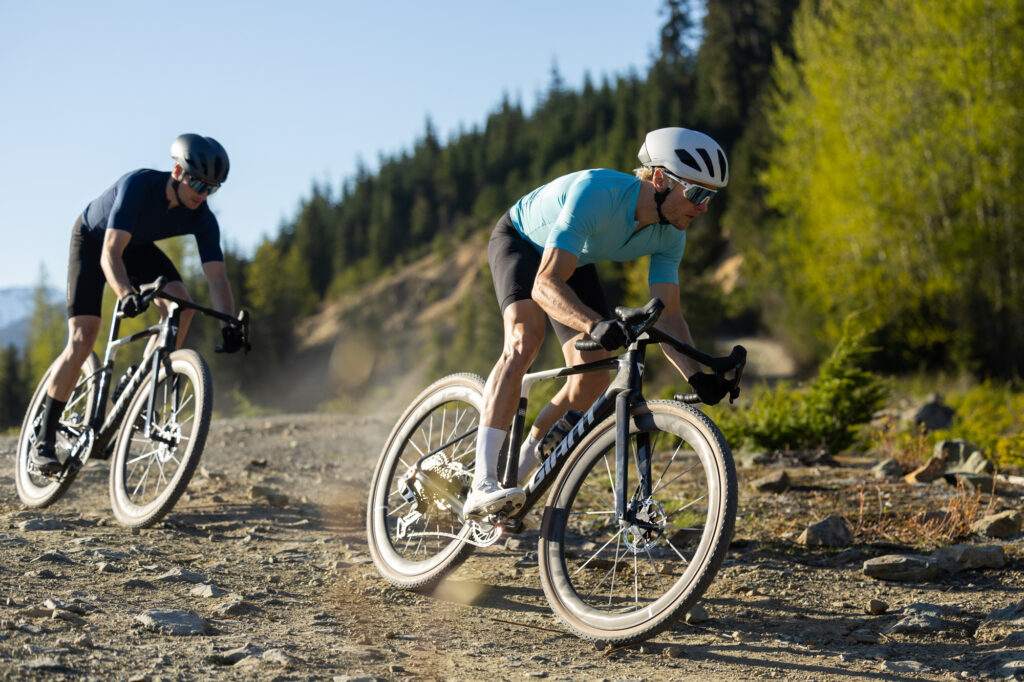
Liv’s Devote matters more than the usual “women’s version” footnote
The Liv Devote Advanced SL launch is arguably the sharper story. Liv is using a wind-tunnel mannequin called Georgia, developed with body dimensions from Australian rider Georgia Baker of Liv AlUla Jayco. That is a far better sentence than the usual industry mush about “female-specific touchpoints”, because it suggests actual testing around how women race, not just a smaller frame, narrower bar and a paint brief passed around a boardroom by men named Brent.
The Devote range mirrors the serious intent: Australian pricing from $8,999 to $13,999, SRAM AXS 1x13 builds, 50 mm carbon wheels, race-focused geometry, and the same broader system thinking. It is not cheap, but neither is pretending women’s performance cycling is a niche afterthought in 2026. If brands want applause for supporting women’s racing, this is the work. Build the tool properly, test it properly, and put it in front of riders who will actually snap chains trying to win on it.
The adventure crowd is not wrong. It is just not the customer here.
Some riders will look at integrated cockpits, hookless 50 mm carbon wheels and five-figure pricing and make the correct noise, which is a sort of tired groan from deep in the bottom bracket. For most Australian gravel riders, the best upgrade is still tyres, pressure, fitness, and learning to stop braking like a startled possum on marbles. A $13,999 gravel bike will not make your local rail trail more soulful. It will not fix your dodgy hip. It will absolutely make replacement cockpit parts more annoying if you stack it into a rut outside Beechworth.
- If you want to bikepack, commute and explore, buy the adaptable bike, not the one designed around a number plate.
- If you race fast gravel, aero and rolling resistance now matter, even if that makes everyone at the pub unbearable.
- If you are between sizes, do not worship the geometry chart. Ride the thing, because lower and longer can be magic or misery.
- If your local shop cannot service the cockpit, wheels and drivetrain without sighing, factor that into the real price.
- If you are buying second-hand in two years, this could be a brilliant race bargain or a proprietary-parts treasure hunt.
Here is the uncomfortable truth for the romantic gravel crowd: this specialisation is a sign of maturity, not betrayal. Road bikes split into climbing bikes, aero bikes and endurance bikes because riders wanted different things. Mountain bikes split into XC, trail, enduro and downhill because terrain and intent matter. Gravel was never going to stay one big wholesome family forever. The family has started arguing at Christmas, and honestly, it is about time.
In Australia, this matters because our gravel is not a single thing. Nannup is not the same as Macedon. The Adelaide Hills are not the same as a dead-flat farm-road smash-up. A rider chasing UCI qualification wants a different bike from the person stitching together forestry roads with a servo pie in the back pocket. The mistake is not that Giant and Liv have built race bikes. The mistake would be pretending these are still the universal answer.
The verdict: good bike, bad religion
I like this launch because it is clear-eyed. Giant and Liv are saying the quiet part out loud: racing has changed gravel, and the bikes are changing with it. The new Revolt and Devote are not pure, because purity in cycling is usually just nostalgia with tyre sealant on its shoes. They are fast, specific, slightly ridiculous, and probably excellent under the right rider. That is enough.
But do not confuse specificity with superiority. A race gravel bike is not the final form of gravel. It is one branch of a category that got too big for one story. If you want to race, this new breed makes sense. If you want to disappear for six hours, find dirt, get lost, and come home with chain slap and a stupid grin, you may be better off ignoring the watt claims entirely. The beautiful part is that both versions can exist. The annoying part is that only one of them will be on the billboard.