
Stop Blaming The Route. Pogačar Won Stage 6 Because He Can Actually Ride A Bike.
The Tourmalet did not just expose legs. It exposed who can descend, read a road and keep pressure on when the power meter stops being the whole story.
There is a lazy take already doing laps after Stage 6 of the Tour de France, and it goes like this: the route gave Tadej Pogačar the race. Nonsense. The route gave everyone the same strip of tarmac from Pau to Gavarnie-Gèdre. Pogačar was simply the bloke who could use all of it.
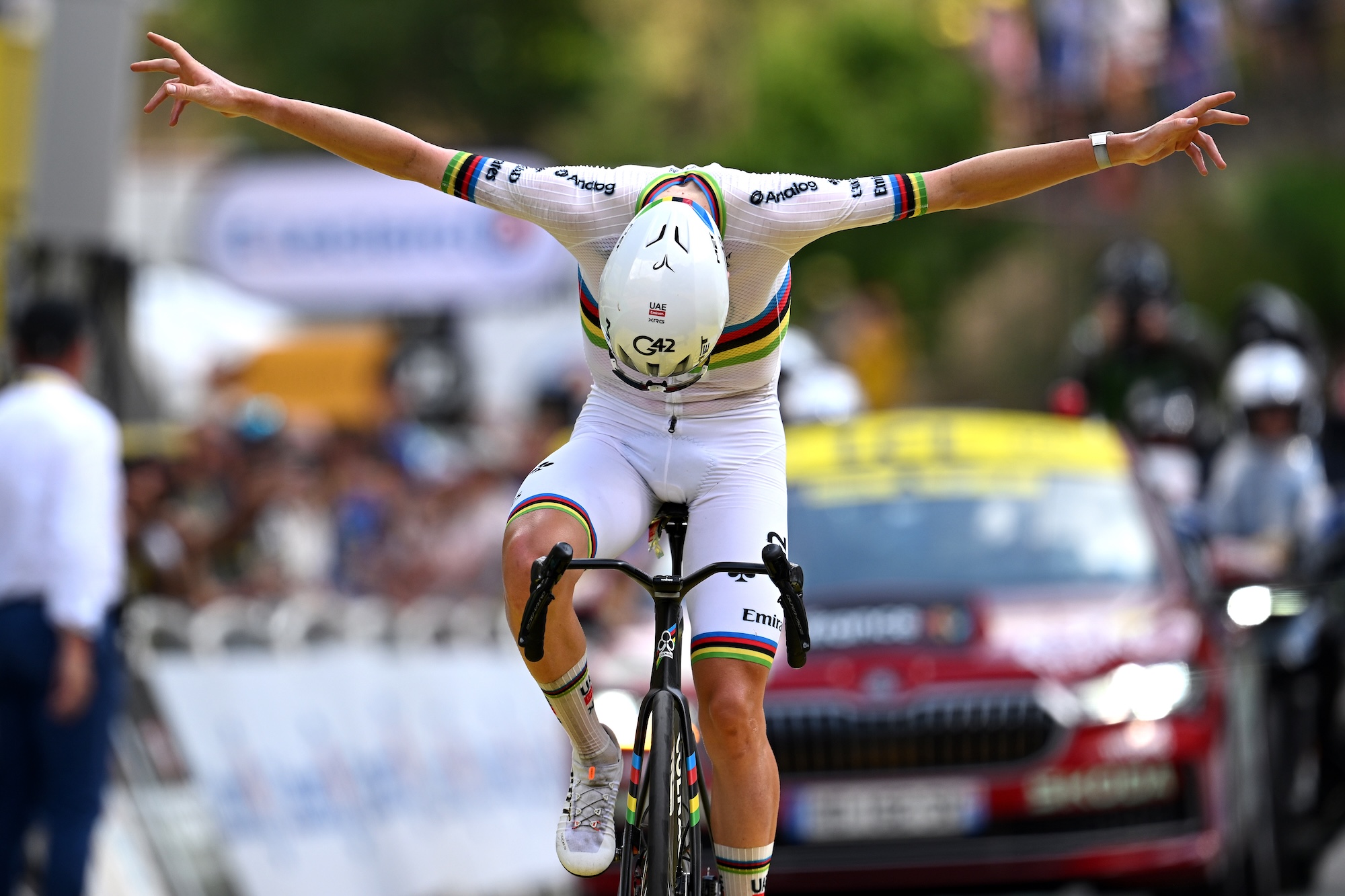
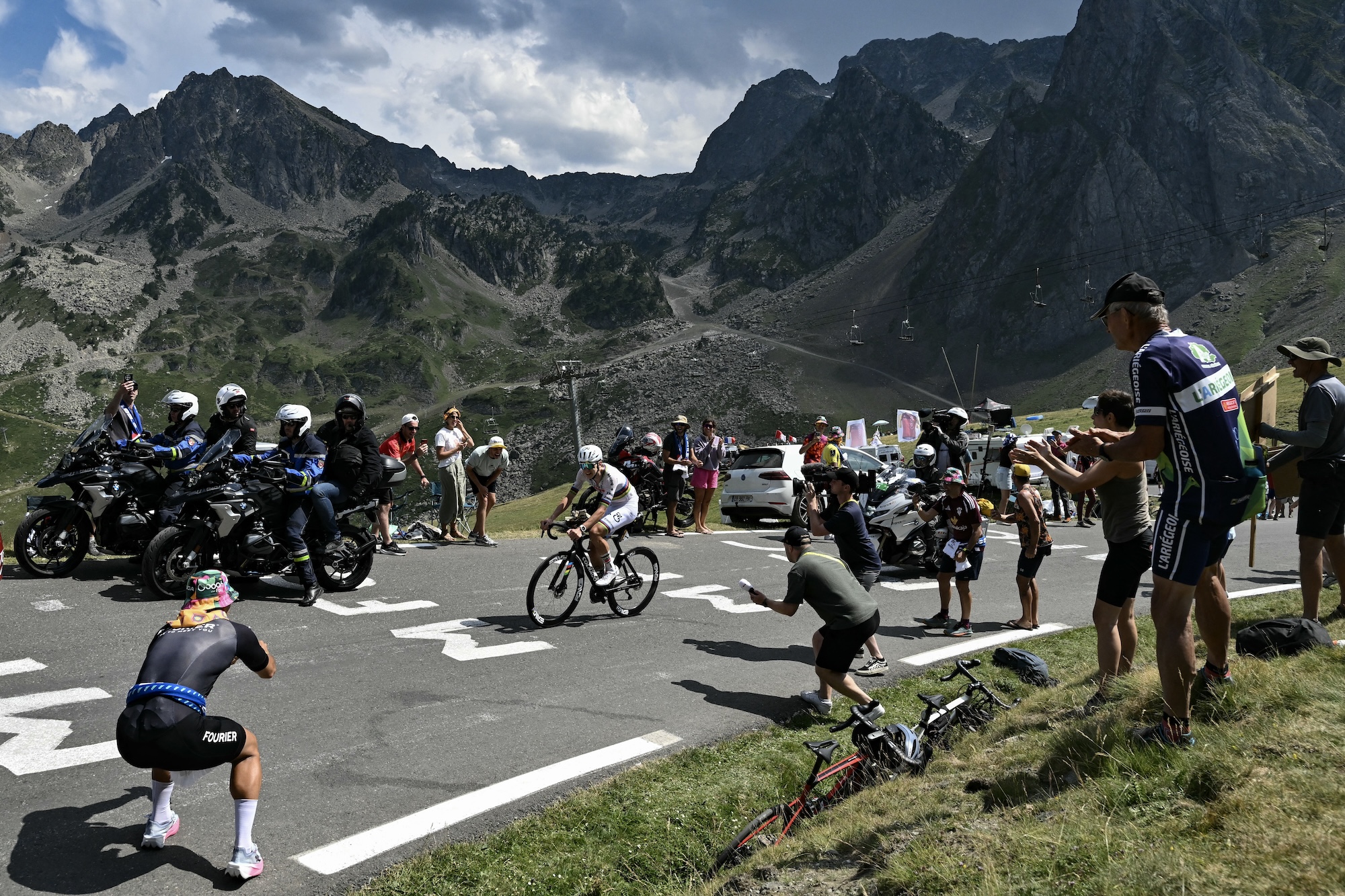
On Thursday 9 July 2026, the Tour hit its first proper mountain examination, 186.2 kilometres through the Pyrenees with the Col d’Aspin, the Col du Tourmalet and that long drag to Gavarnie-Gèdre. UAE Team Emirates-XRG did not so much ride the stage as prosecute it. Isaac del Toro launched Pogačar five kilometres from the top of the Tourmalet, Jonas Vingegaard cracked just enough, and then the world champion turned a gap into a sentence. Forty-three kilometres solo. Stage win in 4:32:07. Vingegaard second at 2:38. Yellow jersey back on Pogačar’s shoulders, now 2:42 clear overall.
This was not just a climbing contest
Yes, the watts were monstrous. Of course they were. You do not ride away from Vingegaard on the Tourmalet because you found a slightly more spiritual breakfast cereal. But the most interesting bit was not the attack itself. It was what happened after the summit, when the calculators should have had a chance to breathe.
At the top of the Tourmalet, Pogačar had about half a minute on Vingegaard. By the start of the final climb, after the descent and valley road, that gap had blown past a minute. That is not a pure FTP story. That is braking later without looking like a hero, exiting corners cleanly, staying aero without going full circus act, choosing speed while everyone else is choosing survival. It is road craft, and cycling has become bizarrely embarrassed by it.
Power gets you to the summit. Bike handling gets you paid on the other side.
We have spent the past decade pretending road racing is a lab test with team cars. Ketones, tyre pressure, heat protocols, aero socks, cockpit reach, rolling resistance, lactate, skin suits that look like they were printed onto a seal. Fine. All of it matters. But then the road tips downwards and suddenly the sport remembers it is not Zwift. It is still a bike, on an imperfect road, with corners, camber, heat, fatigue and fear.
Vingegaard did not implode. He got handled.
The temptation is to write Vingegaard off after losing 2:38. That is silly, and it is also what people who only watch the Tour for three weeks a year do. He was second on the stage, still second overall, and the race still has the Alps, an individual time trial and two goes at Alpe d’Huez waiting with a baseball bat. But Stage 6 did reveal something uncomfortable. Vingegaard was not merely distanced by Pogačar’s punch. He was forced into a kind of racing that does not let you hide in the metronome.
This is why Pogačar is so annoying to race against. He is not just the best climber on enough days. He is also happy when the stage becomes messy. Crosswinds, cobbles, descents, classics-style positioning, long solo pressure, sketchy transitions from high mountains to false flats, he treats them all as invitations. Vingegaard is not a bad bike handler, despite what the pub experts will now claim. But Pogačar is a bike racer in the old, nasty, comprehensive sense of the term.
Torstein Træen’s crash on the descent, while losing the yellow jersey dream he had earned in Foix, was the grim reminder that this stuff has consequences. Descending is not decorative. It is not a neutralised transfer between efforts. It is a skill set with risk attached, and the Tourmalet, especially after a hard, hot Pyrenean stage, does not care how tidy your training file looks.
The Australian lesson is painfully obvious
Australian roadies should watch Stage 6 twice, then go outside and admit something awkward. Too many of us can buy speed but cannot ride it. We will spend five grand chasing a faster frame, then drag the brakes down Mt Donna Buang like the road owes us an apology. We will argue tyre width until the café closes, then sit bolt upright through every bend on Norton Summit. We will turn up to a bunch ride on deep wheels and panic when the road surface changes near Waterfall.
Ben O’Connor gave the stage a proper Australian cameo, attacking on the Côte de Mauvezin before being caught on the Aspin. Chris Harper later came home 24th at 9:33, which is a sentence that sounds modest until you remember the Tour had just been torn open by the best rider on earth. But the broader Australian angle is not patriotic. It is practical. If you race crits, ride gravel, commute through tram tracks, hit Derby, Maydena, Nerang or your local fire trail, the lesson is the same: control is fitness.
What riders should actually learn from Stage 6
- Practise descending when you are tired, not only when the sun is out and your legs are fresh.
- Stop treating braking as panic. Brake before the corner, release through it, look where you want to exit.
- Learn to pedal out of corners instead of coasting like a nervous passenger.
- Do not buy a race bike if you refuse to ride it at race speed on real roads.
- Respect risk, but do not confuse respect with fear dressed up as safety culture.
This is where the Tour still matters beyond hero worship. Most of us will never produce Pogačar numbers, unless the café banana bread is hiding pharmaceutical miracles. But we can all get better at riding the bike underneath us. We can stop outsourcing confidence to equipment. We can stop pretending a radar, a wider bar, a new tyre casing or a $900 helmet will fix the fact that we stare at the front wheel when the road bends.
Stop calling it boring when excellence is inconvenient
The other moan is that Pogačar has made the Tour boring. Maybe. But there is a difference between boring and brutal. Stage 6 was not a lack of racing. It was racing so decisive that it offended our desire for suspense. UAE set it up, Del Toro detonated it, Pogačar finished it, and everyone else had to explain the wreckage.
I do not want a Tour designed to protect weaker riders from stronger ones. I want routes that reward the complete cyclist. Climbs, descents, heat, tactical nerve, team structure, recovery, chaos. If that means Pogačar occasionally kicks the race door off its hinges before the first rest day, so be it. The answer is not to sand the sport down into a controlled wattage parade. The answer is for everyone else to get better.
Stage 6 did not prove the Tour is finished. It proved the Tour is still capable of exposing the difference between a rider with numbers and a rider with weapons. Pogačar has both. That is irritating, spectacular and, if you actually love cycling, impossible to look away from.