
Shimano Changed The Cleat. Your Knees Get No Vote.
Shimano’s new SPD-SLR road pedal system is clever, expensive, and just annoying enough to matter. The marketing says lower stack. Your bike fitter will hear, ‘start again’.
Shimano has done the most Shimano thing imaginable. It has launched a new road pedal and cleat system that is probably better, almost certainly durable, genuinely clever in places, and guaranteed to make thousands of riders stand in the garage holding one old yellow cleat and one new yellow cleat while muttering words not printed in polite magazines.
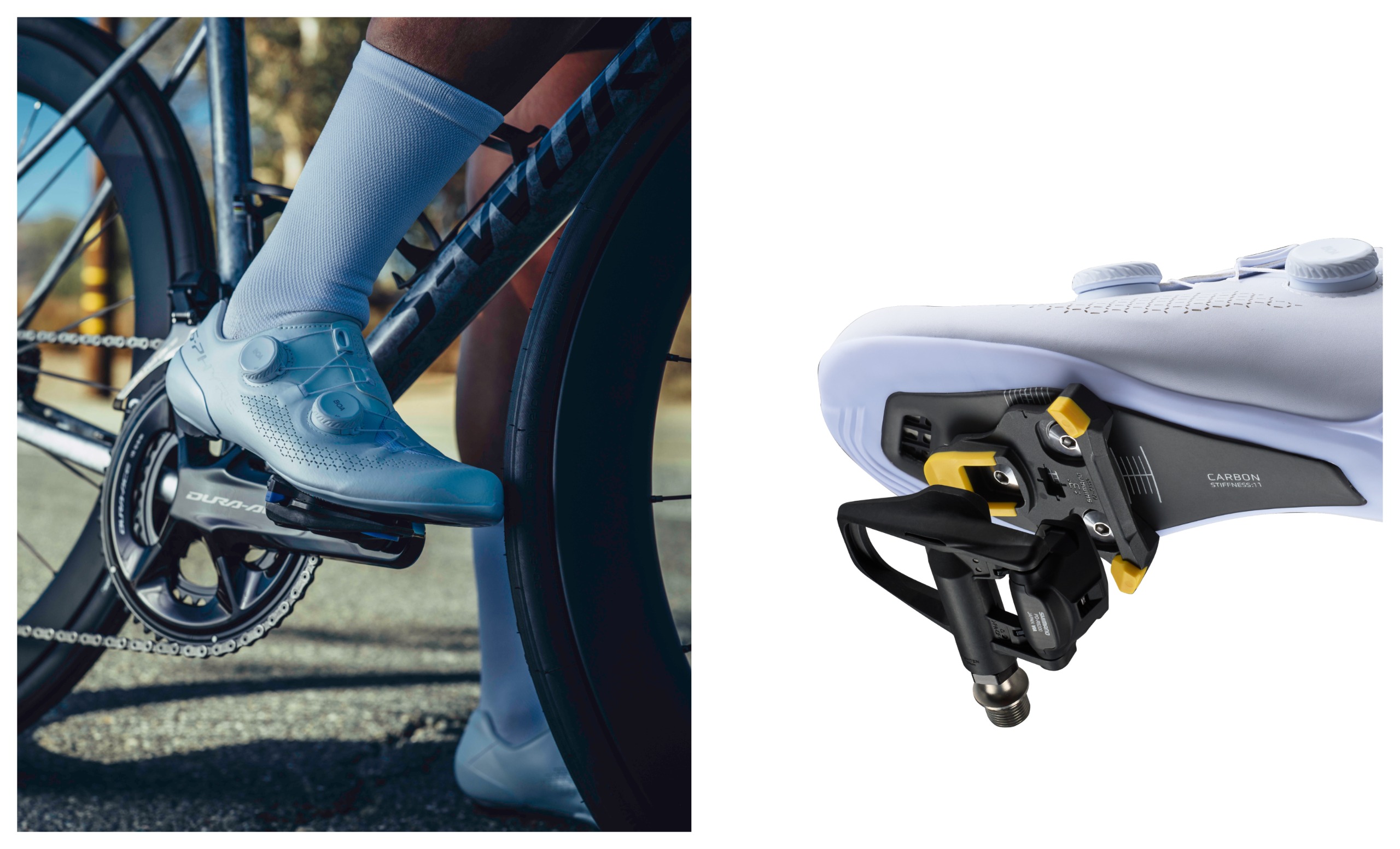
The new system is called SPD-SLR. It arrived on 17 September 2026 with new Dura-Ace PD-R9300 and Ultegra PD-R8200 pedals, new S-PHYRE shoes, and four new cleat options. Shimano says the redesign drops stack height by 2.3mm, narrows the engagement angle from 15.5 degrees to 10.5 degrees, widens the catch zone, and makes the core cleats up to 22 percent lighter than SPD-SL sets. Lovely. Also, the new cleats are not compatible with your old SPD-SL pedals. That is not a footnote. That is the entire column. (bike.shimano.com)
This is not a pedal launch. It is a contact-point coup.
Cyclists are very good at pretending the drivetrain is the soul of the bike. It is not. The soul is where your body touches the machine: saddle, bars, shoes, cleats. Change the rear derailleur and you might need a firmware update. Change the cleat interface and you may need a different saddle height, a new cleat position, another visit to the fitter, and possibly a quiet apology to your left knee.
That is why SPD-SLR matters more than another shiny thing from Osaka. A 2.3mm stack reduction sounds tiny because it is tiny, until you remember road cyclists will pay four figures to save less vertical distance than the thickness of a servo sandwich wrapper. Shimano’s pitch is not nonsense. A lower foot over the pedal axle can feel more planted. A cleaner interface can reduce wobble. Faster engagement is useful when you are clipping in after a traffic light sprint, a crit corner, or a nervous bunch-roll away from the café. But power-transfer language is where grown adults start huffing chain lube.
The great lie of marginal gains is that the gain is always marginal, but the invoice never is.
The good bit: Shimano probably made a better pedal
Let us be fair, briefly, before the comments section starts foaming like a badly bled brake. Shimano road pedals have earned their reputation. They last. They take abuse. They survive wet bunch rides, lazy servicing, ham-fisted cleat changes, and riders who think ‘torque spec’ is a craft beer. If Shimano says the new Dura-Ace pedal uses an ultra-wide platform, a carbon-composite body, a stainless-steel contact plate, revised bearings, and lower rotational resistance, the sensible bet is that it will not be flimsy jewellery.
Australian pricing is not fantasy-land either, by premium road standards. Local reporting lists the Dura-Ace PD-R9300 at $379 AUD, the Ultegra PD-R8200 at $289 AUD, the S-PHYRE SH-RC910 shoe at $649.95 AUD, and the SH-RC810 at $499.95 AUD. Expensive, yes. Outrageous compared with top-end road shoes and pedals already hanging on shop walls? Not really. That is how the trap works. It is just close enough to normal that you can justify it while pretending you are being rational. (bicyclingaustralia.com.au)
The bad bit: fit is not a software setting
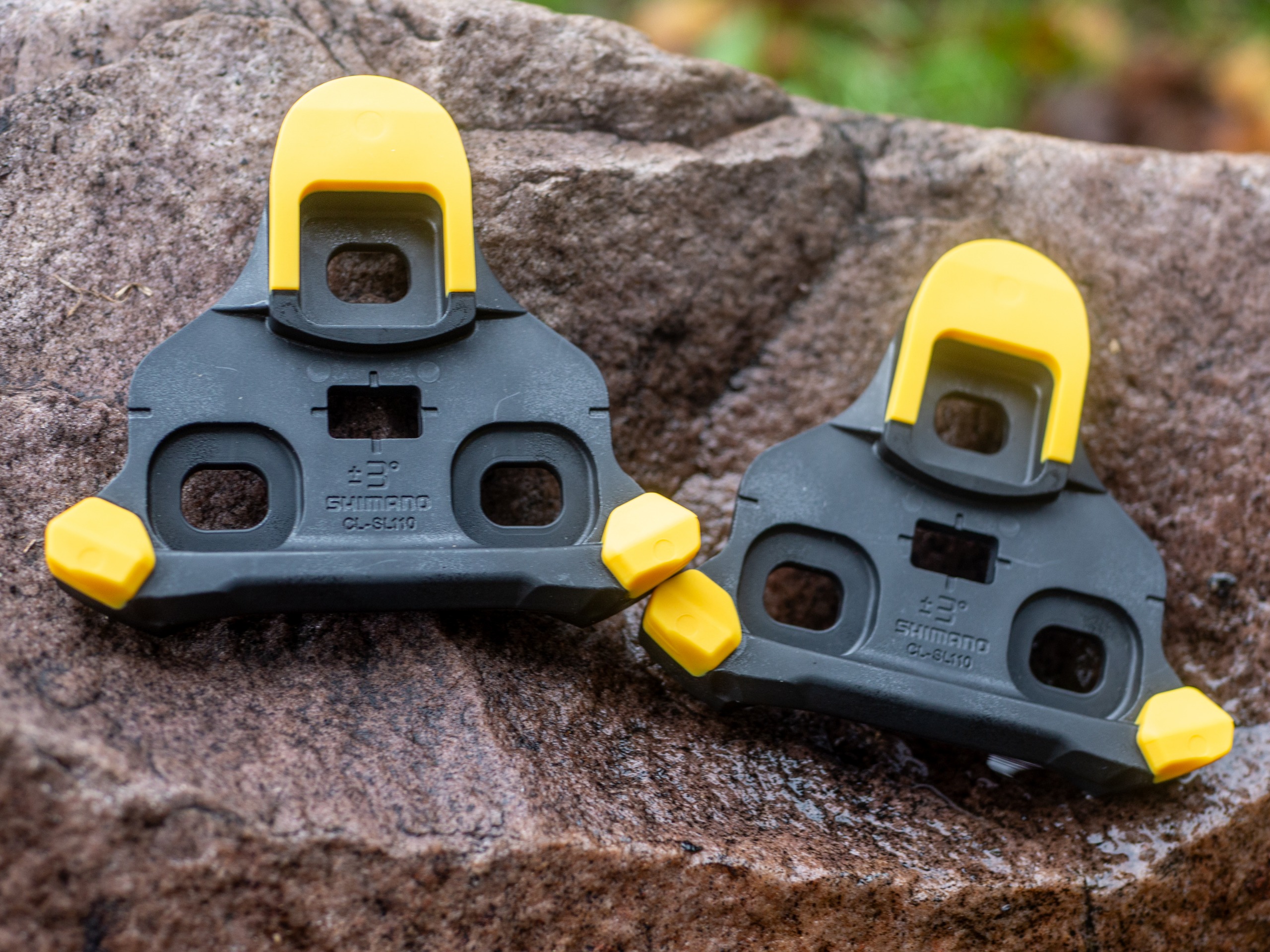
The cleat story is where this gets spicy. Shimano’s three main SPD-SLR cleats, red, yellow and blue, use the familiar colour logic of fixed, generous and narrower float. There is also a grey CL-SL130 transition cleat intended to help riders with most non-Shimano three-bolt road shoes. But Shimano’s own compatibility notes make the hierarchy clear: the full low-stack and weight benefits are for the integrated system, while the grey bridge cleat gives away some of the headline gains. (bike.shimano.com)
BikeRadar’s first test landed on the right pressure point: the new pedals feel excellent, but the low-stack cleats sacrifice much of the fore-aft adjustment many riders are used to managing at the cleat itself. If your shoe has enough adjustment in the sole, fine. If your current position is already at the edge of the slots, or you ride shoes with fixed hardware, welcome to the expensive part of innovation. (bikeradar.com)
This is where internet gear chat becomes actively dangerous. Some rider will say they bolted it up in ten minutes and felt ‘more connected’. Good for them. Another rider will copy that optimism, shift the foot a few millimetres forward, drop the saddle without measuring, ignore the niggle behind the kneecap, then blame the saddle, the crank length, the physio, and probably their coffee order. The body does not care that the product manager used the word efficiency.
The shop should win this one, if it has the nerve
There is a good local bike shop angle here, and not the lazy ‘support your LBS’ sermon that gets wheeled out whenever online retail sneezes. SPD-SLR is exactly the kind of product that should be sold with a ruler, a torque wrench, a shoe compatibility check and, ideally, a fitter who knows the difference between float and a hostage negotiation. A shop that simply says, ‘yeah mate, new Shimano, chuck it on’ deserves the warranty queue it will create.
- Mark your current cleat position before removing anything.
- Check whether your shoes have enough fore-aft adjustment to replicate your current fit.
- Budget pedals and cleats together, not as a casual half-upgrade.
- If you run multiple road bikes, decide whether you really want two incompatible shoe-pedal worlds.
- Do not change saddle height by vibes. Measure it.
The most irritating part is that Shimano says it will continue supporting SPD-SL while there is meaningful demand. That is good, and necessary, because SPD-SL is everywhere. Club bikes, race bikes, loan bikes, spare shoes, old pedals on the rain bike, emergency cleats in the bottom drawer. The problem is not that Shimano has killed the old standard overnight. It has not. The problem is that it has created a parallel road universe with just enough overlap to confuse people and just enough improvement to tempt them. (cyclingweekly.com)
Arenberg already proved the point
If this sounds theoretical, remember Paris-Roubaix. Mathieu van der Poel’s infamous bike-swap mess in the Arenberg Forest now reads like an accidental product demonstration. Reports after the launch tied the chaos to different Shimano cleat systems between bikes, with Jasper Philipsen reportedly on the new pedals while Van der Poel was still on the old SPD-SL interface. That is elite-level absurdity, but the lesson applies to your Saturday bunch. Standards matter most when everything has already gone wrong. (cyclingweekly.com)
The hot take is this: SPD-SLR is probably good. It may even be the best road pedal system Shimano has made. But the cycling industry has trained riders to treat compatibility breaks as progress and fit consequences as user error. That is backwards. A pedal can be brilliant and still be a pain in the backside. A lower stack can be real and still not be worth moving your cleat away from the one position your body actually tolerates.
So yes, admire the engineering. Try the system if you are due for pedals and shoes anyway. Let the early adopters do their righteous café demonstrations. But if your current SPD-SL setup is quiet, stable and your knees are not filing complaints, do not let a 2.3mm number bully you into a $1000 contact-point renovation.
Shimano has moved the foot closer to the axle. Fine. Now the rest of us have to decide whether that moves road cycling forward, or just moves another standard slightly further out of reach.