
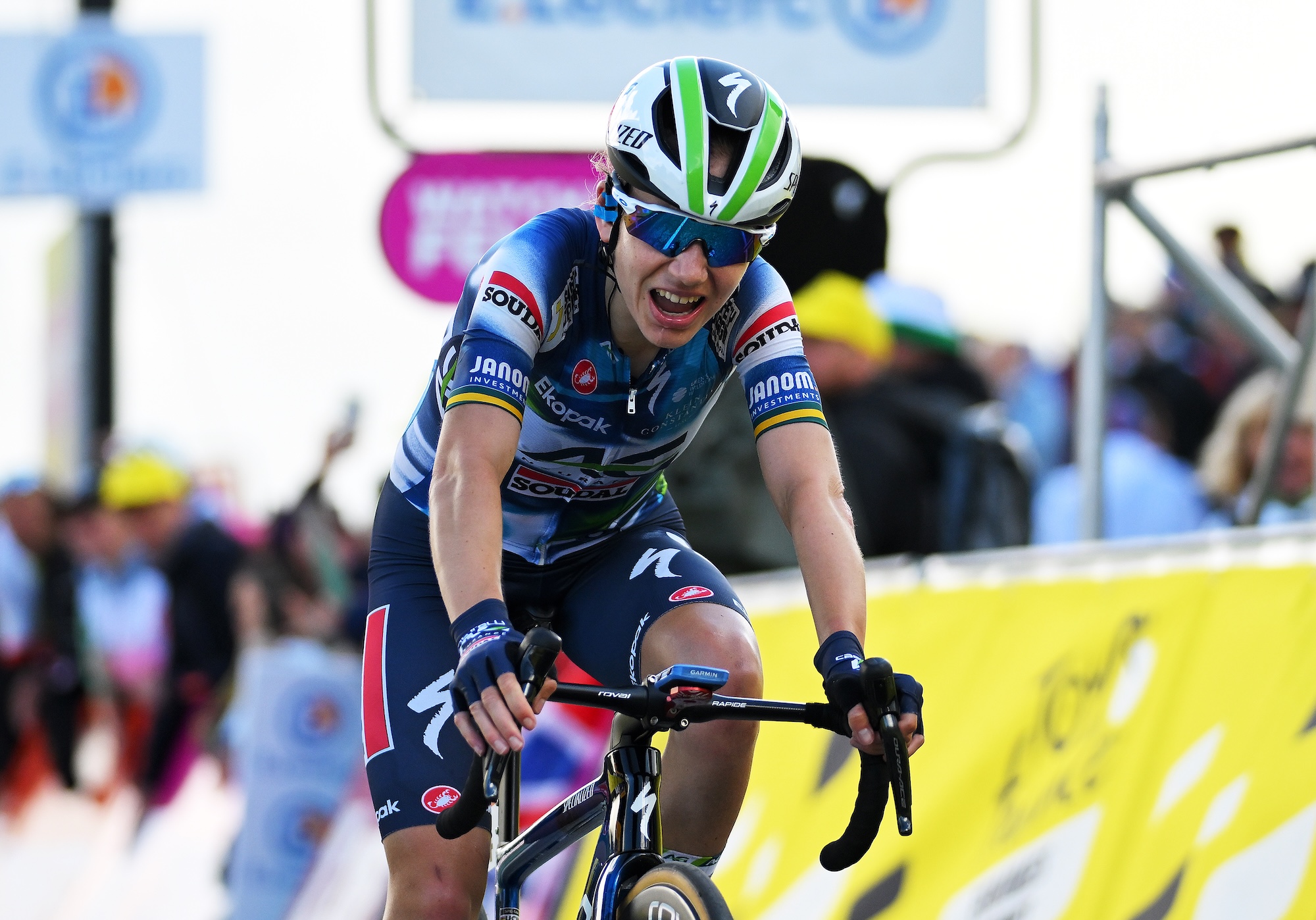
Sarah Gigante Is Back. Stop Treating Comebacks Like Content.
Sarah Gigante has finally reappeared on a start list, and Australian cycling should resist the urge to turn her into a neat redemption reel. A proper comeback is not a hashtag, it is months of boring, fragile, unglamorous work.
Sarah Gigante is back on a start list. That sounds simple if you only read cycling as results, rankings and chirpy team graphics. It is not simple. It is one of the more interesting Australian cycling stories of this week, and maybe the one most likely to be ruined by people who cannot let a rider return without immediately asking what she can win.
On Tuesday 8 September 2026, the news is not that Gigante is suddenly a favourite again. The news is that the 25-year-old Australian climber is due to race the Faun Tour Femmes from Thursday, 10 September, after more than a year away from competition. Her previous race was the final stage of the 2025 Tour de France Femmes, where she finished sixth overall. Less than two weeks later she broke her femur in a training crash. Since then came postponed returns, rehab, more surgery, and the particular psychological grind of watching the sport keep moving while your body negotiates with metalware.
The comeback industrial complex needs to calm down
Cycling loves a comeback because it gives everyone a tidy story. Before, disaster. After, triumph. Cue piano music, slow-motion zip of a skinsuit, inspirational caption, sponsor logo placed tastefully over suffering. Lovely. Also mostly rubbish.
A rider returning from a femur fracture is not a motivational product. She is an athlete re-entering a peloton that has become faster, deeper and less forgiving during her absence. The women’s WorldTour has moved on at warp speed. Teams are richer, calendars are denser, climbing fields are nastier, and every promising 19-year-old appears to arrive already calibrated by altitude camps, aero testing and a junior palmares that would embarrass half the old pro men’s bunch.
If the first thing you want from Gigante is a result, you are not watching a comeback. You are shopping for a miracle.
AG Insurance-Soudal has at least said the sensible bit out loud. She starts without pressure. Good. Now the rest of us have to prove we can behave like adults for four days in France.
Faun Tour Femmes is not a soft landing
The Faun Tour Femmes is not some ceremonial reintroduction ride around a lake with polite applause and a finish-line crêpe. It replaces the long-running Tour Cycliste Féminin International de l'Ardèche, a race with proper climbing DNA and enough lumpy French geography to expose anyone who has been faking form on Instagram. The 2026 edition runs from 10 to 13 September in the Drôme and Ardèche, four stages that should suit climbers on paper, which is exactly why we should be careful with expectations.
Paper is where cycling people make themselves stupid. Gigante climbs beautifully. Therefore hilly race equals comeback fireworks. That is the lazy equation. The better question is not whether she can follow attacks. It is whether she can handle race rhythm, nervous positioning, repeated accelerations, descending under fatigue, team radio chaos, hotel recovery, and the strange violence of being surrounded by 100 riders who did not spend the last year waiting for her.
What would success actually look like?
- Pinning on a number and finishing the opening stage without drama.
- Getting through four days pain-free, even if the result sheet looks ordinary.
- Helping AG Insurance-Soudal rather than being wrapped in cotton wool as a fragile project.
- Descending confidently enough that nobody in the team car starts speaking in that fake-calm voice.
- Leaving France with a training block in the legs and no heroic quote required.
That may sound unromantic. Excellent. Romance is what the sport sells when it does not want to talk about labour. Comebacks are labour. Rehab is labour. Sitting on the trainer when everyone else is at the Giro is labour. Learning to trust a leg again is labour. Australia, with its Olympic obsession and medal-table reflex, is particularly bad at recognising athletic labour unless it ends in a podium photo.
Australia has a climber problem, and Gigante is still the exception
This is the bit that should make local cycling uncomfortable. Gigante remains one of the rare Australian riders who can make proper European mountains feel like an opportunity rather than a sentencing hearing. We produce tough riders, smart riders, track engines, classics grinders, breakaway pests and time-trial machines. Pure climbing talent is rarer, especially on the women’s side, and we have never really built a domestic environment that knows what to do with it before Europe does.
So when a rider like Gigante appears, we tend to do two things badly. First, we over-celebrate the ceiling. Then, when injury interrupts the fantasy, we quietly move attention elsewhere until the comeback graphic drops. That is not support. That is fandom with a short attention span and a national flag emoji.
The timing is sharp because Australian cycling is having one of those weeks where the future keeps knocking. The 2027 Santos Tour Down Under has been talking up its world-first same-course, same-day, same-distance format for men and women. Good. It should. That is exactly the kind of structural change that matters more than another panel session about pathways. But the pathway is not only race days and broadcast slots. It is what happens when a top rider disappears for 13 months and the system still needs to hold shape around her.
Do not make her carry the whole Australian story
Gigante’s return should be celebrated, but not inflated. She does not need to be turned into the saviour of Australian women’s cycling, the proof of resilience, the poster rider for every junior who has ever cried in a physio room. Let her be a bike racer first. Let her have a bad day. Let her sit up. Let her finish 47th without the internet doing amateur sports psychology in the comments.
This is where cycling’s hard-person mythology becomes a nuisance. We pretend pain is noble because most of us have confused discomfort with character. There is nothing noble about rushing back to satisfy a narrative. There is nothing weak about taking time. The most professional thing Gigante can do this week is not attack. It is listen to the body that has already overpaid for this comeback.
Of course, if she floats uphill in France and starts shredding favourites, the café will go feral. Mine included. I am not pretending to be immune. Watching Gigante climb when she is right is one of the better Australian experiences available without a boarding pass and a second mortgage. But the grown-up position is this: the result is secondary, the return is the story, and patience is not the same thing as doubt.
So yes, watch the Faun Tour Femmes. Watch because an Australian climber is finally back in the moving argument of a race. Watch because women’s cycling is better with Gigante in it. Watch because the sport needs fewer disposable heroes and more long memories. Just do not demand a fairytale by Sunday. Fairytales are for people who do not understand recovery. Cyclists should know better.