
Red Bull Just Landed In The Women’s Tour. Cheer First, Then Check The Invoice.
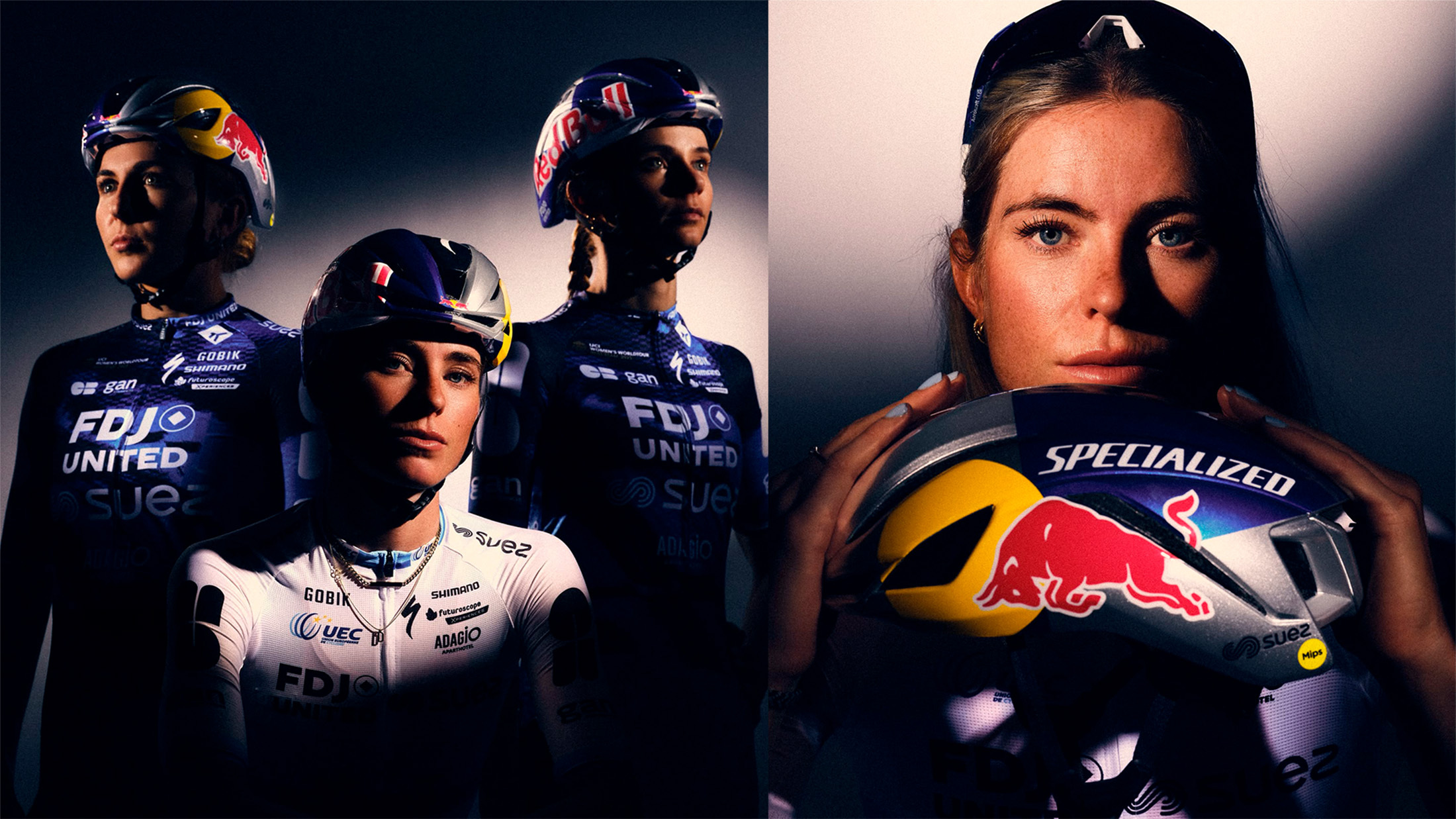
FDJ United-Suez rolled into the Tour de France Femmes with Red Bull helmets and a bigger engine room. That is not selling out. It is growing up, provided the sport does not hand the keys to the loudest cheque book in the car park.
There are quiet sponsorship announcements, the sort that arrive as a PDF, die in an inbox and get recycled into one polite sentence on a race broadcast. Then there is Red Bull turning up at the Tour de France Femmes with helmets, branding, music at the bus and the subtlety of a downhill rider in a full-face at the café.
On Saturday 1 August 2026, as the women’s Tour opened in Lausanne, FDJ United-Suez confirmed Red Bull as a new major partner and official energy drink partner. The logo went straight onto the riders’ helmets. Demi Vollering, already the biggest GC weapon in the team’s shed, called the lid special. Of course she did. A rider does not see a new sponsor the size of Red Bull and complain that the decals clash with the socks.
The lazy take is that this is another multinational buying polish for its brand. The lazier take, usually muttered by men who still call women’s racing a development product, is that women’s cycling should be grateful for any cash that falls out of the corporate jersey cannon. Both are wrong. This is not charity. This is a power move. And women’s cycling should absolutely take the money, then make sure the money does not take the sport.
This is not a sticker deal. It is a warning shot.
Red Bull’s arrival matters because it is not behaving like a local plumbing firm putting its name above a junior team’s bottle cage. It brings a performance ecosystem, media muscle, athlete management, slick content, and the ability to make everyone else look underdressed before the neutral flag has dropped. FDJ United-Suez already had pedigree, structure, Vollering, Specialized bikes and genuine Tour ambition. Red Bull has not rescued a basket case. It has picked a contender.
That distinction matters. The strongest women’s teams are no longer asking to be included in the sport. They are becoming the sport’s most interesting investment class. The men’s WorldTour spent July arguing over superteams, salary pressure and the suffocating gravity of the richest squads. The women’s peloton is now entering the same room, just with fewer bad suits and a lot more upside.
Money does not ruin women’s cycling. Lazy money does.
Meanwhile, Wiebes is making the race look brutally simple
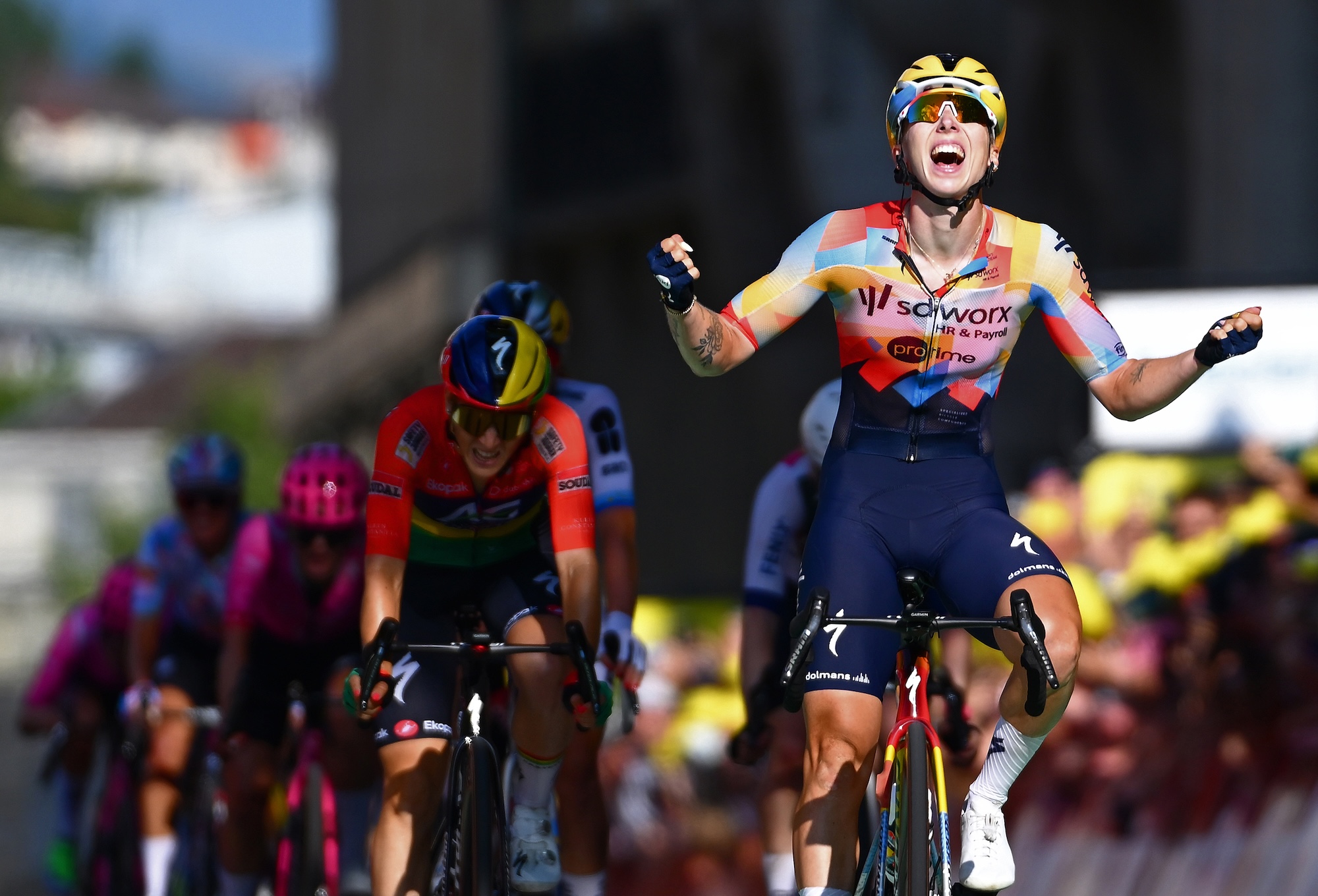
The timing could not be better or more uncomfortable. Lorena Wiebes won stage 1 in Lausanne in yellow-grade style, then backed it up on Sunday 2 August with another sprint win in Geneva after Riejanne Markus was caught with just 450 metres to go. FDJ United-Suez got the sponsorship splash, but SD Worx-Protime got the scoreboard. That is the thing about cycling. Your marketing department can win the morning. Your sprinter still has to win at 5pm.
And yet the Red Bull move changes the pressure around the race. FDJ United-Suez have not merely turned up to support Vollering. They have turned up with a billboard strapped to the roof saying yellow or bust. Célia Gery attacking on stage 2, Vollering sniffing seconds on stage 1, the team talking openly about the overall, it all now happens under a logo associated with domination, risk and making sport look like a product launch.
Some purists will wince. Good. Purists are often just romantics with no payroll responsibilities. Women’s cycling has been told for decades to be patient, to build sustainably, to accept smaller calendars, smaller prize pools, worse time slots and equipment crumbs swept off the men’s bench. Now a serious sponsor walks in and suddenly everyone remembers their pastoral concern for authenticity. Spare us.
The real danger is not Red Bull. It is everyone copying the worst version of Red Bull.
There is a good version of this. Red Bull funds better coaching, better medical support, smarter recovery, more stable contracts, proper content, proper salaries and a team culture where women are not treated as a footnote to a men’s programme. If that is where this goes, clap loudly. Buy the ridiculous helmet if you must. Paint your local bunch ride in cartoon bulls.
There is also a bad version. The bad version is an arms race where a few rich squads vacuum up the best riders, development becomes a press-release word, and every race is slowly reduced to four superteams bullying the bunch while everyone else gets exposure instead of a wage. Cycling has seen that movie. It comes with better buses and worse racing.
That is why Decathlon CMA CGM’s announcement that it will launch a women’s ProTeam in 2027 is part of the same story. The women’s peloton is not just attracting sponsor stickers, it is attracting infrastructure. New teams, bigger budgets, development pathways, and brands that realise the Tour de France Femmes is no longer a side dish after the men’s banquet. It is an audience with its own taste, its own heroes and, increasingly, its own commercial gravity.
- Minimum salary growth that keeps pace with sponsorship inflation, not Instagram follower growth.
- Longer contracts for domestiques, not just superstar retention deals.
- Investment in junior and under-23 women, because you cannot buy a pathway the week before the Tour.
- More race days outside July and August, so the sport does not live entirely on Tour attention.
- Transparent budgets and safer working conditions, because professionalism should mean more than a flash helmet.
Australia should pay attention, not just applaud
There is an Australian angle here beyond spotting Amanda Spratt in the moves and Ruby Roseman-Gannon piloting Liv AlUla Jayco into the final corner in Geneva. Australian cycling loves to celebrate toughness, pathways and good culture. Lovely. But the world is now putting serious money into the women’s side, and culture will not bridge a budget gap forever.
If our domestic scene wants to keep feeding the WorldTour rather than simply donating talent to richer ecosystems, it needs better race opportunities, better commercial packaging and fewer speeches about inspiration. Inspiration does not pay rent in Girona. A properly funded contract does.
The Red Bull helmet is easy to mock because it is loud, shiny and perfectly engineered to annoy people who think cycling should still look like a damp wool jersey and a hand-painted support car. But the actual scandal would be if women’s cycling reached this commercial moment and failed to demand better terms. If brands want the glow, they can pay for the light fittings.
So yes, cheer the deal. FDJ United-Suez have earned the right to act like a heavyweight. Red Bull has finally noticed that women’s cycling is not a charity case, it is premium sport with sharper racing and a better growth curve than half the tired properties companies already sponsor. But keep one eye on the invoice. The future of women’s cycling should be better funded, louder and more ambitious. It should not become a content studio with a finish line attached.