
Poland Just Proved Safety Is Not A Gear Ratio
Tour de Pologne stage 4 did not need another thinkpiece about handlebars. It needed dry paint, sane descents, enough medical cover, and organisers willing to call nonsense before 40 riders are on the deck.
There are days when pro cycling looks gloriously stupid. Tour de Pologne stage 4 was not one of them. It was the other kind of stupid, the kind where a wet road, a fast downhill, white traffic paint and a nervous WorldTour bunch combine to remind everyone that the sport keeps trying to solve flesh-and-asphalt problems with spreadsheet regulations about equipment.
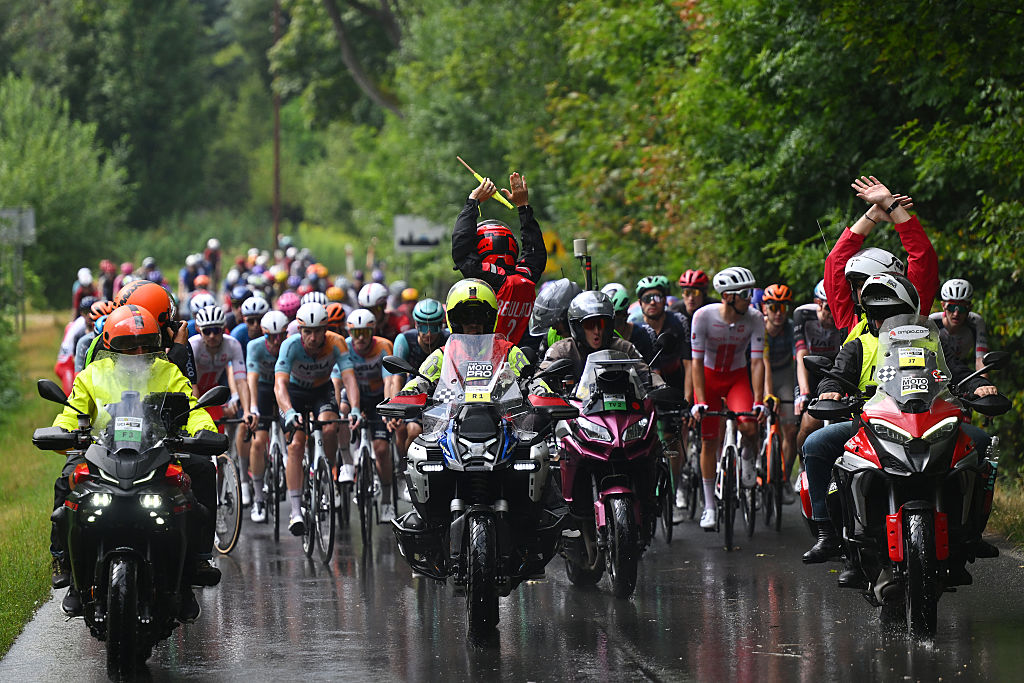
On Thursday 6 August, around 30 to 40 riders went down in a major crash about 41 kilometres from the finish on the hilly run to Karpacz. The race was neutralised for roughly 35 to 40 minutes while ambulances dealt with the injured. Riders were scattered across both sides of the road. A race motorbike was reportedly caught up. João Almeida, one of the race favourites and a former Tour de Pologne winner, continued with a torn kit and a visible leg injury before dropping away from contention.
This was not bad luck. It was a system showing its seams.
The organisers did what organisers usually do after the horse has bolted, the gate has exploded, and half the stable is in a ditch. They removed the Cat 1 Borowice climb from the finale, shortened the stage, and sent the race onwards to Karpacz. Bart Lemmen then salvaged the afternoon with a gutsy, slightly bonkers win for Visma-Lease a Bike, taking his first professional victory and the overall lead by six seconds. It was a hell of a ride. It was also not the point.
Cycling loves the heroic restart because it lets everyone avoid the ugly question: why did the race need a heroic restart in the first place?
The Tour de Pologne is not some village handicap run by a bloke with a clipboard and a ute. It is a WorldTour race. It sits in the same calendar tier as Paris-Roubaix, the Tour Down Under, the Giro and the Tour de France. It gets the big teams, the big buses, the big convoy, the big broadcast package. Which means the excuses have to be smaller. Wet descents are not exotic. White paint is not a new discovery. A bunch going full noise on broad rural roads while chasing a break is not unforeseeable. That is literally road racing.
The UCI keeps looking at the bike. The danger keeps arriving from the road.
This is where the current safety conversation becomes maddening. The UCI and SafeR have spent the last few seasons poking at handlebar width, hood positions, helmet shapes, maximum gear ratio tests, signage, convoy movements and various attempts to slow the peloton by nibbling at the machine. Some of that matters. I am not defending 34 centimetre bars twisted inwards like a praying mantis having a panic attack. I am not pretending a convoy can behave like a Melbourne tradie in a Ranger and still be safe.
But the crash in Poland makes one thing painfully obvious. If the sport thinks rider safety starts at the handlebar clamp, it has already lost the plot. Safety starts with route design. It starts with road-surface audits that are more serious than a bloke driving the course at lunch. It starts with traffic paint treated as a hazard, not scenery. It starts with enough medical cover that a race does not become a rolling moral dilemma the moment 40 riders hit the deck.
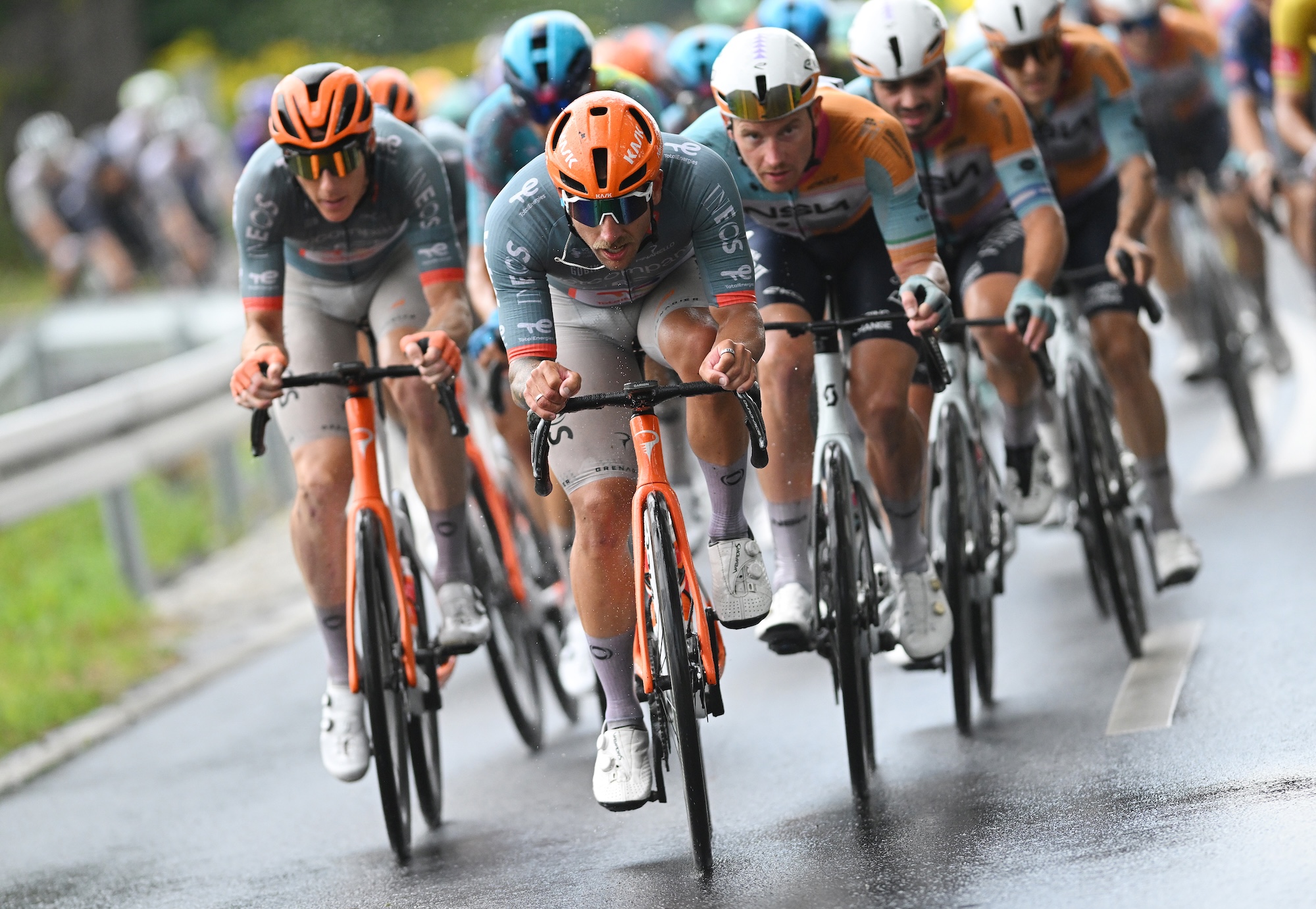
Australian riders understand this better than most because we race and train on every flavour of sketchy surface known to local government. Polished zebra crossings. Chipseal that feels like a cheese grater. Roundabouts designed by people who appear to have seen bicycles only in cartoons. Summer tar that sweats. Winter roads that stay greasy in the shade. Ask any NRS rider, any club racer at a wet crit, any commuter who has clipped a painted line in the rain: grip does not care about governance language.
The speed problem is real. The answer is not theatre.
Before stage 4, Jonathan Milan had won the first three stages of the Tour de Pologne in a row. That matters because the race arrived at the mountains already vibrating with sprint speed. Modern pro cycling is faster, deeper and less forgiving. The old lull-and-surge rhythm has been replaced by permanent pressure from teams with too much horsepower and too many points to chase. Even transitional stages are raced like someone left the oven on.
So yes, talk about speed. Talk about gearing if you must. Talk about race radios, sprint zones and the three-kilometre rule. But do not pretend a 54x11 cap or a narrower wheel profile is going to save riders when 150 of them are surfing a wet descent across painted road furniture. That is safety cosplay. It photographs well in a regulation update. It does not change the coefficient of friction under a front tyre.
- Mandatory pre-race wet-weather risk audits for descents and painted road sections, not just generic course checks.
- Clear authority to neutralise or alter a route before a mass crash, rather than after riders have become the evidence.
- More transparent medical minimums for WorldTour races, including what happens when all ambulances are occupied.
- Public post-stage safety reports when a race is neutralised, with findings that teams and riders can actually see.
- A culture where rider concerns about a descent are treated as operational intelligence, not whining from expensive employees.
The awkward bit is that proper safety costs money and annoys powerful people. It means telling mayors their scenic descent is out. It means telling broadcasters the finale has changed. It means telling sponsors the race might be less spectacular because nobody wants their logo parked next to a pile of riders and snapped carbon. It means giving safety managers teeth instead of a lanyard.
And yes, Australia should be paying attention.
We love congratulating ourselves on clean events, big skies and nice police motos at the Tour Down Under, Cadel Evans Great Ocean Road Race and nationals. Good. Keep doing the work. But do not think Europe’s chaos is a foreign disease. The moment a race gets faster, wetter, narrower or more desperate, the same physics arrives here with a boarding pass. If Australian cycling wants more international racing, more gravel worlds, more WorldTour attention and more mass-participation events, it has to stop treating safety as a compliance folder.
The most honest thing about stage 4 was not Lemmen’s win, good as it was. It was the neutralisation. For once, the machinery of the race had to stop and admit the obvious: the show could not continue until the bodies were cleared and the route was changed. That pause said more than any press release. It said the system was at capacity. It said the plan had failed. It said rider safety is not something you can bolt onto a bike after the fact.
Cycling will always be dangerous. That line gets dragged out whenever anyone wants the conversation to end. Fine. Descending in the rain at race speed will never be lawn bowls. But danger is not a get-out-of-jail card for lazy design. Risk is part of racing. Predictable stupidity is not. Poland just gave the sport another warning, wet, loud and expensive. If the response is another argument about gear ratios while riders keep crashing on the same old hazards, then the peloton is not the only thing sliding across paint.