
Philly Brought Back The Wall. Australia Should Steal The Blueprint.
The Philadelphia Cycling Classic returns this week with WorldTour teams, equal prize money and a climb that actually means something. Australia has the riders, the roads and the broadcast appetite, so why are we still treating urban road racing like a council inconvenience?
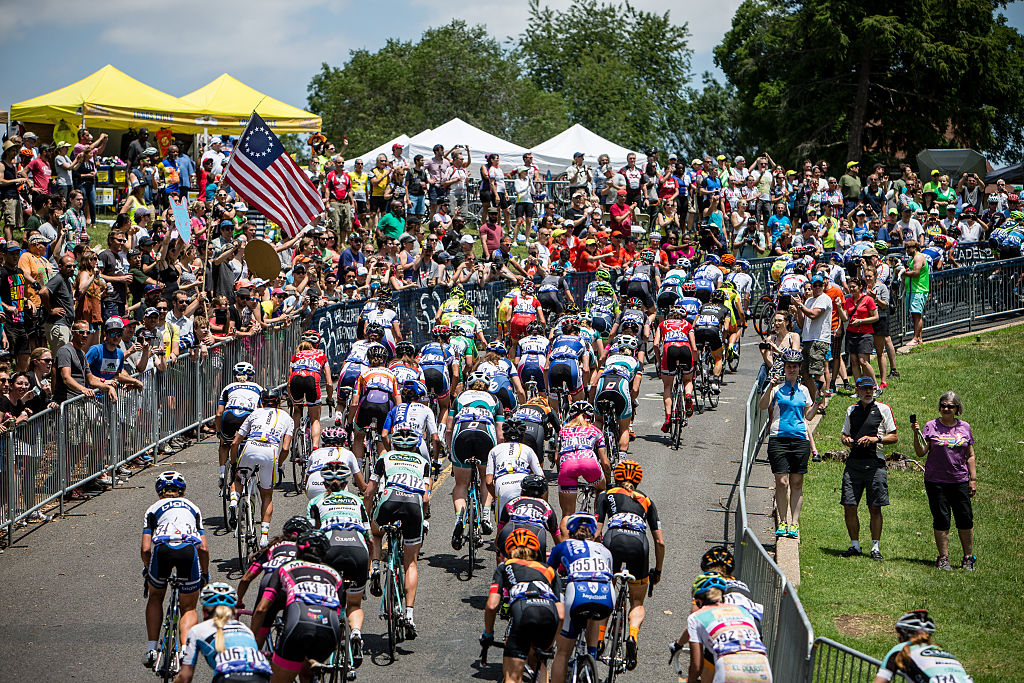
Forget the Vuelta weather circus for a minute. The most interesting road race this week is not in Spain, and that alone should make the Euro-snobs choke on their cortados. On Sunday, August 30, the Philadelphia Cycling Classic comes back after a near-decade absence, dragging with it the Manayunk Wall, Lemon Hill, a proper city circuit, WorldTour teams, domestic squads, equal prize money and a reminder that road cycling is at its best when it invades a city rather than politely asking to borrow a highway shoulder.
This is not nostalgia with timing chips. The revived race has five men's WorldTour teams on the start list, including EF Education-EasyPost, Lidl-Trek, Lotto-Intermarché, NSN Cycling Team and Team Jayco AlUla. The women's field brings Canyon-SRAM, EF Education-Oatly and Human Powered Health, plus a thick stack of Continental and elite domestic teams. Quinn Simmons, Luke Lamperti, Maggie Coles-Lyster, Kristen Faulkner, Derek Gee-West, Tao Geoghegan Hart and Megan Guarnier give the poster some teeth. Guarnier, who won the last women's edition in 2016, is even jumping from the team car back onto the bike. That is either ridiculous or brilliant. In cycling, the best answer is usually both.
The Wall is the product
The course matters because the course has a personality. The 14.4-mile loop runs from the Benjamin Franklin Parkway along the Schuylkill River, through Manayunk, up the 17 per cent sting of the Manayunk Wall, back through Fairmount Park and over Lemon Hill before returning downtown. The women race 100 kilometres. The men get close to 200. That is not a sterile office-park crit with a coffee van and six traffic cones. It is a civic event with a bike race running through it.
A race with a climb people can name is already ahead of half the modern calendar.
Cycling keeps spending money trying to explain itself, then acts surprised when the public does not fall in love with drone shots of a peloton on an anonymous dual carriageway. Philly does not need explaining. You stand on the Wall, you see riders suffer, you yell something probably unhelpful, and suddenly the sport makes sense. That is the magic. Not the points table. Not the aero socks. Not the sponsor activation deck written by someone who has never changed a cable.
Australia should be taking notes, not taking comfort
Here is the uncomfortable bit for us. Australia has world-class road racing, but too much of it is treated as a summer postcard. The Tour Down Under is excellent. Cadel Evans Great Ocean Road Race is our only men's and women's WorldTour one-day fixture and Geelong does the waterfront theatre better than most. The ProVelo Super League has given the domestic scene badly needed structure after the old National Road Series era. Road Nationals in Perth proved that a city circuit can draw atmosphere when it is not buried under apologetic messaging about road closures.
But we still do not have enough races that feel like they belong to the streets. We have pathways, calendars, development language and earnest panel discussions. Lovely. Where is the annual Australian urban classic that a non-cyclist knows because it ruins their Sunday and, by lap three, somehow turns them into a fan? Where is the Sydney harbour circuit with a climb sharp enough to make pros hate life? Where is the Melbourne inner-north wall, the Brisbane river loop, the Perth parkland punch-up, the Adelaide post-TDU one-day race that does not vanish once the team buses head to the airport?
The lesson is not America is good. The lesson is specificity sells.
The Philly organisers have understood something cycling administrators routinely miss. A race does not become important because it buys a date. It becomes important because fans can describe it in one sentence. Paris-Roubaix has cobbles. Strade Bianche has white roads. Fleche Wallonne has the Mur de Huy. Philly has the Wall. Cadel has Challambra and the Geelong waterfront, which is why it works. Too many other events are just gradients, kilometres and committee-approved adjectives.
- Give the race a named obstacle that hurts. If spectators cannot remember it, riders will not fear it.
- Run women and men on the same day, same visible course, same seriousness. Prize parity should not require a press release in 2026, it should be the floor.
- Make it public transport friendly and bike-in friendly. If the default advice is drive and park somewhere miserable, you have already lost.
- Put domestic teams next to WorldTour squads. That is how the public learns the ladder exists.
- Stop apologising for closing roads. Every marathon does it. Every football final does it. Cycling needs to stop acting like a guest at its own party.
Jayco turning up matters
Team Jayco AlUla being on the men's start list is not a footnote for Australian fans. It is the exact kind of overseas visibility Australian cycling needs, especially when our domestic riders are trying to turn PSL form, Oceania results and national titles into proper contracts. A UCI 1.1 race in a major city gives domestic riders a chance to be seen against WorldTour legs without needing a miracle email from a European development team. That matters more than another glossy pathway graphic.
It also exposes the gap at home. Australia produces riders with absurd efficiency, then too often sends them into a system where the biggest local stages are clustered in January and February, while the rest of the year becomes a grind of commitment, travel costs and selective obscurity. If we are serious about keeping talent visible, our calendar needs anchor events people can attend, remember and argue about. A proper city classic is not a luxury. It is infrastructure.
Yes, councils will whinge. Let them.
The standard objections are predictable. Road closures are hard. Residents complain. Police costs are ugly. Sponsors want certainty. Weather is unpleasant. Broadcast is expensive. Fine. Nobody said building a classic was easy. That is why most race promoters hide behind industrial estates and call it elite sport. The whole point of a classic is that it feels slightly unreasonable.
Philadelphia is closing roads, building a fan festival with more than 150 vendors, running an amateur time trial, adding a charity ride and streaming the elite races. That is not just a bike race, it is a weekend economy with Lycra attached. Australian cities, which already shut themselves down for fun runs, footy parades, car races and fireworks, can stop pretending a peloton is uniquely disruptive. Bikes are not the problem. Timid ambition is.
So yes, watch the Vuelta if you want the grand tour plotline. But keep one eye on Philly this weekend. Not because America has suddenly solved cycling, it plainly has not. Watch because the revived Classic understands something pure: road racing needs geography, noise, inconvenience and a climb with a nickname. Australia has all the raw material. What it lacks is the nerve to put a proper wall in the middle of town and tell everyone to come watch the suffering.