
Paris Finally Stopped Being A Champagne Ride. Now Make It Count.
Mathieu van der Poel and Tadej Pogačar just turned the Tour’s final Sunday into a bike race again. The ASO should stop pretending the old procession is sacred and admit Montmartre is the future.
The Tour de France used to end with bubbles, handshakes, fake attacks, one doomed Frenchman waving at the cameras, and a sprint so preordained the lead-out trains could have filed a development application with Paris council. Sunday 26 July 2026 blew that nonsense into the gutter.
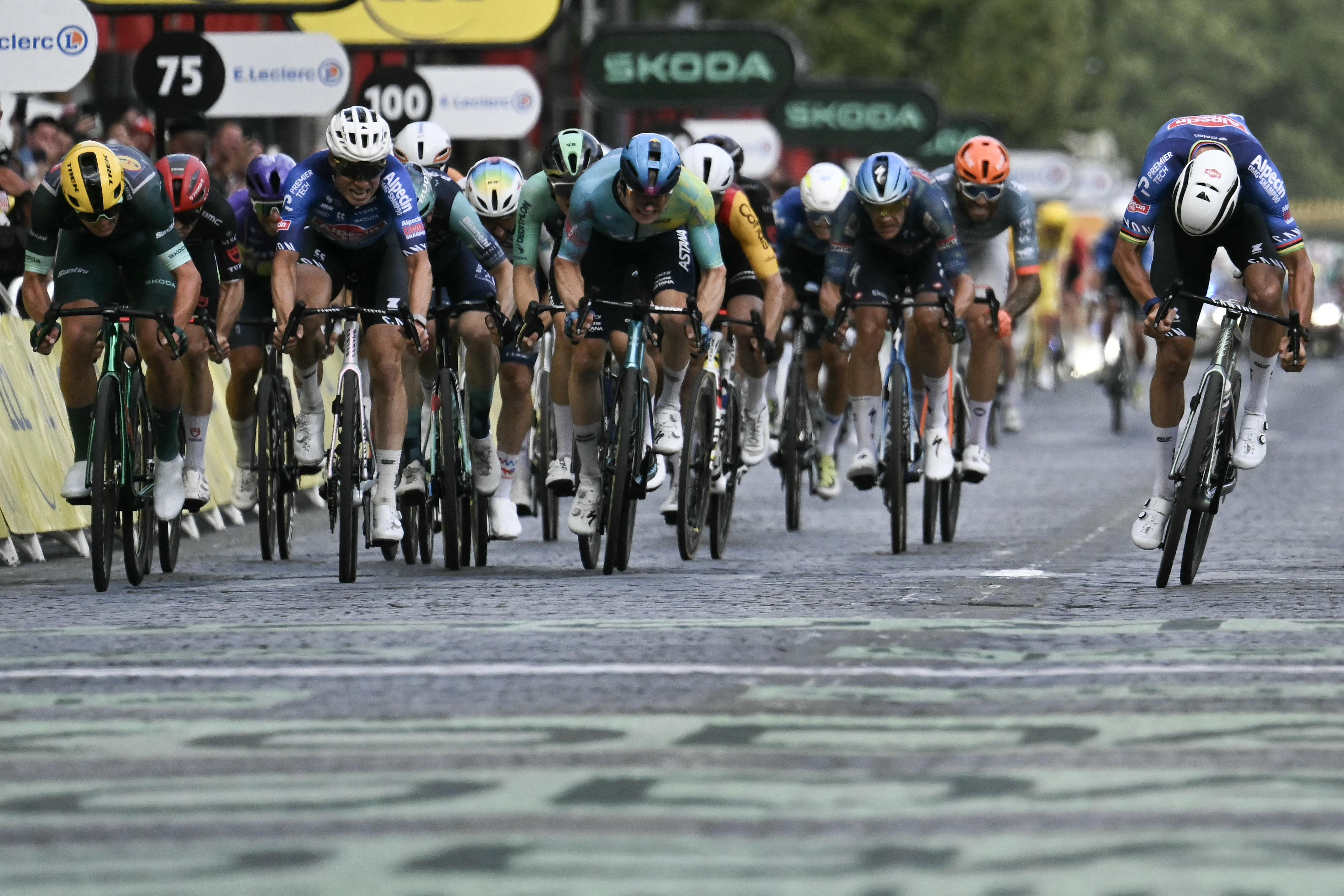
Mathieu van der Poel won Stage 21 in Paris after attacking with Tadej Pogačar over Montmartre and then refusing to die on the run back to the Champs-Élysées. Jasper Philipsen almost swallowed him at the line. Mads Pedersen was right there. Pogačar, already confirmed as a five-time Tour winner, had still thrown himself into the chaos like a man allergic to ceremony. That is not a procession. That is a race.
The champagne stage is dead. Good.
Cycling is painfully good at preserving traditions long after the tradition has turned into wallpaper. The final stage procession made sense when the Tour needed a soft landing after three weeks of industrial-grade suffering. Riders posed for photos. Teams toasted sponsors. Sprinters got their cathedral finish. Everyone pretended not to notice that the world’s biggest bike race had decided to end with two hours of neutralised theatre and ten minutes of actual sport.
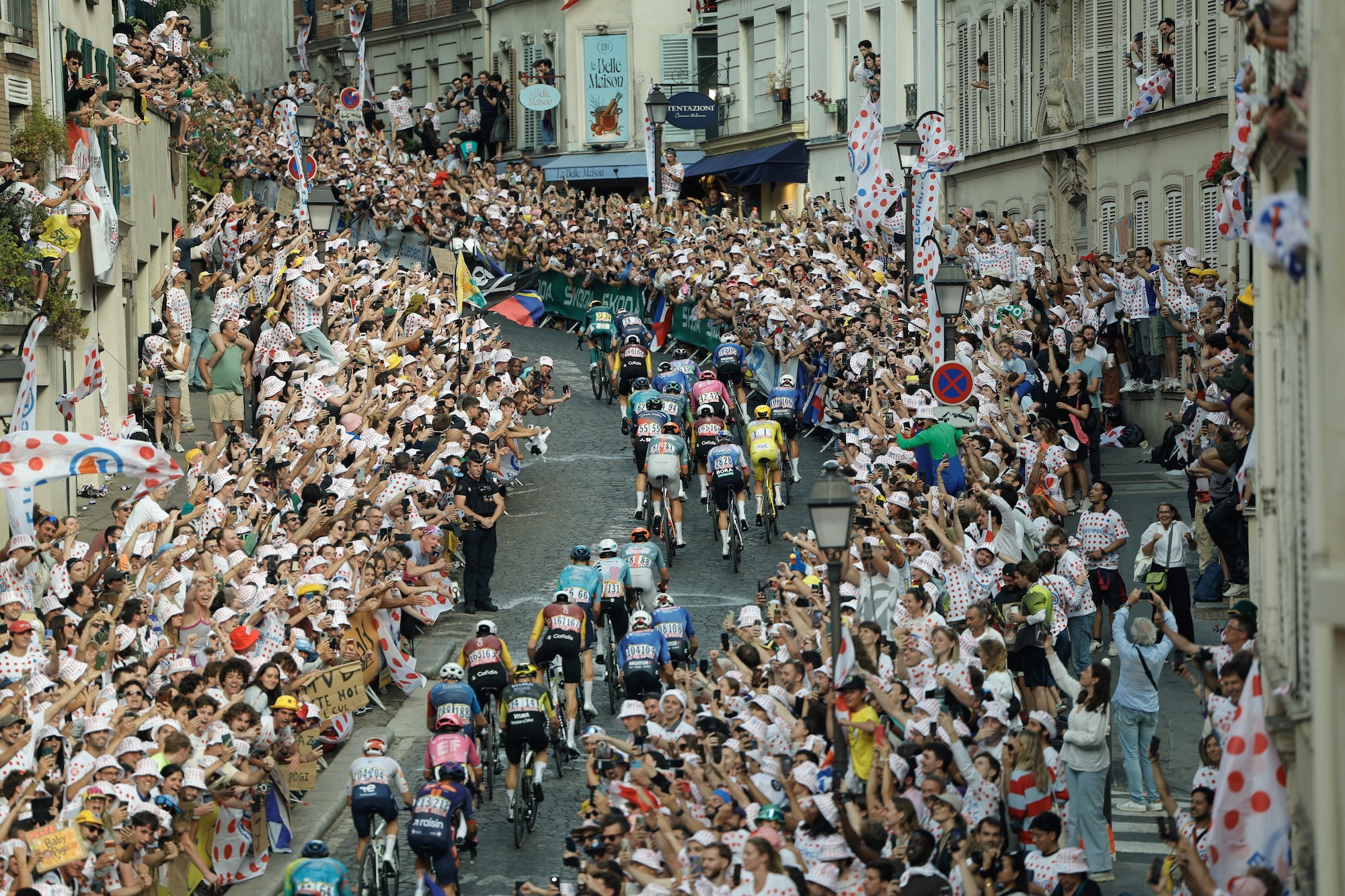
Montmartre has changed the calculation. Those narrow streets, cobbles, crowds and lung-punch ramps make the final Sunday feel like a Classics afterparty organised by someone with a grudge against lead-out men. The Tour tried this modern Paris finale after the Olympic glow, and now it has proved itself again. If the race goes back to a flat lap parade because some administrator misses the old postcard, that administrator should be made to ride Rue Lepic on a hire bike with a rubbing brake.
The Tour does not need a ceremonial ending. It needs an ending that reminds casual viewers why bike racing is beautifully stupid.
Neutralised GC times were sensible. They were also cowardly.
Here is the uncomfortable bit. The 2026 finale was thrilling partly because the general classification was safe. The GC times were taken before the Montmartre circuits, around 41 kilometres into the shortened 89-kilometre stage. That meant Pogačar could go hunting without putting his yellow jersey on a wet drain cover or a spectator’s elbow. It meant Remco Evenepoel did not have to lose a podium because somebody’s uncle leaned over the barrier with a phone. Sensible? Absolutely.
But if you build the best final-stage course the Tour has had in decades, then wrap the biggest prize in bubble wrap before the good bit, you are admitting you do not quite trust your own idea. That is the problem. Cycling keeps designing spectacle, then panicking when spectacle behaves like sport.
The answer is not to send the GC contenders into a blind alley circus with no protection and call it romance. The answer is to make a proper final-day format and stop improvising around fear. If Paris wants Montmartre, and it should, then the Tour should design the final stage as a real stage from kilometre zero, with rules everyone understands before the race starts in Barcelona, Bilbao, Brest or wherever the next Grand Départ circus parks itself.
Make it count, but make it fair
There are three honest options. Keep the champagne parade and admit Stage 21 is a sponsor procession with a sprint tacked on. Keep Montmartre but neutralise GC and call it a bonus exhibition, which is what 2026 basically became. Or make the final Sunday count with a course designed to decide something.
- Option one is boring and should be buried with rim-brake nostalgia and team-issued jeans.
- Option two is entertaining, but it creates a strange fake-danger zone where the stage matters to everyone except the riders who define the race.
- Option three is the grown-up choice. Let Paris be decisive, but design it properly: earlier time gaps protected only in clearly unsafe final kilometres, wider run-ins where possible, serious crowd barriers, hard caps on motorbike clutter, and no last-minute mystery about where the race actually stops counting.
The Tour already bends itself into knots for television, climate, politics and municipal vanity. This year’s final stage was shortened because emergency resources were being pulled towards wildfire response in the south. That was the right call. But it also underlined the obvious: the Tour is not a museum piece. Routes change. Starts move. Heat, fire, police capacity and city logistics now shape the race as much as cols and cobbles. So let us stop pretending the final-day procession is an untouchable relic.
Van der Poel gave the Tour what it keeps claiming to want
Van der Poel’s win was not tidy. That is why it was brilliant. He went with the one rider nobody sane wants to tow to a finish, then somehow out-suffered the sprinters as the gap shrank to panic distance. Philipsen nearly came past, then did the awkward teammate calculation at 70 kilometres an hour. Pedersen, who had spent the Tour in green, was denied the perfect punchline. Pogačar ran out of sting but still crossed as the man of the race, five Tours deep before turning 28.
This is what modern road cycling should sell. Not sterile domination. Not another graphic of watts per kilo over a dead climb. Not a champagne flute balanced in a bidon cage. It should sell great riders making terrible decisions at impossible speed, watched by people who can understand the stakes without needing a spreadsheet.
Australian fans know the pain of the old final stage better than most. You stay up through the dead hours, negotiate with your future Tuesday self, then discover half the stage is a rolling sponsor reel before the sprinters finally bother to switch on the gas. A Montmartre finale is different. It gives the late-night sickos a reason to stay awake. It gives the non-cyclist in the room something to point at and say, quite reasonably, that looks cooked.
Paris should be a finish line, not a lap of honour
The best traditions in cycling survive because they still bite. Roubaix still bites. The Poggio still bites. A mountain-top finish still bites, even when the richest teams try to sand down every variable with altitude camps and aero socks. The old Paris procession had stopped biting. Montmartre has teeth.
So yes, keep the Arc de Triomphe. Keep the Champs-Élysées. Keep the images that make the Tour look bigger than every other race, because frankly it is. But quit treating the last day like a retirement village lap. If the Tour wants to end in Paris, it should end with racing worthy of Paris.
Pogačar’s fifth yellow jersey will own the history books. Van der Poel’s Stage 21 will own the memory. That tells you everything. The Tour accidentally discovered that its final Sunday can be more than a coronation. Now it has no excuse to go back.