
Nannup Is Too Far? Welcome To Australian Cycling.
Europe finally has to pack a bike bag and everyone suddenly discovers geography. Good. The 2026 Gravel Worlds in Western Australia might be the first UCI version that actually deserves the word gravel.
The funniest thing happening in cycling this week is not another Vuelta team botching a sprint train, or another aero gravel bike pretending the rider is not still a flapping meat-sail. It is the quiet panic around one simple fact: the UCI Gravel World Championships are going to Nannup, Western Australia, and the rest of the cycling world has to decide whether it can be bothered turning up.
That sounds harsh. It is meant to. Australian cyclists have spent decades waking up at criminal hours to watch European races, flying across the planet for a proper start line, paying freight costs that make a wheelset feel like contraband, and pretending jet lag is character-building. Now the rainbow jersey is coming to the South West, on 10 and 11 October, and suddenly geography is a moral crisis.
The world title finally left Europe. Cue the fainting.
Nannup will host the first UCI Gravel World Championships outside Europe. The previous editions lived in the comfortable old cycling triangle of Italy, Belgium and the Netherlands, which is fine if your definition of global sport is a train ride from Brussels and a hotel breakfast with four kinds of ham. Western Australia changes the equation. It asks riders to commit. It asks teams to budget. It asks the gravel scene whether its world championship is actually global, or just a European roadie reunion with dust on the chainstays.
The early signs are better than the cynics expected. Organisers have started naming proper contenders, not just passport-stamp collectors. Sofia Gómez Villafañe is expected, which matters because she is not a road tourist with a gravel side hustle, she is one of the defining riders of the modern discipline. Matt Beers is on the radar too, bringing Cape Epic horsepower and enough off-road credibility to make a WorldTour domestique look like a café rider on a borrowed bike. Mads Würtz Schmidt, fresh from defending the European gravel title in Houffalize after a season that already includes The Traka 360 and Unbound 200, is aiming straight at the rainbow bands.
If you call yourself a gravel specialist and skip the one Worlds course with more than 80 percent gravel because it is inconvenient to fly there, maybe the problem is not the course. Maybe it is the business model.
This is not another tame road race in cosplay tyres
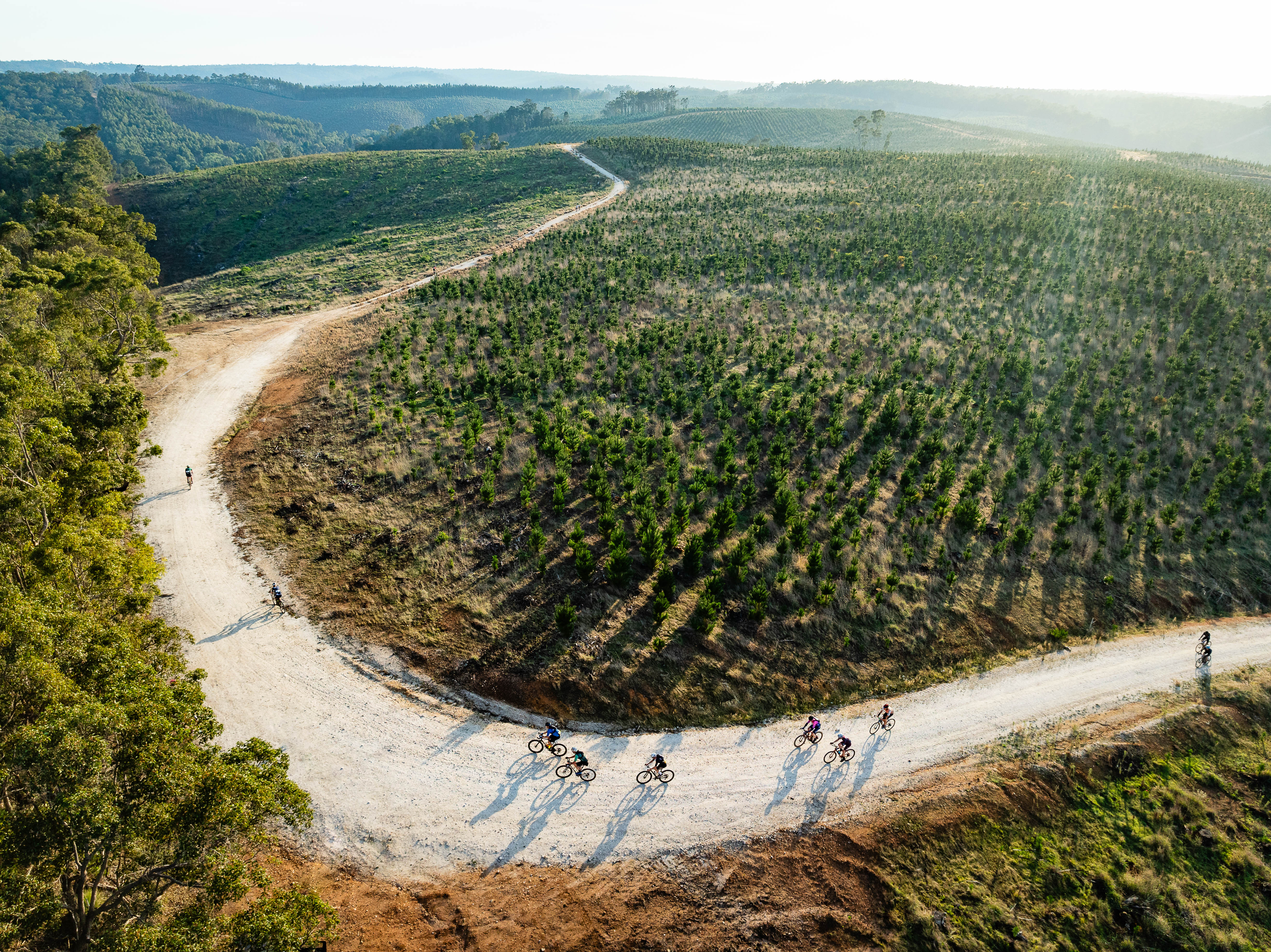
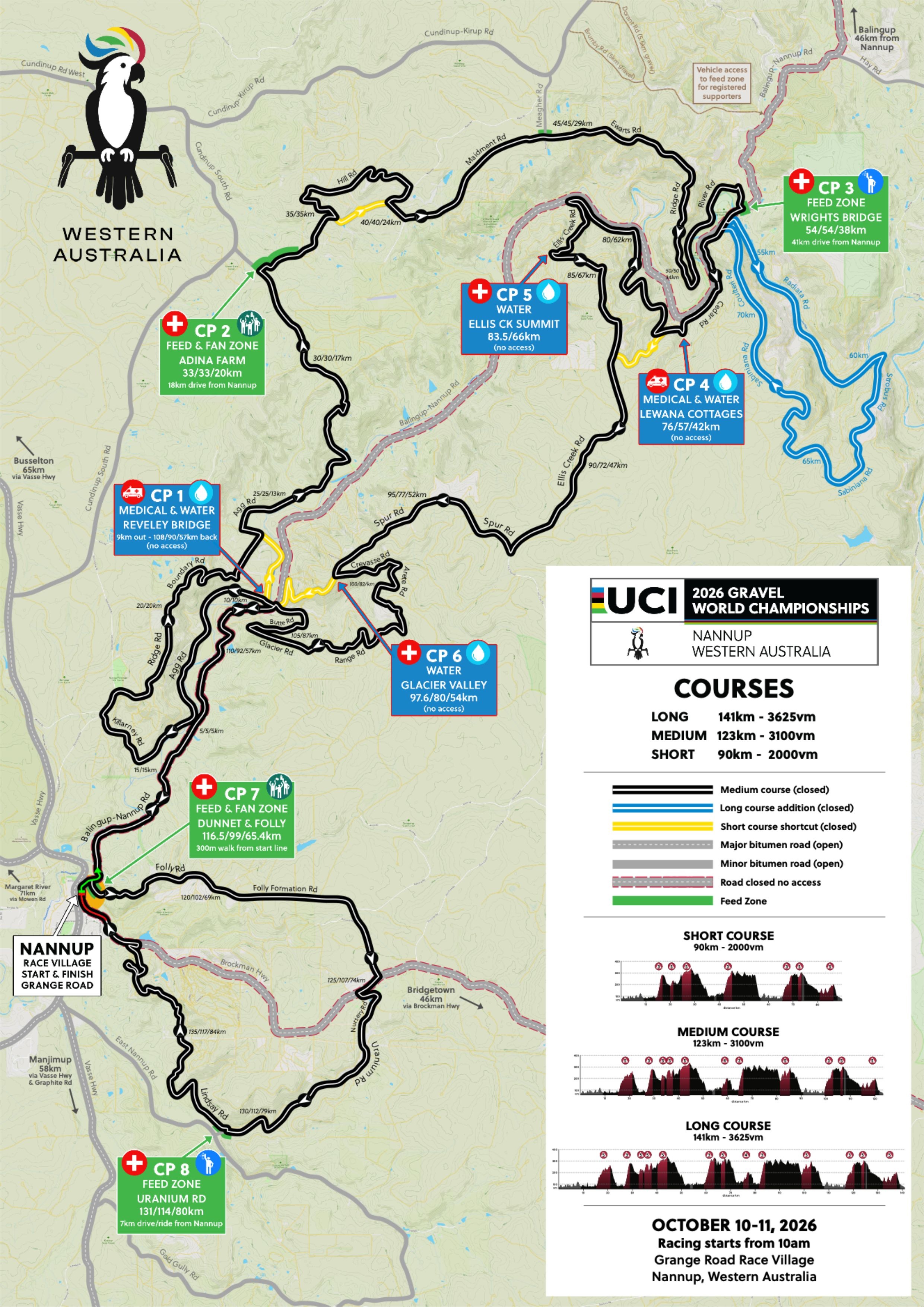
Here is the part that should make every gravel tragic lean forward. The Nannup course is not some apologetic ribbon of farm lane with a few decorative unsealed sections sprinkled in for Instagram. The elite men get 140.7 kilometres and 3,625 metres of climbing. The elite women get 123.1 kilometres and 3,100 metres. Every route is at least 80 percent gravel, with the race starting and finishing in Nannup before heading through the Blackwood Valley, pine plantations, farmland and forest roads.
That matters because the UCI’s gravel experiment has often felt embarrassed by gravel itself. Too many championship courses have been road races with a dirty conscience, fast enough for tarmac engines, forgiving enough for riders whose idea of bike handling is bunny-hopping a bidon in the team bus car park. Nannup looks different. Not absurdly technical, not a survivalist cosplay event, but relentless. One-to-three kilometre climbs, repeated over and over, mostly in that horrible 5 to 8 percent range where nobody gets dropped instantly and everybody starts lying to themselves about how good they feel.
The Life Time clash is not an excuse, it is a sorting hat
The obvious complication is the clash with Little Sugar MTB in the Life Time Grand Prix. The American gravel economy has become powerful enough that a UCI rainbow jersey now has to negotiate with Bentonville spreadsheets. That is not necessarily bad. It is proof that gravel has more than one centre of gravity. But if a rider can skip one Life Time round and still stay eligible, then fly back for Big Sugar on 17 October, the clash becomes less a wall and more a confession booth.
The riders who come to Nannup are telling us they still think a rainbow jersey is worth discomfort. The riders who stay home may have perfectly reasonable commercial reasons. Sponsors, points, prize money, fatigue, family, logistics, all of that is real. But let us not pretend this is just about calendars. Gravel has spent years telling road cycling it is freer, tougher and less precious. Wonderful. Here is the test: fly to the other side of the planet, race on actual gravel, and stop asking the UCI to bring the world to your preferred airport lounge.
- Gravel’s loudest market is not automatically gravel’s rightful capital.
- A World Championship that never leaves Europe is not a World Championship, it is a regional championship with better branding.
- The UCI’s points system still flatters road riders, but a hard, gravel-heavy course gives specialists a fighting chance.
- Australian riders and organisers should stop acting grateful and start acting like hosts with leverage.
- If the sport wants authenticity, it cannot complain when authenticity is remote, dusty and awkward.
Australia has skin in this, not just scenery
There is a local racing point here too. Tiffany Cromwell and Cameron Scott took the elite titles at the 2026 AusCycling Gravel National Championships at Mt Crawford in ugly, muddy conditions. Cromwell went long and brutal, Scott survived an elimination race. That matters because Australians cannot host this thing like polite volunteers holding clipboards while imported stars collect the content. We need Australian riders making the race uncomfortable, Australian brands using it as more than a lanyard opportunity, and Australian clubs turning the Nannup spotlight into participation that survives after the circus leaves town.
AusCycling’s calendar has already been dragged in the right direction. SEVEN in WA and Devils Cardigan in Tasmania gave local riders home-soil paths toward qualification, while Gravelista points toward the 2027 Worlds in Haute-Savoie. The UCI series has ballooned to 47 qualifying events across 32 countries, with the top quarter of each age group earning a route to Nannup. For once, Australian riders are not being asked to prove themselves only by leaving. The world is being asked to come here.
Do not waste this by making it polite
The temptation, because Australia loves a civic-hosting moment, will be to sell Nannup as picturesque. Forests. Farms. Wine. Nice weather. Friendly locals. All true, and all slightly beside the point. The stronger sell is nastier: this course can punish soft assumptions. It can make European road imports work for position instead of cashing UCI points at the front. It can make American gravel stars prove their mythology travels. It can make Australians stop apologising for distance, as if being far from Belgium is a design flaw rather than a competitive advantage.
So yes, Nannup is far away. Excellent. So is every serious thing Australian cycling has ever had to chase. If the rainbow jersey means anything in gravel, it should survive a bike bag, a long-haul flight and a course that refuses to behave like a road race in beige clothing. The road does not end in Nannup. The excuses might.