
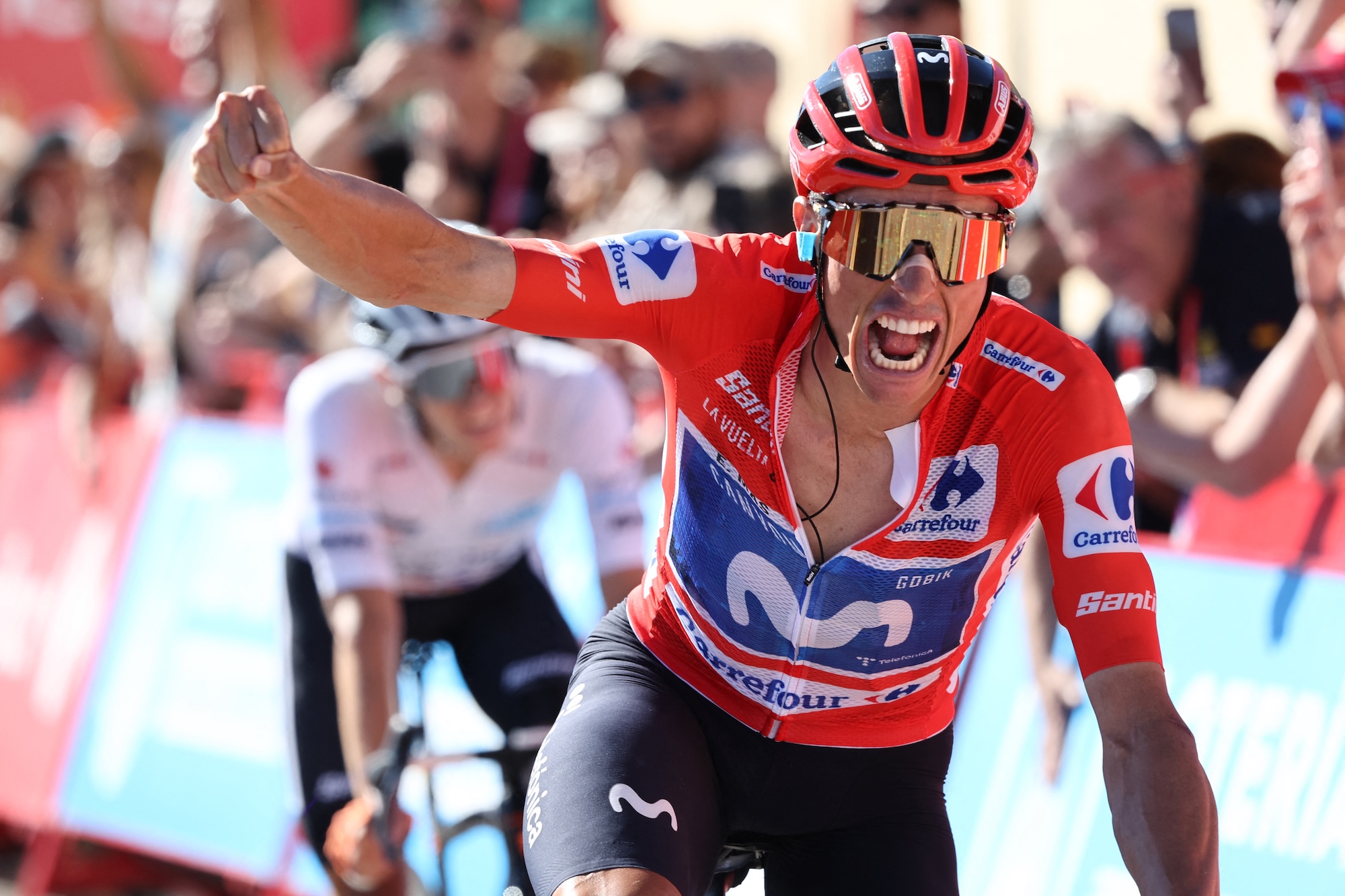
Movistar Finally Remembered The Front Of The Race Exists
Enric Mas inherited red after a horrible Vuelta crash. Then he did the one thing Movistar so often forgets to do, he raced like the jersey was his, not on loan.
For years, Movistar have been cycling’s most beautifully lit cautionary tale. Big budget, big heritage, big bus, big tactics board, then a tactical plan that looks like it was scribbled on a bidon with a chain checker. On Sunday 30 August 2026, on the Alto de Aitana, Enric Mas briefly made all of that noise shut up.
Mas started stage 9 of the Vuelta a España in red after Tadej Pogačar’s horrible stage 8 crash and abandon. He could have ridden like a man wearing someone else’s clothes. He could have sat behind Decathlon CMA CGM while Felix Gall thumped away, waited for Primož Roglič to blink, then given the usual post-stage sermon about sensations, heat, and tomorrow. Instead, he attacked 3.2 kilometres from the finish, dragged Oscar Onley with him, and won the stage himself.
A red jersey is not a souvenir
That is the bit worth getting excited about. Not because Mas is suddenly the second coming of Alberto Contador, calm down, but because he treated the red jersey as a weapon. Too many GC riders wear leadership like a legal liability. They defend. They mark. They outsource initiative to teammates with hollow cheekbones and thousand-yard stares. Mas got handed a damaged race and decided not to apologise for being in charge.
The stage was no soft parade either. Villajoyosa to Alto de Aitana was 187.4 kilometres with roughly 5,000 metres of climbing, six classified nasties, and a summit finish long enough to expose any rider whose confidence was made of press-release carbon. Wout van Aert and others were firing early. Alastair Mackellar was in the chaos up the road. Decathlon did the proper big-team thing and drilled the race for Gall. The script was sitting there, waiting for Movistar to revert to type.
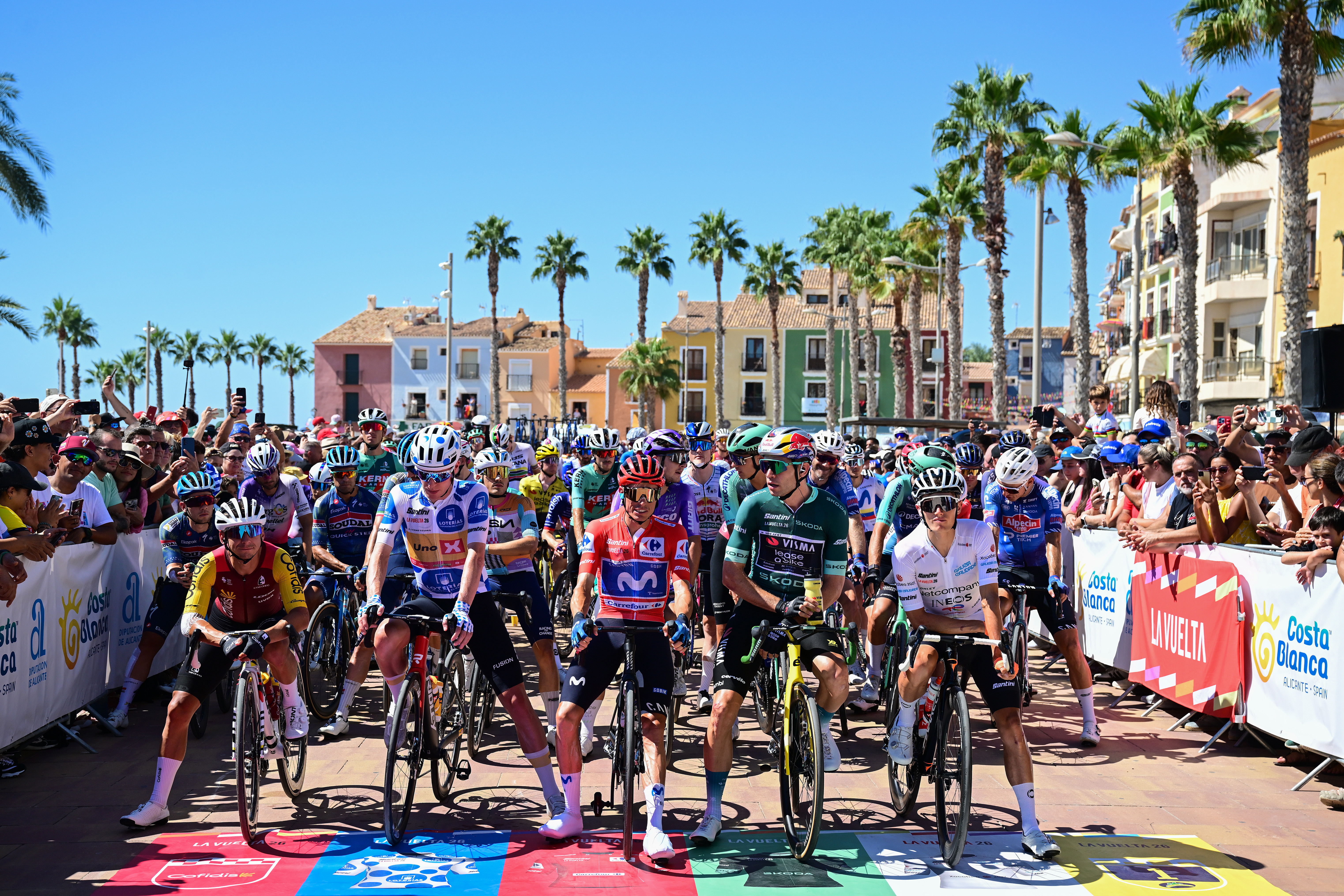
Gall pressed the button. Mas pressed harder.
Gall went from around seven kilometres to go, again and again, which is exactly what he had to do. He was not riding for TikTok clips. He was trying to break the race. The problem was that Mas answered every acceleration with the dead-eyed irritation of a bloke who has finally found the right tyre pressure. Then, when the road and the rivals had been properly softened, Mas went himself.
Onley followed, which matters. The young Brit did not just cling to the camera motorbike’s fumes. He is now fourth overall and leading the youth classification, and he looked like a rider who belongs in this conversation rather than one temporarily trapped in it. But Mas led into the final, kept his head, and beat him in a two-up sprint. Roglič came in 12 seconds down. Gall lost 18 seconds on the stage and, more importantly, a little of the authority his team had tried so hard to manufacture.
The most un-Movistar thing about the whole day was that Movistar made the obvious winning move, at the obvious winning moment, and it actually worked.
After stage 9, Mas leads Roglič by 1:18. Gall is at 1:39. Onley is at 2:20. Richard Carapaz sits fifth at 3:26, which is not close enough to terrify anyone yet, but close enough that nobody sane gives him a free lunch. That is a proper Vuelta table. Messy. Alive. Full of riders with different flaws. Exactly what a Grand Tour should be before the second rest-day podcast industrial complex turns it into maths homework.
Do not confuse tragedy with opportunity
There is an ugly shadow over all of this, and pretending otherwise would be grubby. Pogačar’s exit on stage 8 was brutal. He crashed inside the final 33 kilometres on the road to Xeraco, left the race in an ambulance, and later reports described a concussion, a displaced left clavicle fracture and a stable C7 fracture. Nobody with a functioning heart celebrates that. The sport loses when its best rider is sitting in a hospital instead of punching the pedals up Aitana.
But racing does not go into mourning for two weeks. It can be respectful without becoming anaesthetised. The correct response from the remaining contenders was not to form a sentimental waiting room on wheels. It was to race the Vuelta in front of them. Mas did that. UAE Team Emirates-XRG, suddenly stripped of the rider who bends stage races around his will, now has to decide whether to go feral for stages or sulk in formation. I know which version I would rather watch from Australia at a stupid hour on SBS.
- If you inherit a jersey, you still have to earn it the next day.
- Control without attack is just expensive fear.
- Movistar are tolerable when they stop trying to out-clever the sport.
- The Vuelta is better when the favourite’s absence creates racing, not paralysis.
- Onley is no longer a promising kid in the margins. He is in the GC fight.
This is the Movistar we were promised
Movistar’s modern brand has too often been confusion with nice sunglasses. They have been mocked, sometimes unfairly, often not, as a team that can turn three leaders into zero plans before the first feed zone. Mas has carried the weight of that reputation too. He has podiumed, hovered, threatened, and occasionally looked like a rider waiting for permission from a committee that was itself waiting for permission from a spreadsheet.
Aitana was different. There was patience, yes, but not passivity. There was response, then decision. That distinction matters. Any club racer who has ever sat in a bunch watching the same bloke close every move knows the feeling. Sooner or later, the strongest rider has to stop being the policeman and become the thief. Mas stole the stage because he finally stopped merely guarding the race.
Now comes the harder part
The Vuelta rest day on Monday 31 August is not a coronation. Stage 10 from Alcaraz to Elche de la Sierra on Tuesday 1 September is hilly enough to invite ambushes, and the second week still has enough sharp Spanish cruelty to make a race leader regret every enthusiastic interview. Roglič will not sit there admiring the red jersey. Gall has a team that clearly believes in blunt-force climbing. Onley is close enough to be annoying. Carapaz is Carapaz, which is both a scouting report and a warning label.
Still, Mas has changed the tone of this race. He did not just benefit from Pogačar’s misfortune. He put a stamp on the first mountain day after it. That matters for him, for Movistar, and for a Vuelta that could have sagged into absence and speculation. Instead, it has a Spanish leader in red who just won on a Spanish summit by attacking the best climbers left in the race. If Movistar ruin this from here, at least they will have to ruin something worth ruining.