
Gravel Has Won. Now It Has To Stop Lying About Being The Underdog.
Gravel cycling did not sneak into the sport through a side gate. It kicked the gate down, sold everyone a 50 mm tyre, and now wants to pretend it is still a charming little rebellion.
Gravel cycling has spent the past decade dressing itself up as the antidote to road cycling’s worst habits. No team buses. No rolled-up sock policing. No bunch captain barking about half-wheeling on Beach Road. Just dirt, mates, wrong turns, wide tyres and the smug satisfaction of being fitter than the bloke in the lifted ute who tells you bikes do not belong on roads.
That story is now mostly fiction. Useful fiction, yes, but fiction all the same. Gravel has risen so quickly that it has become the very thing it claimed to resist: professional, commercial, increasingly technical, obsessed with marginal gains and absolutely crawling with brands trying to sell you freedom in matte carbon. The interesting part is not that gravel got big. The interesting part is that cyclists are still pretending it is small.
The revolution now has timing chips
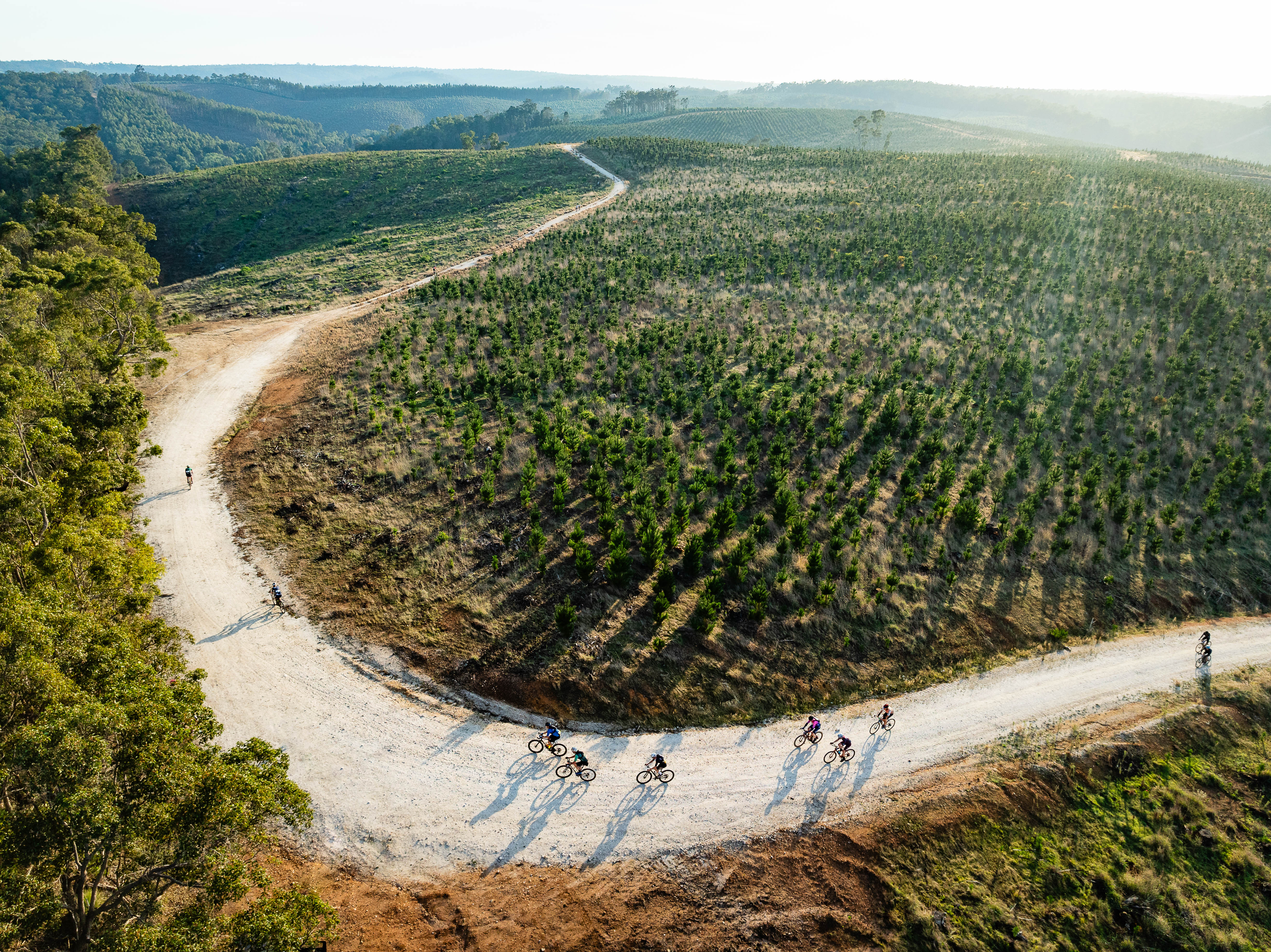
If you want proof that gravel has left the alternative scene and entered the main stadium, look west. On 10 and 11 October 2026, Nannup in Western Australia will host the UCI Gravel World Championships, the first edition held outside Europe. The elite men will race 140.7 km, the elite women 123.1 km, with a claimed minimum of 80 per cent gravel and enough climbing to make a flatlander reconsider their personality. Men get about 3,625 metres of elevation. Women get about 3,100. That is not a participation ride with a craft beer token at the finish. That is a proper world championship course with teeth.
And frankly, good. Australia has spent too long treating gravel like road cycling’s scruffy cousin who sleeps in the shed. Nannup has been quietly building the case for years through SEVEN, a race that links the Blackwood Valley’s gravel sectors between Nannup and Balingup. In May, Tiffany Cromwell defended her SEVEN title and Brendan Johnston reclaimed the men’s win, both solo. More than 2,000 participants from 29 countries rolled out of town. That is not a fad. That is a regional economy with tyre sealant in its veins.
The gravel boom is not about escaping cycling culture anymore. It is about choosing which version of cycling culture gets to own the dirt.
The bike industry smelled blood, then invented 55 mm clearance
The best and worst thing about gravel is that it solved a real problem. Road bikes became too fragile, too expensive and too useless on anything rougher than a council-approved hotmix ribbon. Mountain bikes became brilliant but overkill for riders who wanted distance, not drops. Gravel sat between them and said: ride from your house, disappear for four hours, come home looking like you lost a fight with a paddock. Perfect.
Then the industry arrived with a tape measure and a wind tunnel. The 2026 Specialized Crux 5 is the poster child for the new order: an aero gravel race bike, not a cyclocross refugee with bottle mounts. It launched just before Unbound Gravel and immediately became impossible to ignore. Mads Würtz Schmidt and Sofía Gómez Villafañe both won the Unbound 200 on it, and Specialized filled a ridiculous amount of the pointy end. The message was subtle as a track pump to the shin: gravel racing is now a development category for serious race hardware.
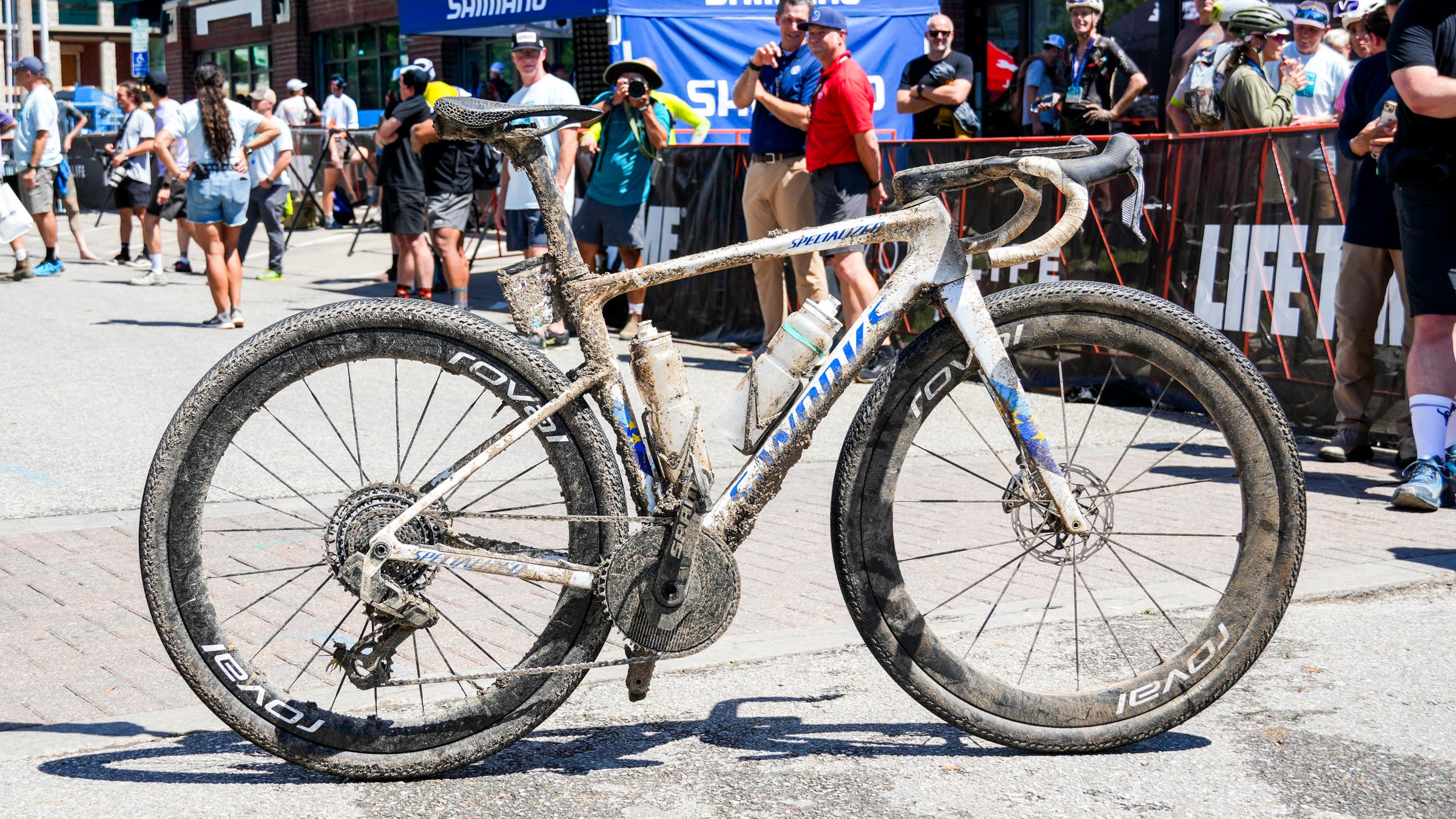
This is where the old romantics start groaning into their enamel mugs. They miss the days when gravel bikes were just endurance road frames with questionable tyre clearance and a third bottle cage. I get it. I have affection for ugly, practical bikes that look better with frame bags than launch-day photography. But nostalgia is a poor mechanic. The reason modern gravel bikes are getting faster, lighter, wider and more aero is because riders are asking them to do stupid things at stupid speeds for stupidly long distances. That is cycling. We pretend it is spiritual, then argue for 40 minutes about tyre pressure.
Unbound proved the privateer myth is cracking
The 2026 Unbound Gravel 200 was the cleanest dirty example of the shift. Rain, lightning, peanut-butter mud and mechanical chaos turned Emporia into a drivetrain autopsy lab. Würtz Schmidt won the men’s race after Specialized teammate Keegan Swenson sacrificed his rear wheel. Gómez Villafañe won the women’s race from a five-rider sprint, adding another major result to a frighteningly consistent season.
Cue the outrage: team tactics have arrived, gravel is dead, the spirit has been murdered by corporate squads in matching sunglasses. Spare me. Gravel was never pure. It was just underfunded. The minute prize money, livestreams, sponsor bonuses and world titles became meaningful, riders were always going to organise. The Life Time Grand Prix is offering serious money in 2026, with a $350,000 season-ending purse split equally between elite women and men, plus event prize money at major stops. You cannot ask athletes to treat gravel like a profession and then clutch your pearls when they behave professionally.
- Road riders want adventure without buying a dual-cab ute and a full-face helmet.
- Mountain bikers want distance without spending every weekend driving to a trailhead.
- Commuters and all-road riders want one bike that can survive potholes, rail trails, fire roads and the occasional optimistic shortcut.
- Brands want a category where road-bike margins meet mountain-bike tyre clearance.
- Race organisers want fields big enough to include pros, masters, first-timers and the bloke who packed three sandwiches.
Australia should not waste this moment
Here is the uncomfortable bit for Australian cycling: gravel is our best chance in years to grow the sport without begging state governments to stop treating bicycles like decorative crime. We have the terrain. We have farm roads, forestry tracks, rail trails, wine regions, alpine valleys, coastal hinterland and towns that would benefit from a weekend influx of riders who think $7 for a post-ride pastry is perfectly reasonable.
But we cannot just slap a gravel label on a dirt road and call it culture. Good gravel needs access, landholder trust, local councils that understand events, bike shops that can service tubeless properly, and riders who do not behave like entitled pests the second they leave bitumen. If gravel is going to keep growing here, it has to be more than Instagram dust and imported American race mythology.
The AusCycling Gravel National Championships at Mt Crawford in late May gave us another clue. Tiffany Cromwell went back-to-back in filthy conditions, soloing for more than 100 km and winning by a canyon-sized margin. Cameron Scott took his first elite men’s gravel national title in what sounded like an attritional slog rather than a tidy bike race. That matters. Gravel rewards the complete rider: power, handling, pacing, mechanical sympathy and the ability to keep eating when your hands look like you have been gardening in a swamp.
The backlash is coming, and some of it is deserved
The next fight in gravel will not be rim width. It will be identity. Is gravel a race discipline, an adventure format, a bikepacking gateway, a tourism product, or simply road cycling for people who got bored of traffic? The answer is yes, which is exactly why everyone is annoyed.
The racers will keep demanding safer courses, clearer rules, better neutral support and cleaner feed zones. They should. The dreamers will keep insisting gravel should stay loose and weird. They should too. The problem comes when either group claims ownership. A world championship in Nannup does not invalidate a solo Sunday loop on a steel bike with a bar bag. A $15,000 aero gravel superbike does not make your alloy workhorse obsolete, unless your ego is weaker than your derailleur hanger.
My take? Gravel has not lost its soul. It has lost its innocence. That is different. Innocence is cute, but it cannot build sustainable events, fund women’s fields properly, attract junior riders, keep regional towns interested or convince bike brands to make better tyres. Soul is what remains when the marketing dust settles and you are 80 km from home, low on water, caked in filth, laughing because the road you picked on the map has turned into a goat track.
The rise of gravel cycling is not a trend. It is a correction. For too long, cycling split itself into silly tribes: roadies pretending smooth tarmac was civilisation, mountain bikers pretending anything without suspension was cowardice, commuters pretending they did not care about speed while absolutely caring about speed. Gravel exposed the lie. Most riders just want a bike that lets them go further, explore more and avoid the worst of cars without needing a PhD in trail geometry.
So yes, gravel has won. The question now is whether it becomes another over-regulated, over-priced, over-branded corner of cycling, or whether it keeps enough dirt under its fingernails to stay interesting. Nannup will be a test. Unbound already was. The bikes are ready. The riders are coming. The culture is still being negotiated, loudly, messily and usually over coffee after someone has said something unforgivable about 1x drivetrains.
Good. That is how you know a cycling movement is alive.