
France Has Found Its Tour Saviour. Someone Hide Him From France.
Paul Seixas just rode onto the Tour de France podium conversation on Bastille Day. The dangerous bit is not the climbing, it is the national hysteria now trying to climb onto his back.
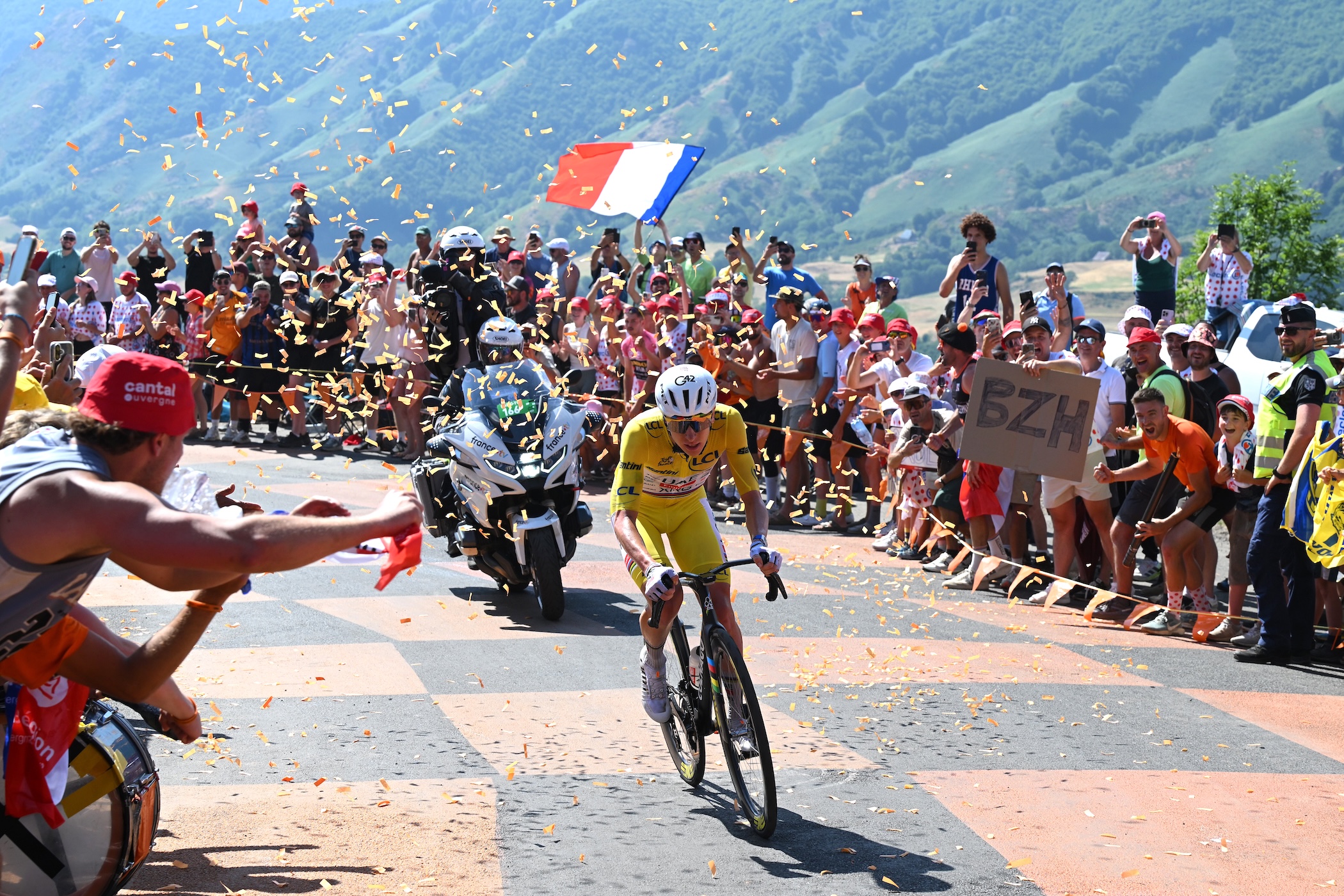
Bastille Day at the Tour is supposed to be theatre for French riders, but usually in the tragic sense. A doomed move, a camera motorbike, a national champion grimacing like he has swallowed a tyre lever, then the inevitable foreign winner arrives to tidy the place up. On Tuesday 14 July 2026, Tadej Pogačar still did the tidying. He launched on the Col de Pertus, won Stage 10 to Le Lioran, took his third stage of this Tour, and pushed his overall lead out to 3:36. Fine. We have seen this film. The plot twist was the kid behind him.
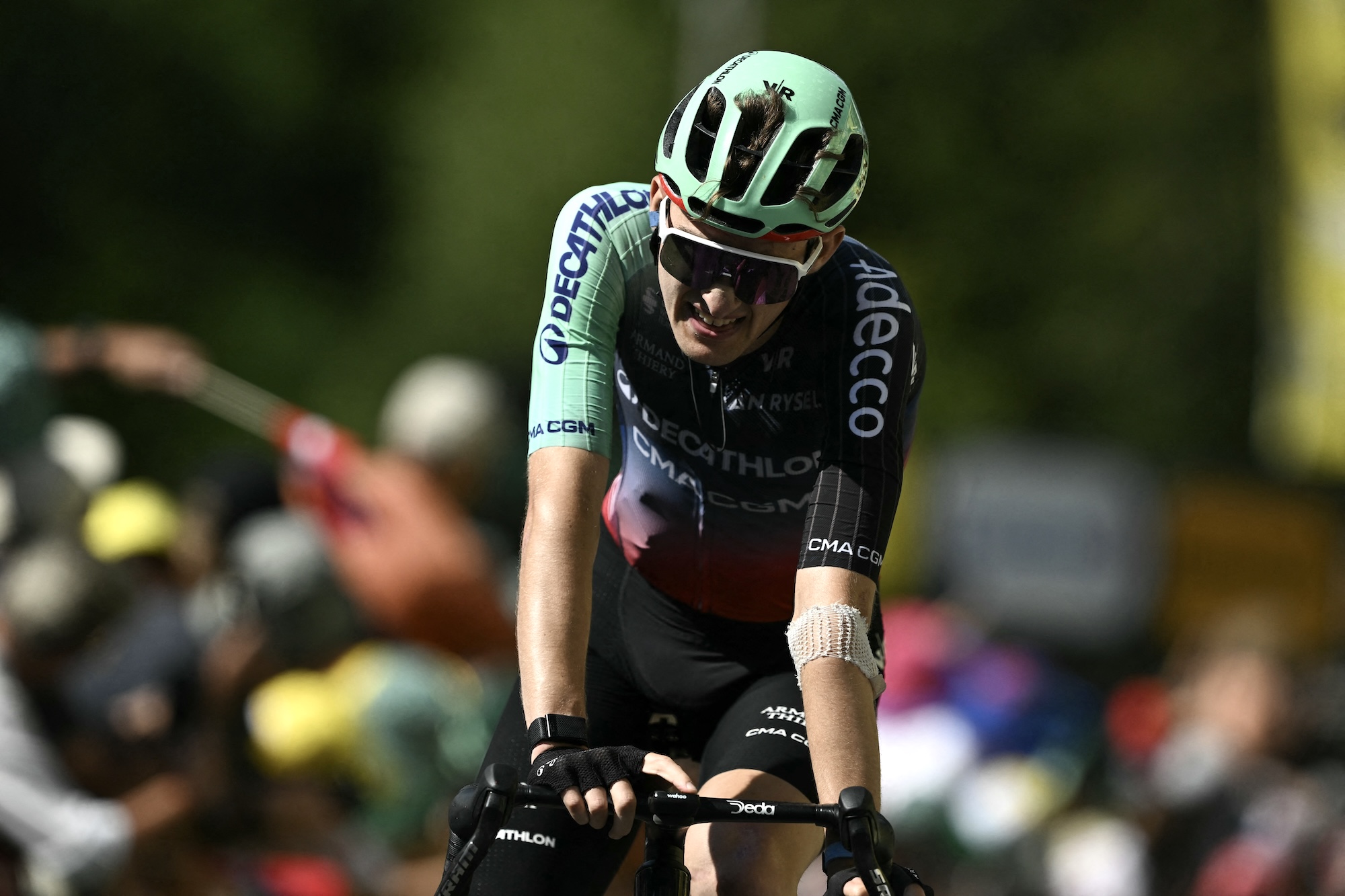
Paul Seixas, 19 years old, Decathlon CMA CGM, French, feather-light and already carrying the emotional freight of a railway siding, finished third on the day and moved into the top five overall. The official Tour account noted the brutality of the stage, 166.6km, seven categorised climbs, 3,800 metres of elevation, and a finale built to turn ambitious men into mist. Seixas did not vanish. He sprinted from the group of mortals, behind Pogačar and Remco Evenepoel, and suddenly France had something more dangerous than hope. It had evidence. (letour.fr)
The kid did the mature thing, which is why everyone should panic
There is a particular stupidity in cycling commentary that mistakes youth for recklessness. We see a teenager near the front and start demanding fireworks, as if every prodigy must be a Roman candle taped to a seatpost. Seixas is interesting because he is not riding like a TikTok clip. On the Tourmalet last week he let the actual alien go, measured his climb, and finished fifth among the serious podium candidates. His own line afterwards was almost annoyingly sensible: he said he managed his climb, got a nice fifth place, and was where he should be. That is not the quote of a boy drunk on attention. That is the quote of a rider who knows a three-week race is not won by blowing your doors off for a television director. (cyclingnews.com)
The smartest thing Decathlon can do now is deeply unfashionable: bore everyone. No superhero arc, no saviour nonsense, no grand national resurrection. Just bottles, shelter, calories, sleep, and a firm hand on the hype tap.
This is where Decathlon CMA CGM has to be better than the industry around it. The bike trade loves a prodigy because a prodigy sells everything: bikes, helmets, sunglasses, miracle recovery drinks, team documentaries, junior development mythology, the lot. France loves a prodigy because Bernard Hinault retired in 1986 and French cycling has been trying to manifest a successor with increasingly unhinged candles ever since. A Frenchman has not won the men’s Tour since 1985, and every promising climber since has been loaded up like a commuter e-bike with four kids and a week's groceries. (cyclingweekly.com)
Do not confuse pressure with purpose
Seixas did not sneak into this Tour through a side door. Decathlon selected him as a leader, not a mascot. The team had already said he would aim for the best possible result while still learning, and pointed out that he started this Tour at 19 years, 9 months and 10 days, the youngest participant since 1937. That is not normal. Neither is his palmarès: Flèche Wallonne winner, three stages and the overall at Itzulia Basque Country, second at Liège-Bastogne-Liège, second at Strade Bianche, Tour de l’Avenir winner, junior world time trial champion. If you are waiting for permission to call him elite, stop waiting. (decathloncmacgmteam.com)
But elite is not the same thing as finished. This is the distinction most fans, and frankly half the sponsor village, are hopeless at making. A rider can be good enough to fight Ayuso, Lipowitz, Evenepoel and a fading Vingegaard on the Massif Central and still need protecting from stupid expectations. Both things can be true. In fact, in modern cycling, both things usually are true. The sport got younger, the contracts got longer, the media cycle got nastier, and suddenly a rider is expected to be a franchise before he has properly learned which hotel breakfast rice pudding will betray him at kilometre 140.
This is not a French problem. It is a cycling problem.
Australian cycling should recognise this disease. We do it too, just with fewer accordion soundtracks. We find a climber, slap the word 'next' on him, then act personally wounded when he turns out to be a human being rather than a national infrastructure project. The difference is that France does it at industrial scale, with presidents, television helicopters and a roadside population that can turn affection into suffocation in the space of one hairpin.
That is why the Pogačar comparison is mostly useless. Pogačar is not a development model, he is a weather event. On Stage 10 he erased Richard Carapaz’s lead, went solo from 15.5km out, and won by 32 seconds, while Evenepoel clawed back second and Vingegaard slipped to seventh. That is not a benchmark for a teenager. That is the current ceiling of the sport being used as a blunt instrument. (cyclingnews.com)
- Keep Seixas on GC unless his body says otherwise, not because French television needs a plot.
- Let Olav Kooij and the rest of the squad keep chasing stages so every microphone is not shoved under one teenage nose.
- Refuse the saviour script. Say 'development' until everyone is bored enough to go bother someone else.
- Make the podium a possibility, not a demand. There is a massive difference, and riders feel it in their legs.
The tempting take is that Seixas should attack now, because cycling culture has become addicted to highlights. I think that is rubbish. The most exciting thing he can do over the next fortnight is survive intelligently. Follow when it is worth following. Let Pogačar go when the Slovenian starts riding like gravity has signed a non-compete clause. Take seconds where they appear. Eat like a professional. Descend like a grown-up. Let the race harden him instead of trying to brand him before Paris.
France finally has a rider worth being patient for
That is the uncomfortable beauty of Seixas today. He did not win. He did something more useful. He confirmed that the hype has legs under it. Not enough to beat Pogačar, almost nobody has those. But enough to make the podium conversation real, enough to make Decathlon look like more than a supermarket team with a chequebook, and enough to make every French fan on the roadside start dreaming with both hands off the emotional brakes.
So here is the column’s unfashionable verdict: protect the kid from the romance. Celebrate the ride, absolutely. Third on Bastille Day in that company is not a participation sticker, it is a bloody statement. But if France wants Seixas to become the rider it has spent 40 years begging the sport to deliver, it needs to stop treating him like a prophecy and start treating him like an athlete.
The Tour has enough noise. The great ones learn which noise to ignore. Today, Paul Seixas looked like he might already know. That should scare his rivals. It should also scare the people about to love him too loudly.