
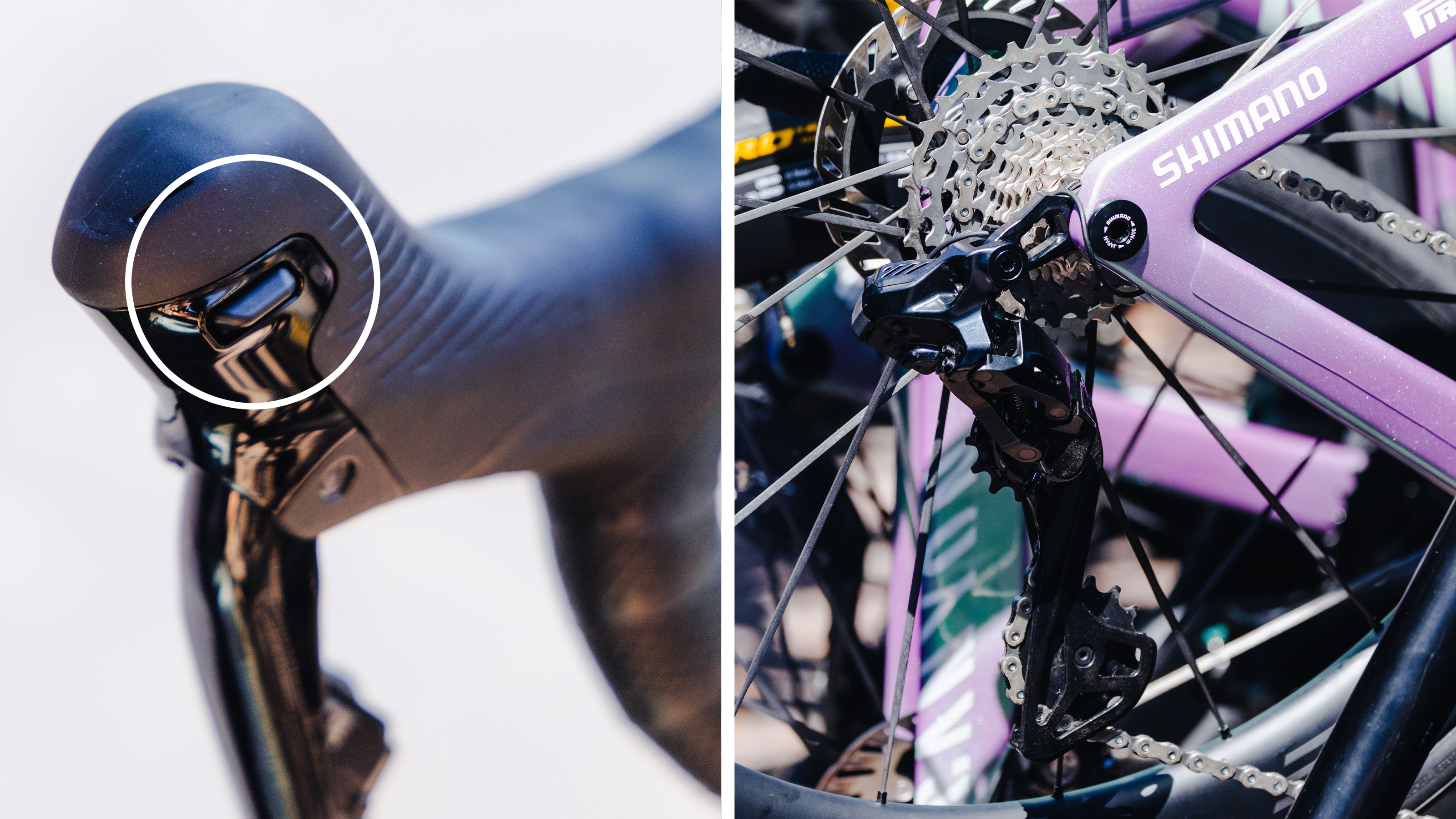
Dura-Ace Went 13-Speed. Your Freehub Just Started Sweating.
Shimano’s new Dura-Ace has broken cover at the Vuelta, and yes, there are thirteen sprockets. The real story is not the extra gear, it is the quiet cost of making yesterday’s superbike feel administratively obsolete.
There it was, leaning near the Alpecin-Premier Tech bus at the Vuelta a España, the most Shimano way imaginable to announce a new top-end groupset. No fireworks. No nightclub launch video. No gravel influencer pretending to discover drivetrain friction in a wind tunnel. Just a mechanic’s stand, a purple Canyon, and a cassette that appears to have found another sprocket down the back of the sofa.
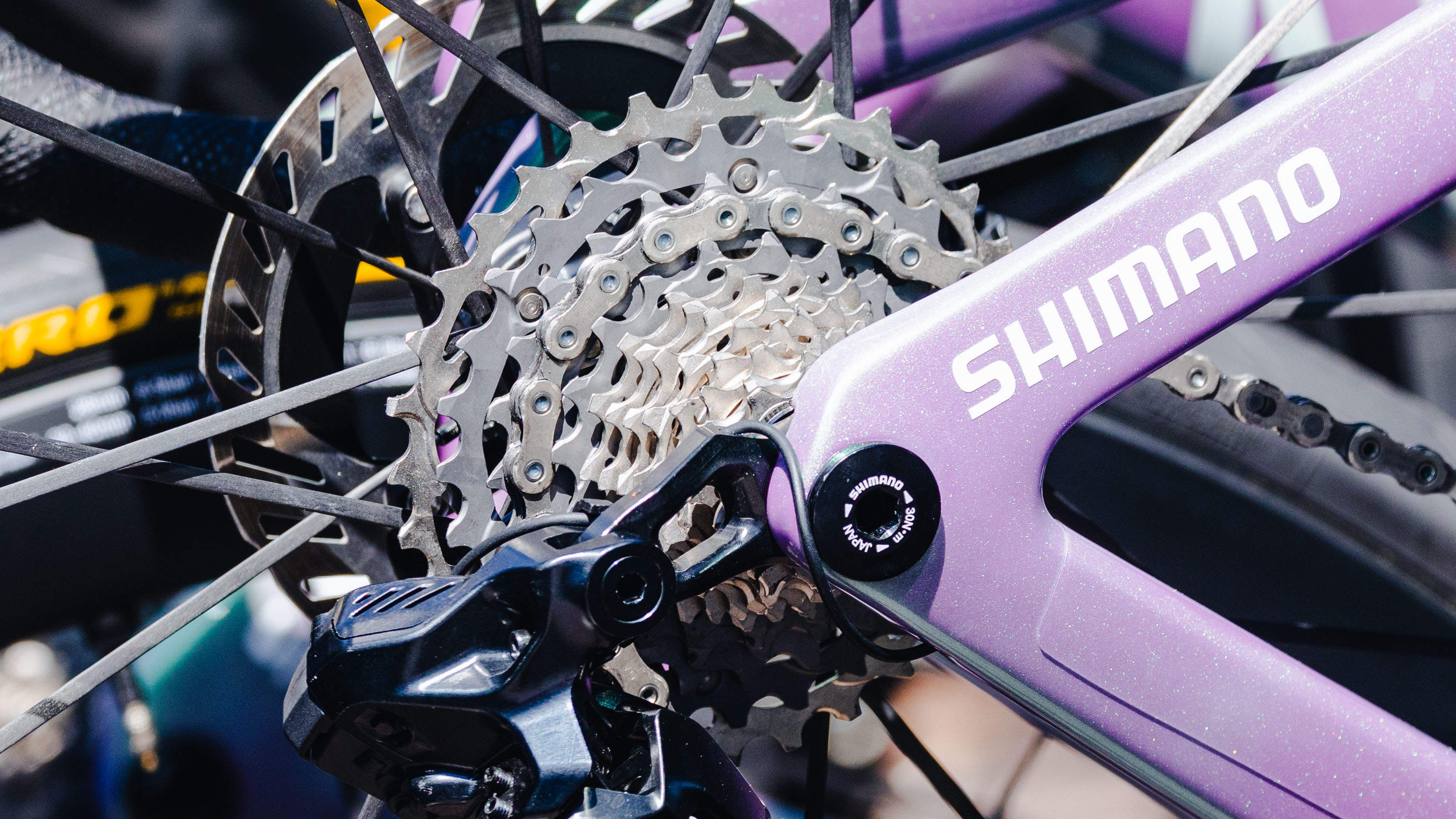
Cyclingnews spotted what is widely understood to be Shimano Dura-Ace R9300 on 22 August, as the 2026 Vuelta began in Monaco. The photographs show new shifters, derailleurs, cranks and a cassette with thirteen sprockets. They also show something more interesting than the number thirteen: Shimano still does not seem ready to go fully wireless on the road. The rear derailleur appears to be fed by a wire, which suggests the familiar semi-wireless Di2 arrangement lives on, with wireless shifters and a central battery feeding the derailleurs.
Thirteen gears is not the revolution. The ecosystem is.
The lazy take is that Shimano has finally caught up. SRAM has been pushing its wireless gospel for years. Campagnolo went 13-speed on the road with Super Record 13. SRAM’s XPLR gravel kit already lives in the thirteen-sprocket universe. Shimano, after moving Dura-Ace from 11 to 12-speed in 2021, has spent five years being treated by certain podcast men as the conservative Japanese uncle at the drivetrain barbecue.
That is only half true. Shimano’s great strength has never been being first. It is making everyone else look slightly experimental once the dust settles. Dura-Ace is not supposed to be a science project. It is supposed to shift when your hands are numb, your chain is salted with sweat, your mechanic is hungover and your race wheels were packed by an airline with the emotional range of a wheelie bin.
The thirteenth sprocket is not progress by itself. Progress is whether the thing shifts cleanly in February, has spares in August, and does not turn every rear wheel in the shed into a compatibility hostage.
And that is where the spotted R9300 gets spicy. The photos reportedly suggest a move to 13-speed that may require a new freehub body. If that proves true, Australian riders should stop clapping for a moment and go stare at the wheels hanging in the garage. The question is not, “Can I afford the groupset?” That is boutique-bike theatre. The question is, “What else does this force me to replace?” Cassettes, freehubs, spare wheels, trainer adapters, race-day compatibility, the lot.
The new hood button is the small thing that actually matters
The most rider-facing change may not be at the cassette. It may be at the shifter. The new Dura-Ace hoods appear to gain a proper protruding thumb-style button on the inside face, replacing or supplementing Shimano’s old hidden satellite-style hood button. That matters because anyone who has tried to jab a smooth rubber lump through winter gloves knows the difference between “integrated” and “bloody useless”.
This is where Shimano deserves credit. Riders do not interact with spec sheets. They interact with contact points. Brake levers, hoods, buttons, saddle noses, bar tape, shoe dials. If R9300 makes shifting from the tops, climbing position or aero hoods more reliable without needing extra satellite buttons zip-tied all over the cockpit, that is meaningful. It is not sexy in the launch copy, but it is exactly the kind of improvement that wins over riders who actually pay attention to the bike after the first Instagram photo.
Semi-wireless is either stubborn genius or cowardice
Now for the argument at the café. Shimano sticking with semi-wireless road Di2, if confirmed, will annoy the clean-cockpit absolutists. They will say SRAM has already solved this. They will say wires are dead. They will say internal routing is a crime scene, and for once they are not entirely wrong. Modern road frames already require the hands of a watchmaker, the patience of a kindergarten teacher and the moral flexibility of a plumber.
But fully wireless is not automatically better. It is tidier, yes. It is easier to set up in some cases, yes. It also means more removable batteries, more charging habits, more tiny objects to lose before a Sunday bunch ride, and more dependence on brands not being idiots with firmware. Shimano’s internal battery has always felt old-fashioned in the same way a good floor pump feels old-fashioned: boring until everything else lets you down.
- Will my current wheels take the new freehub, or am I buying another expensive circle?
- Will cassettes be available locally, not just theoretically available in Europe?
- Will Ultegra and 105 follow quickly, or will this be a dentist-only upgrade for two seasons?
- Will the new button layout work with gloves, sweat, rough chip-seal and real-world hands?
- Will Shimano keep enough backwards compatibility to avoid punishing loyal riders?
That last point is the big one. Shimano’s enormous Australian footprint is built on trust, not hype. The weekend racer in Adelaide, the commuter with a suspiciously nice road bike in Melbourne, the triathlete in Noosa, the Bunbury bunchie with three wheelsets and one long-suffering local mechanic, they all buy Shimano because it usually works and spares usually exist. If R9300 turns that into another closed premium island, Shimano will have learned the wrong lesson from the luxury end of cycling.
The Vuelta was the perfect place to leak it
The timing is delicious. Pogačar opened the Vuelta in red by less than a tenth of a second over Ethan Hayter on Saturday. On Sunday, Matthew Brennan won the long road stage to Manosque for Visma-Lease a Bike while Pogačar kept the leader’s jersey. The race is already screaming for attention, and Shimano has managed to make half the tech world zoom in on a cassette instead of a finish line. That is either accidental genius or the neatest soft launch in the sport.
It also tells us where road tech is now. The biggest brands do not need to announce products. They let them appear under pros, wait for photographers to get shoved away by staff, and allow the internet to do the unpaid launch campaign. Cyclists pretend to hate this. We do not. We love it. We love counting sprockets in blurry photos like conspiracy theorists with torque wrenches.
Do not sell your R9200 yet
Here is the unfashionable advice: if you already own 12-speed Dura-Ace or Ultegra Di2, calm down. Your bike did not become slow overnight. A thirteenth sprocket will not fix a bad position, dead tyres, lazy fuelling or the fact you sit on the front of the bunch doing 420 watts into a headwind because your ego has no cadence sensor.
But if you are about to spend serious money on a new road bike, especially one with top-end Shimano and fancy wheels, this leak matters. Ask the shop hard questions. Ask about upgrade paths. Ask about freehub standards. Ask whether the wheels on the floor today are future-friendly or just discounted because the next compatibility headache is already sitting by a team bus in Monaco.
Shimano has found a thirteenth gear. Fine. The peloton will use it, the brands will spec it, and plenty of riders will convince themselves they can feel the extra ratio while soft-pedalling to coffee. The real test is not whether Dura-Ace R9300 is brilliant. It probably will be. The test is whether Shimano can modernise without becoming hostile to the riders who made Dura-Ace the default answer in the first place.
Because an extra sprocket is easy. Keeping faith with every mechanic, wheel hoarder and Australian rider who bought into your ecosystem, that is the hard shift.