
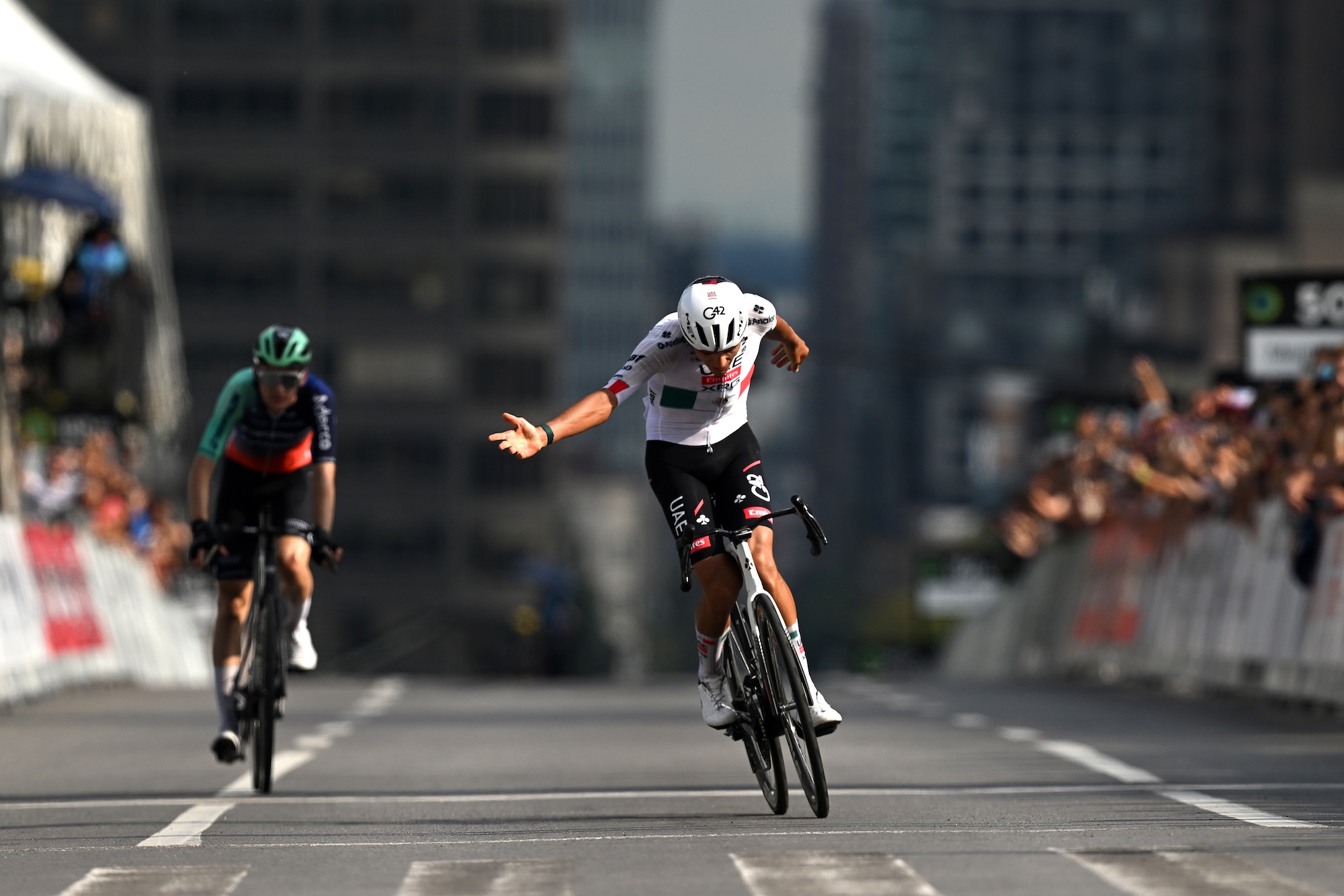
Del Toro Just Rode The Worlds Course Like He Owned It. Australia Picked A Relay Team.
Isaac del Toro turned Montréal into a Worlds audition and made the course look brutally specific. Australia’s squad has horsepower, history and a very shiny mixed relay habit, but the road race is asking a nastier question.
Isaac del Toro did not win the Grand Prix Cycliste de Montréal on Sunday like a bloke filling in a form for rainbow jersey consideration. He won it like he had already measured the curtains. On the same Montréal terrain that will host the elite men’s World Championship road race on 27 September, Del Toro waited until the final uphill drag, let Paul Seixas tow him into the argument, then kicked with 300 metres to go and ended the conversation.
That matters because Montréal is not some generic late-season WorldTour postcard. It is a course with teeth filed into every lap, a circuit that punishes the rider who waits for a sprint and humiliates the rider who thinks climbing form alone will save him. The GP was 214.4 kilometres. Worlds will stretch the elite men to 273.2 kilometres. Same city, same flavour, more hours in the oven. If you watched Del Toro and saw only a talented Mexican having a nice Sunday, clean your glasses.
This was not a warm-up. It was a warning.
The lazy take will be that Tadej Pogačar’s absence opens the race. True, but not useful. A missing god does not make the church democratic. It simply lets the ambitious heretics move closer to the altar. Remco Evenepoel won Québec on Friday, then finished fifth in Montréal after the race broke into the shape of a proper Worlds selection trial. Tom Pidcock was there. Giulio Ciccone was there. Ben Healy was making trouble. UAE had bodies everywhere, including Brandon McNulty in third and Adam Yates still stamping his passport at the front late.
Del Toro’s win was not just legs. It was architecture. UAE kept numbers in the final, used McNulty as a bridge and threat, and still had Del Toro fresh enough to match Seixas when the French kid lit the last-lap fuse. This is how modern one-day racing works now. Not romance, not one heroic idiot towing a nation on his back, but layered violence. You need options. You need a Plan B that looks suspiciously like a Plan A. You need riders who can make a reduced front group before the television director has finished showing the previous attack.
Montréal is not going to reward the prettiest national jersey. It is going to reward the country that can keep punching after the race has stopped looking like a race and started looking like a bar fight on bikes.
Australia’s squad has class, but what is the job?
Australia named its 2026 Road Worlds squad on Sunday, and the elite men’s list is both strong and awkward: Jack Haig, Jai Hindley, Michael Matthews, Ben O’Connor, Michael Storer, Luke Tuckwell, plus Conor Leahy for the individual time trial. Jay Vine is out through illness. Sebastian Berwick was selected but has withdrawn after illness affected his preparation. That is not a disaster, but it does change the texture of the team. Vine would have given Australia a time trial medal threat and a nasty mixed relay engine. Berwick would have added another climbing option for a course that will not tolerate passengers.
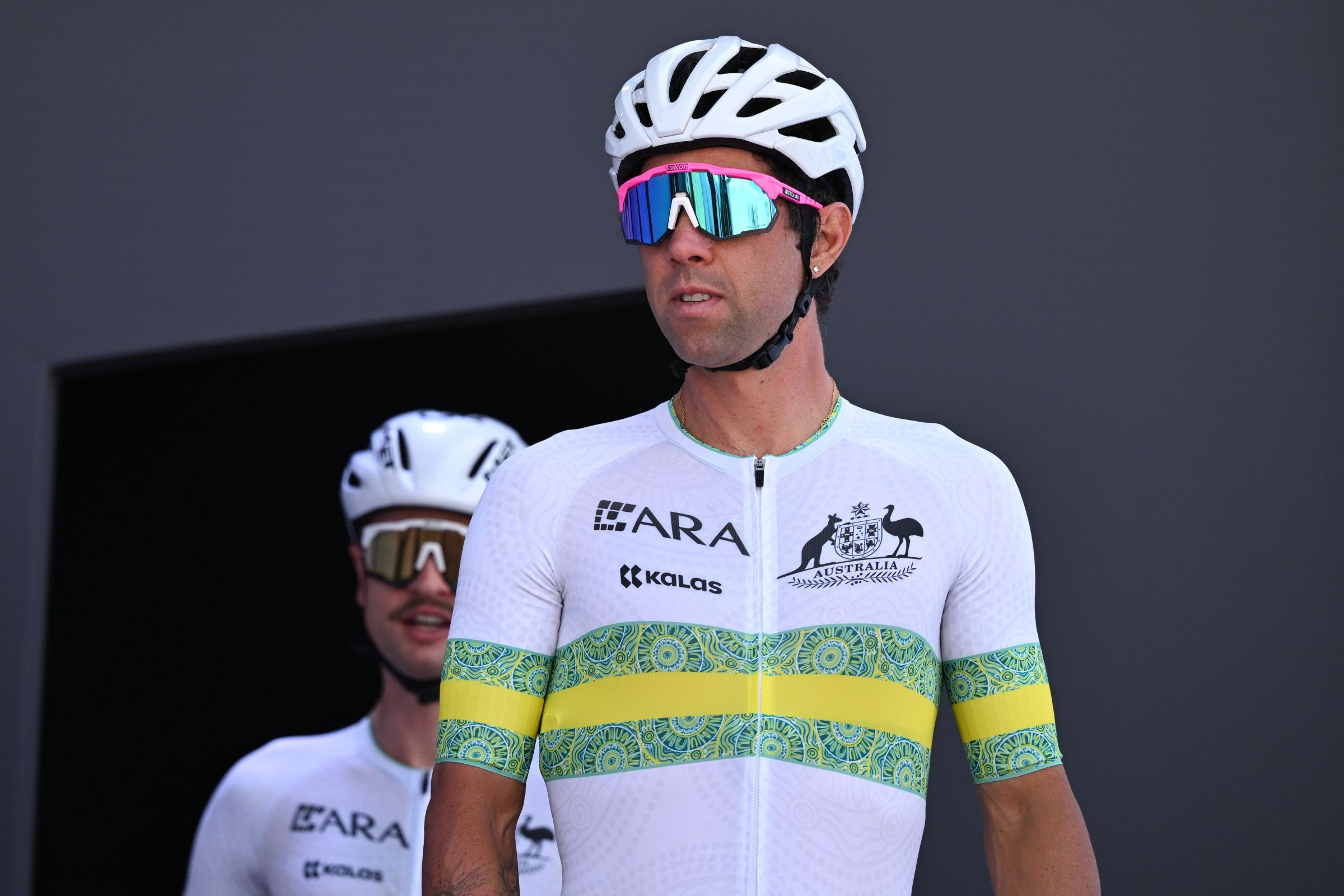
The obvious emotional centre is Matthews, because Australia always seems to circle back to him at Worlds like a bunch ride circling back to the only bakery still open. He has medals, craft and a finish. He was sixth in Québec on Friday, then 54th in Montréal on Sunday, more than 15 minutes down after a race that became brutally selective. Do not overread one result, but do not pretend it says nothing either. Montréal does not look like a comfortable Matthews appointment. It looks like a race where Bling needs chaos controlled around him until the exact moment chaos becomes the only currency left.
Ben O’Connor and Michael Storer make more sense than the average roadside expert will admit. Hindley too. These are not pure classics thugs, but Montréal’s attrition should suit riders who can go deep repeatedly without needing every pinch to become a summit finish. Haig gives experience and suffering. Tuckwell is the fascinating pick, the 22-year-old debutant you choose if you believe the future should be allowed to get mud on its shoes before someone frames it in a PowerPoint.
The mixed relay is becoming Australia’s comfort blanket
Here is the part we need to say out loud: Australia has become excellent at the team time trial mixed relay, having won it two years running. That is a brilliant achievement and also a dangerous sedative. It is exactly the sort of medal that administrators love because it proves systems, alignment, pathways, buzzwords and the expensive meeting room were all worth it. But the road race is where cycling’s reputation gets made in public.
The mixed relay comes on 22 September. The elite women’s road race follows on 26 September and the elite men on 27 September. By all means, go and defend the relay. Put Leahy’s track engine to proper use. Celebrate the stopwatch. Just do not let the stopwatch become the national personality. Nobody in the café five years from now will be arguing over a beautifully paced third rider change unless it came with a rainbow jersey and a road race story attached.
- Can O’Connor, Hindley or Storer make the front when the race splits before the final lap?
- Can Matthews be protected without forcing the whole team to ride as if the finish is guaranteed?
- Can Tuckwell be used aggressively rather than hidden like a development asset in bubble wrap?
- Can the women’s squad, with Amanda Spratt at her final Worlds and Sarah Gigante back in green and gold, race the course rather than the occasion?
- Can Australia remember that medals are not only won by waiting for the perfect scenario?
Del Toro showed the cost of hesitation
The most useful thing about Del Toro’s Montréal win is not that he is now a favourite. Favourites are for broadcasters filling dead air. The useful thing is that he showed exactly how narrow the winning window will be. Seixas did almost everything right and still got done. Evenepoel did not have a disaster and still found himself watching the front pair from behind. Matthews finished, but not in the conversation. Kaden Groves climbed off. Luke Durbridge climbed off. Damien Howson climbed off. That is Montréal speaking plainly.
For Australia, the temptation will be to call this a course of opportunity. Fine. But opportunity is not a strategy. If the plan is to wait for Matthews, say it and wear the risk. If the plan is to use O’Connor, Hindley and Storer as serial attackers, commit properly and stop treating the front group as something other nations are allowed to form first. If the plan is to salvage the week with relay gold, at least be honest that the road races have become bonus content.
The best version of Australia in Montréal is not conservative. It is ugly early, annoying often and tactically rude. Send someone when Belgium looks around. Send someone when UAE has two riders and everybody else is pretending that is fine. Make France chase. Make the Americans spend Simmons before they want to. Make Del Toro answer before the final 300 metres. If Australia waits politely for the course to invite it into the winning move, the course will shut the door and bolt it from the inside.
The verdict
Del Toro did more than win Montréal. He made the Worlds feel less theoretical. The road to the rainbow jersey now has a shape: long, lumpy, tactical, and hostile to teams that confuse experience with inevitability. Australia has enough riders to matter, but only if it stops treating the road race like a problem to be managed and starts treating it like a fight to be started.
The squad is not weak. That is the point. Weak teams have excuses. This one has decisions. And after Del Toro’s dress rehearsal, the first decision is obvious: do not wait for Montréal to become winnable. By then, the Mexican kid may already be up the road, waving one hand, while everyone else explains how the plan nearly worked.