
Decathlon Buying Into Brompton Is Not Betrayal. It Is A Warning To Every Bike Shop.
Brompton has taken Decathlon money, and the purists are already twitching. Good. The folding bike just became the most interesting battleground in cycling retail.
The most important bike industry story today is not another Tour selection, another aero sock, or another gravel tyre pretending to be spiritually different from the last one. It is Decathlon buying its way into Brompton. Not taking over. Not swallowing it whole. Buying a meaningful slice and, more importantly, buying proximity to the kind of cycling culture Decathlon has never quite been able to manufacture in a warehouse aisle.
On Tuesday 30 June 2026, Decathlon PULSE, the French giant's investment arm, and Brompton announced a strategic partnership around micro-mobility and premium urban cycling. Reports put Decathlon's stake at 10 percent, with Shanghai-based BA Capital taking another 5 percent, in a deal understood to be worth about £18 million. The stated targets are Germany and China, plus dedicated Brompton corners in selected Decathlon stores. That last bit should make every independent bike retailer sit up straighter.
The cult folder just walked into the big box
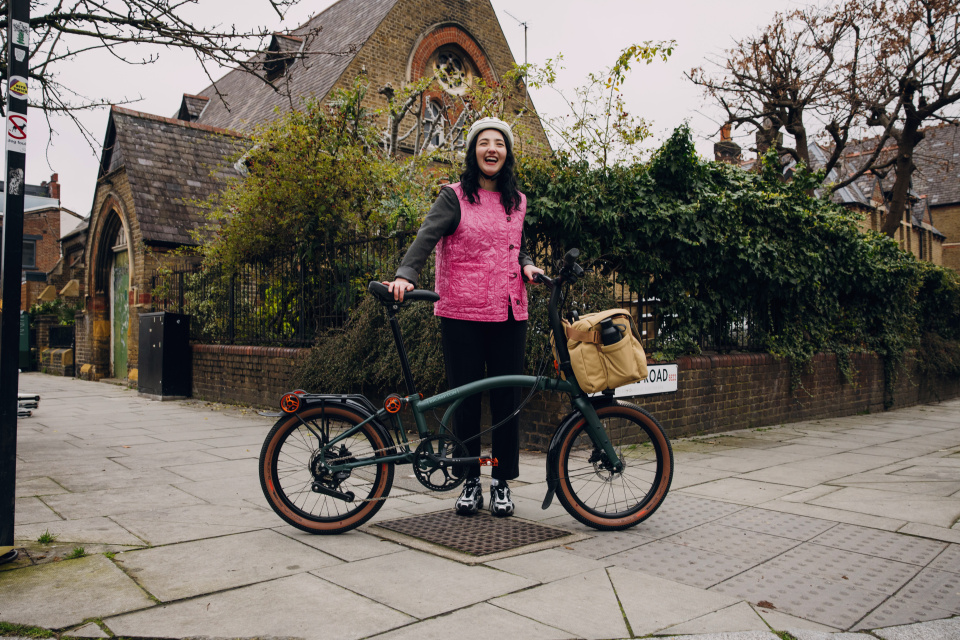
Brompton is not just a bicycle brand. It is a portable identity system for people who can quote train timetables, have opinions about trouser clips, and understand that a bike you can take inside is a bike that actually survives the city. Founded in London in 1975, hand-built there, and now claiming more than 1.2 million bikes made, Brompton has spent decades being the opposite of anonymous sporting goods retail.
Decathlon, meanwhile, is the world's great sporting goods compressor. It takes a category, squeezes out snobbery, scales the supply chain, and sells the result to normal people who do not want to be lectured by a bloke in a shop apron about headset standards. That model is often brilliant. It is also often soulless. A Decathlon bike department can be useful, affordable and completely devoid of romance, all in the same five metres of floor space.
The industry keeps saying it wants more people on bikes. Then it panics whenever a brand with actual distribution tries to put bikes in front of more people.
This is why the Brompton deal matters. Decathlon is not buying cheap inventory. It is buying credibility in premium urban mobility, a phrase that normally deserves to be locked in a marketing cupboard, but here actually means something. A folding bike is not a road bike with smaller wheels. It is a solution to storage, theft, apartment living, mixed-mode commuting and public transport rules. In Australian terms, it is exactly the kind of bike that makes sense for the rider who lives in Brunswick, works in the CBD, catches a train twice a week, and refuses to leave four grand chained to a signpost.
This is not a sell-out. It is a stress test.
The easy take is that Brompton has sold its soul. That is lazy. A minority investment is not the same as Decathlon slapping a Rockrider sticker on a London-made folder and calling it Tuesday. Brompton says its independence, brand identity and operational model are preserved. The bikes are still positioned as premium, still built around the famous three-part fold, still sold through a web of dealers and Brompton Junction stores, including Melbourne's Brompton Junction in Carlton North, which remains a real Australian anchor for the brand.
But the purists are not completely wrong to be nervous. Culture can die by spreadsheet. The danger is not that Brompton suddenly becomes cheap. The danger is that it becomes available in a way that feels frictionless but shallow. The old Brompton purchase involved a test ride, a conversation about handlebar shape, luggage blocks, gearing, commuting habits and why your office lift hates you. If a Brompton corner becomes just another staffed-by-whoever zone between yoga mats and camping chairs, the brand loses the bit you cannot put in a quarterly deck.
Bike shops should be worried, but not for the reason they think
Independent dealers love to complain about big retail, sometimes fairly, sometimes while offering the customer experience of a government waiting room. The shops that should worry are not the ones with good mechanics, proper advice, fast parts access and staff who know how people actually ride. They will be fine. They may even benefit if more people discover folding bikes and then need competent service.
The shops in trouble are the ones still acting as if scarcity is a business model. If your only value is having stock behind the counter and sighing when someone asks a normal question, Decathlon is coming for you, and frankly you invited it. Brompton corners in big stores will not replace great mechanics. They will replace bad retail theatre.
- Urban bikes are no longer the consolation prize beneath road, gravel and MTB. They are the growth fight.
- Premium does not have to mean fragile boutique isolation. It can mean better design with bigger reach.
- Big retailers now understand that culture matters, which is why they are buying into brands that already have it.
- Local bike shops need to stop assuming loyalty and start earning it with service, fit, repairs and actual expertise.
- Australia should be paying attention, because our cities are full of people who need practical bikes more than they need another carbon race fantasy.
The Australian angle is hiding in plain sight
Australia is a strange market for folding bikes. We have sprawling suburbs, hostile roads, patchy infrastructure and a national talent for treating cycling as either elite sport or weekend recreation. Yet our inner cities are made for this category. Sydney apartments, Melbourne trams, Brisbane heat, Perth trains, Adelaide laneways, all of it screams for bikes that are easy to store, easy to carry and hard to steal because they are under your desk rather than outside a pub on a cable lock.
Brompton already has Australian distribution and proper local dealers. Decathlon also has a local presence, though whether Australia gets any serious Brompton retail treatment is another question. If it does, the response from the traditional trade should not be pearl-clutching. It should be better demo rides, better commuter builds, better workshop turnaround and fewer lectures about why someone should buy the bike the shop happens to have left in medium.
The uncomfortable truth is that Decathlon understands the casual rider better than much of the bike industry does. It knows people walk in wanting permission, not intimidation. Brompton understands commitment, durability and daily ritual. If those two instincts can coexist, the result could be more people riding useful bikes. If they cannot, Brompton becomes another premium badge diluted by scale.
A folding bike is not a compromise. In a real city, it is often the most honest bicycle in the room.
So no, this is not the death of Brompton. It is a warning flare. The post-boom bike industry is done rewarding brands for vibes alone and shops for existing. Capital is moving towards bikes that solve actual transport problems, not just bikes that photograph well against Tuscan gravel. Decathlon has seen the opening. Brompton has taken the money. Now the question is whether cycling's most charming folder can scale without becoming boring.
My bet? The bikes will survive. The cult probably will too. But the lazy end of bike retail should be terrified. Because when a big-box giant starts learning the language of proper cycling culture, the old excuse that customers just do not understand good bikes starts sounding very thin indeed.