
Alaphilippe Retired. Good Luck Spreadsheeting That.
Julian Alaphilippe has stopped mid-contract, mid-era, and mid-myth. The sport will file him under panache, because it is too scared to admit he was a rebuke to the whole power-meter religion.
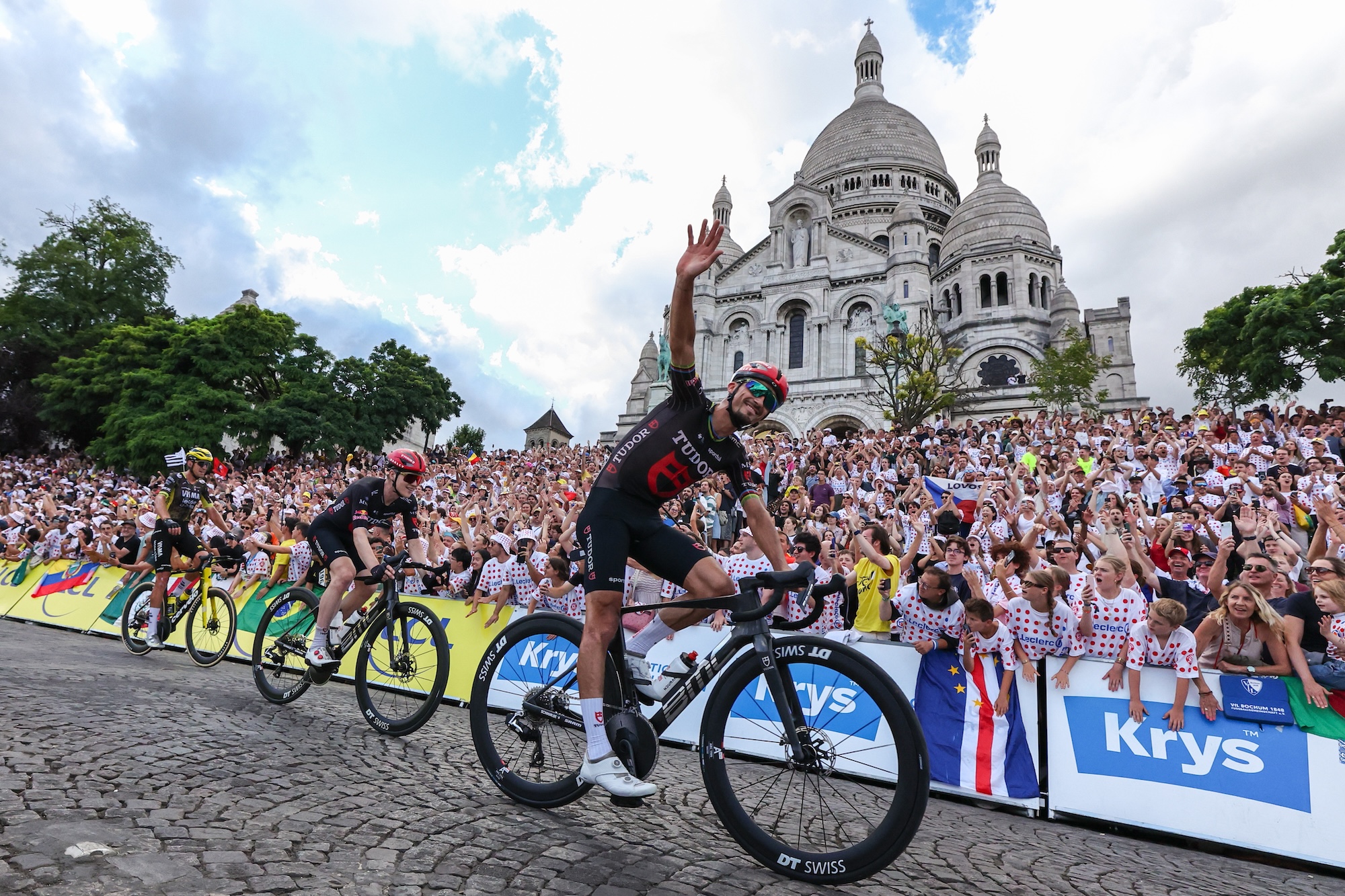
Julian Alaphilippe has retired, immediately, at 34, with a Tudor contract still hanging into 2027 and no farewell criterium circus required. His last race is now the final stage of the 2026 Tour de France on July 26, up through Montmartre and onto the Champs-Élysées, which is almost too neat. Cycling rarely writes endings that cleanly. Usually it gives champions a knee brace, a podcast, and three sad seasons chasing breakaways they used to create.
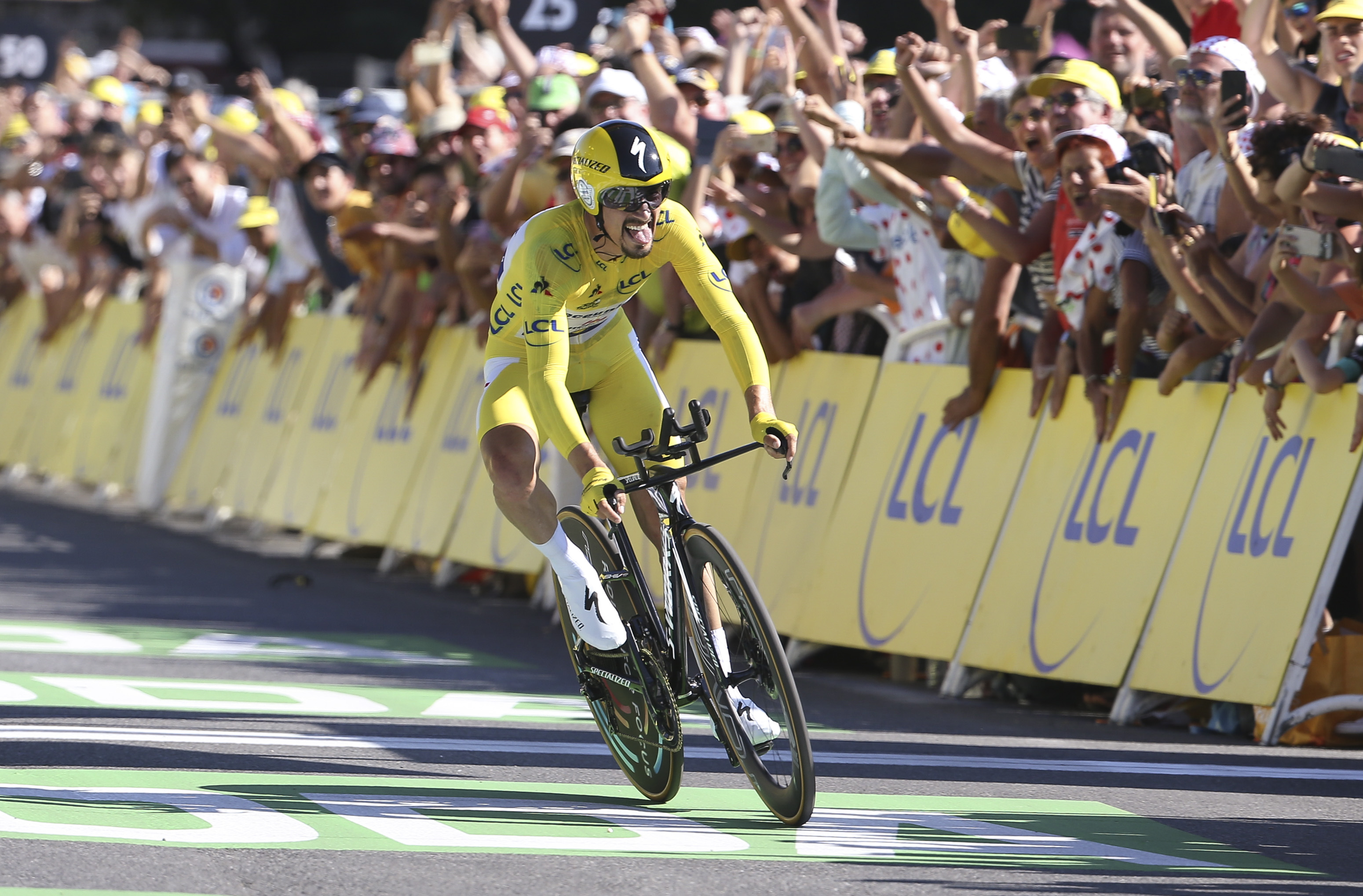
The record is tidy enough for the museum label. Two road world titles, in Imola in 2020 and Leuven in 2021. Six Tour de France stage wins. Fourteen days in yellow in 2019. Milan-San Remo, Strade Bianche, La Flèche Wallonne three times, a Giro stage in 2024, and 45 professional wins by the time the shutters came down. But reducing Alaphilippe to palmarès is like judging a descent by its average gradient. Technically correct, emotionally dead.
Panache was never the whole story
Everyone will reach for the same word. Panache. It is the lazy café napkin version of Alaphilippe, and it flatters us more than him. Panache makes it sound decorative, a little French flourish added after the serious riders have finished doing their spreadsheets. That is rubbish. Alaphilippe’s best racing was not decoration. It was violence with timing. He attacked because the race had a pulse, not because the DS had highlighted a sector on a PDF.
Watch Leuven again if you have forgotten. He did not win the 2021 World Championship by being charming. He won it by repeatedly punching the race in the throat until the favourites stopped pretending they were in control. Every attack looked excessive until it became decisive. Every grimace looked theatrical until everyone behind him started riding like they had missed the last train home.
Alaphilippe did not race like a man who had misplaced his numbers. He raced like a man who knew numbers were only useful until somebody dared to make the race stupid.
That is what made him precious, and also what made his decline so uncomfortable. Modern cycling has become very good at explaining why nothing should happen yet. The climb is too far out. The wind angle is wrong. The nutrition plan says wait. The tyre pressure has been optimised for sector four. Then along came Loulou, shoulders rolling, tongue out, throwing matches around like a bloke lighting a barbecue in a total fire ban.
The sport will miss him more than it wants to admit
This is the uncomfortable bit. Alaphilippe’s retirement lands in a peloton that is faster, cleaner in its execution, deeper in talent, and often less surprising. That is not nostalgia talking. The current top end is astonishing. The best riders now can climb, time trial, sprint uphill, descend like thieves, and recover as if human fatigue were a software bug. The problem is not quality. The problem is texture.
A race needs more than the strongest rider doing the strongest-rider thing at the most logical moment. It needs bad ideas executed beautifully. It needs someone prepared to make a director swear into the radio. It needs a rider who looks at 50 kilometres to go and thinks, incorrectly but gloriously, why not? Alaphilippe gave us that. Not always successfully, which was the point. He was not a content machine. He was a risk machine.
Australia should understand this better than most
Australian cycling is forever talking about pathways, testing, development squads and marginal gains, as if the next Cadel Evans can be built in a spreadsheet and signed off by committee. Fine. Build the engine. Teach the aero tuck. Count the carbs. But do not accidentally breed out the idiot gene, the beautiful racing stupidity that tells a rider to go when the safe move is to sit in.
SBS did not help turn generations of Australians into sleep-deprived July zombies because cycling was efficient. We stayed up because riders like Alaphilippe made the screen feel unstable. You could go to the kettle during a controlled mountain train and miss nothing. You went to the kettle during an Alaphilippe stage and came back to find the race on fire, a Frenchman half out of the saddle, and commentators sounding like someone had unplugged the script.
- Proof that emotion is not the opposite of tactical intelligence.
- A reminder that fans remember attacks, not threshold compliance.
- A warning to development systems that over-coaching can sand the edges off genius.
- A career that made the rainbow jersey feel dangerous, not ceremonial.
- A final image in Paris that looks like a farewell because, it turns out, it was one.
Do not turn him into a cartoon
The worst tribute would be to turn Alaphilippe into a beret-wearing mascot for vibes. He was not just vibes. At his peak he was tactically vicious, technically superb, and physically outrageous. He could corner, punch, descend, bluff, and suffer. The face-pulling was not a substitute for class. It was what happened when class was being emptied onto the road at full pressure.
There is a reason his 2019 Tour still sits in the collective memory like a flare. He did not win the race. He finished fifth. Yet for two weeks he made the Tour behave differently. He made the maillot jaune feel less like a spreadsheet output and more like a national electrical fault. That is a serious sporting achievement, even if it does not fit neatly into the modern hierarchy of Grand Tour success.
So yes, chapeau. But also, pay attention. Alaphilippe leaving is not just the end of a rider. It is another small evacuation of chaos from a sport becoming dangerously good at managing itself. The bikes are faster. The fuelling is better. The helmets look like kitchen appliances from the future. The racing, at its best, is still supposed to make no bloody sense until the finish line explains it.
Julian Alaphilippe understood that. He raced as if joy was not a by-product of winning, but part of the method. Now he is gone, and the peloton gets a little tidier. That might be progress. It also might be exactly the problem.