
A Tour Salary Cap Sounds Fair. It Also Sounds Like A Cop-Out.
Christian Prudhomme wants cycling to stop the richest teams hoarding talent. Fine. But if the sport only caps rider wages while leaving sponsor power, calendar chaos and development inequality untouched, it will just build a prettier cage.
The most important Tour de France story today was not only Mathieu van der Poel finally bullying a stage into submission in Ussel, though that was magnificent in the way only Van der Poel can be magnificent, all elbows, instinct and barely concealed contempt for conservative racing. The bigger story was Christian Prudhomme saying the quiet bit out loud on 12 July 2026: professional cycling has a money problem, and a salary cap is now being discussed seriously enough that the Tour director is prepared to back it in public.
Good. Also, not good enough. Because if cycling thinks a salary cap alone will stop the richest teams from turning WorldTour racing into a talent warehouse with scenery, it is kidding itself harder than a bloke on Beach Road insisting his 9kg aero bike is faster because the bar tape is new.
The cap is coming because the imbalance is obvious
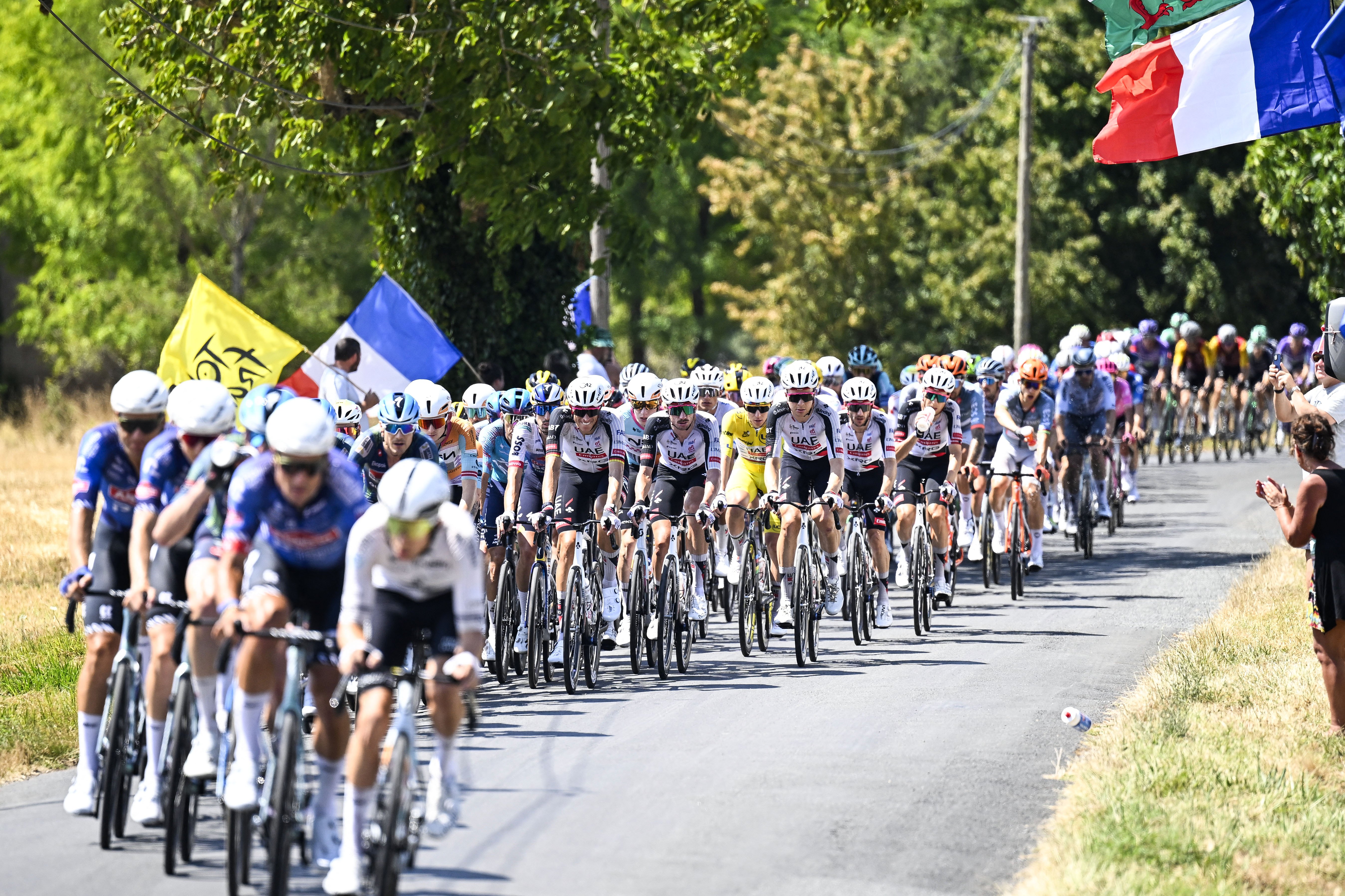
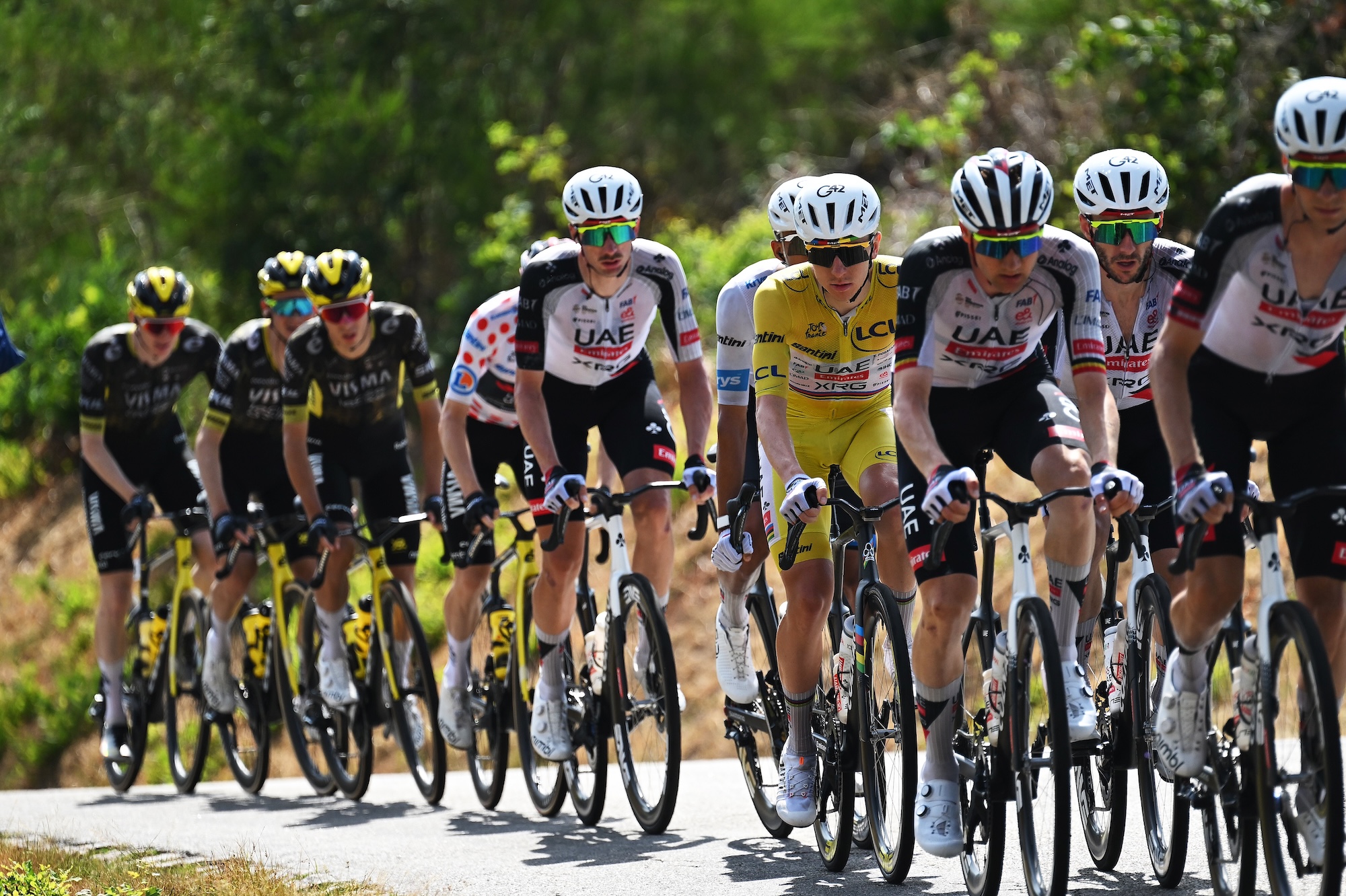
Prudhomme’s argument is blunt: the wealthiest three or four teams are vacuuming up the best young riders, and that damages real competition. He is not wrong. UAE Team Emirates-XRG have not merely built a squad around Tadej Pogačar. They have built something closer to a rolling honours programme for riders who would be leaders almost anywhere else. The reported numbers are obscene by cycling standards, with UAE at the top of the budget list around €60 million, while the average men’s WorldTour budget sits around €32 to €33 million. That is not marginal gains. That is a different sport wearing the same sunglasses.
“The three or four richest teams hoover up all the best young riders.” Prudhomme is right. The question is whether cycling has the guts to cap power, not just salaries.
The easy reaction is to cheer. Finally, someone in a blazer has noticed what anyone watching the last few seasons from a couch, pub, bike shop workstand or SBS stream already knew. Pogačar is brilliant, and nobody sane should resent a rider for being brilliant. But the brilliance is now surrounded by a depth chart that turns attacks into hostile takeovers. When a team can deploy multiple Grand Tour podium-level riders as support, the romance of cycling starts sounding like a shareholder presentation.
Do not cap riders and call it justice
Here is where cycling needs to be careful. A salary cap can be fair, or it can become a neat little trick where billionaires, state-backed projects and giant sponsors keep their influence while the actual workers, the riders, are told to accept less for the good of the show. That is not reform. That is wage control with a yellow lanyard.
If a cap comes, it must be a total performance-spend cap, not a simplistic rider-pay ceiling. Teams do not only win because of salaries. They win through altitude camps, nutrition staff, aero testing, development teams, medical infrastructure, data people, logistics, equipment pipelines, and the sort of marginal gains department that would make your local club treasurer burst into tears. If you only cap rider wages, the richest teams will simply move the advantage sideways. More performance staff. Better camps. Bigger bonuses through personal sponsors. More development contracts signed before a kid has finished growing into his femurs.
Australia should care, because this is our problem too
This is not just a European palace argument. Australian cycling has lived the budget gap for years. Team Jayco AlUla remain our WorldTour lighthouse, a proper Australian institution built on Gerry Ryan’s stubbornness, practical sponsorship and the GreenEDGE habit of surviving when plenty said it would not. But even with Saudi-linked backing and serious professionalism, Jayco are not shopping in the same aisle as UAE or Visma. They are choosing targets. The richest teams are choosing eras.
That matters for every Australian kid trying to turn NRS legs, gravel hunger or track pedigree into a European contract. If the sport keeps concentrating opportunity inside a few giant structures, development becomes less a pathway and more a mining lease. The rich teams sign early, stash talent, loan confidence and kill uncertainty. Everyone else gets the leftovers, or worse, gets asked to play unpaid talent scout for the teams who will eventually buy the finished product.
- Limit total team performance spending, not just rider salaries.
- Force transparent reporting, because cycling’s current budget gossip economy is amateur hour.
- Protect minimum wages and development riders, so reform does not land on the weakest contracts.
- Include women’s teams before the imbalance becomes impossible to unwind there too.
The French rugby-style comparison being floated is interesting, but cycling is not rugby. There is no stable league, no home stadium revenue, no draft, no equal fixture list, no proper collective broadcast model across the calendar. Cycling is a travelling circus run by race organisers, sponsors, federations, teams and television deals that often behave like they met five minutes before the start. A salary cap dropped into that mess without structural reform would be like fitting ceramic bearings to a cracked bottom bracket shell. Lovely spin, still broken.
Van der Poel gave the sport a reminder
Stage 9 was useful here because Van der Poel’s win offered the counterargument cycling desperately needs. He won from a brutal, shortened, heat-struck day to Ussel, outkicking Tobias Halland Johannessen, Tom Pidcock and Alex Baudin after a break that refused to die. Pogačar kept yellow by 2:42 over Jonas Vingegaard, but for once the day was not swallowed whole by the GC machine. It was messy, hot and tactical. It looked like bike racing, not budget enforcement.
That is the product. Not fairness in some abstract spreadsheet sense, but the believable possibility that a strong rider with good timing can ruin a bigger team’s afternoon. The Tour does not need charity winners. It needs plausible danger. If every stage begins with the audience asking whether UAE will allow the race to happen, the sport has already lost half the argument.
Cap the empire, not the ambition
I am pro cap, with conditions. Cap total spend. Publish the bands. Audit properly. Close the personal-sponsor loopholes before they become wide enough to drive a team bus through. Make sure the cap floor rises too, because cycling’s lower end is still full of riders and staff being asked to live like monks while wearing million-dollar marketing assets on their backs. And for heaven’s sake, do not let this become another UCI half-measure that punishes bottle carriers while the superteams hire three more consultants called Head of Heat Adaptation.
The richest teams will hate a real cap because a real cap would do what rules are supposed to do: reduce the ability to buy certainty. Fans should want that. Riders should demand that. Smaller teams should stop politely nodding and start making noise. Bike racing is at its best when money helps build excellence but cannot purchase inevitability. Right now, inevitability is getting worryingly good value.
So yes, Prudhomme is right to put salary regulation on the table. But the Tour director has only opened the door. Cycling now has to decide whether it wants a competitive sport or merely a luxury goods expo with timing chips. A salary cap can help. A fake one will just make the accountants faster than the riders.