
A $500 Marketplace Bike Just Exposed Gravel’s Most Expensive Lie
Amanda Macuiba DNF’d Gravel Worlds on a cheap second-hand Marin and still did cycling a favour. The lesson is not that gear doesn’t matter. It is that gravel’s gear obsession has become a very polished excuse.
The most useful bike story of the week was not another superbike launch, not another drivetrain with one more cog, and not another brand whispering the word aero over a gravel handlebar until the accountants started purring. It was Amanda Macuiba turning up to the elite women’s race at Lauf Gravel Worlds in Lincoln, Nebraska, on 22 August with a $500 Facebook Marketplace Marin and enough nerve to embarrass half the industry.
Yes, she DNF’d. Good. That is partly why the story works. If she had rolled a battered steel bargain bin bike into the elite field and somehow finished on the podium, every lifestyle brand in cycling would be slapping sepia filters on steel frames by breakfast. Instead, she got 95 miles into a 150-mile race, crashed, damaged the shifting, ground her knees into dust, and made the sensible call. That is not failure. That is a better advert for cycling than another wind tunnel graphic.
The cheap bike was not the joke. The joke is our excuse machine.
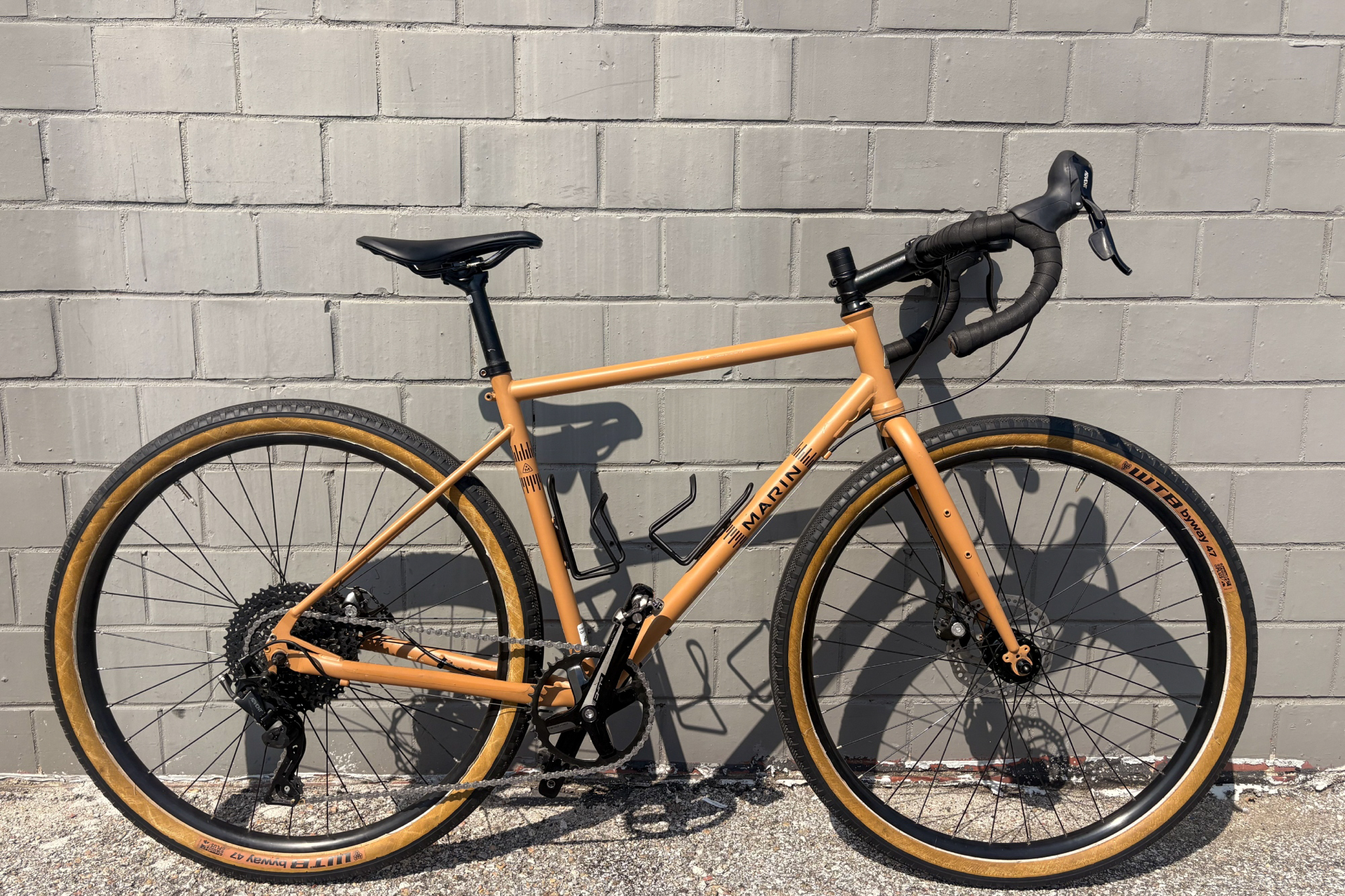
Macuiba’s bike was reportedly a Marin Nicasio+, steel frame and fork, 650b x 47 mm tyres with Super Glue in the cracks, and a 1 x 9 Microshift mechanical drivetrain. Read that again, because it sounds like something parked outside a Brunswick café with a Kryptonite lock through the front wheel, not something rolled into an elite start line among carbon wheels, fresh rubber and riders who know exactly how many grams of carbohydrate are in their bottle.
But the lesson is not the dull internet take that equipment does not matter. Of course equipment matters. Anyone who says otherwise has never tried to descend washboard gravel on dead tyres or shift a wounded rear mech under load while their quads are staging a workplace stoppage. Good gear matters. Fit matters. Tyre choice matters. Brakes matter. A cassette range that does not turn every climb into a squat rack matters.
The real scandal is not that Macuiba started on a cheap bike. It is that so many riders never start at all because the bike industry has trained them to feel under-equipped before they are even under-trained.
That is where gravel has lost the plot. The discipline sold itself as the antidote to road cycling’s velvet-rope nonsense, then immediately built its own velvet rope out of flared carbon bars, ceramic pulleys, privateer media managers and wheelsets that cost more than a reliable used hatchback. We were promised dirt, chaos and self-reliance. We got spreadsheet adventure, with tan walls.
Gravel Worlds was brutally fast, which makes the story sharper
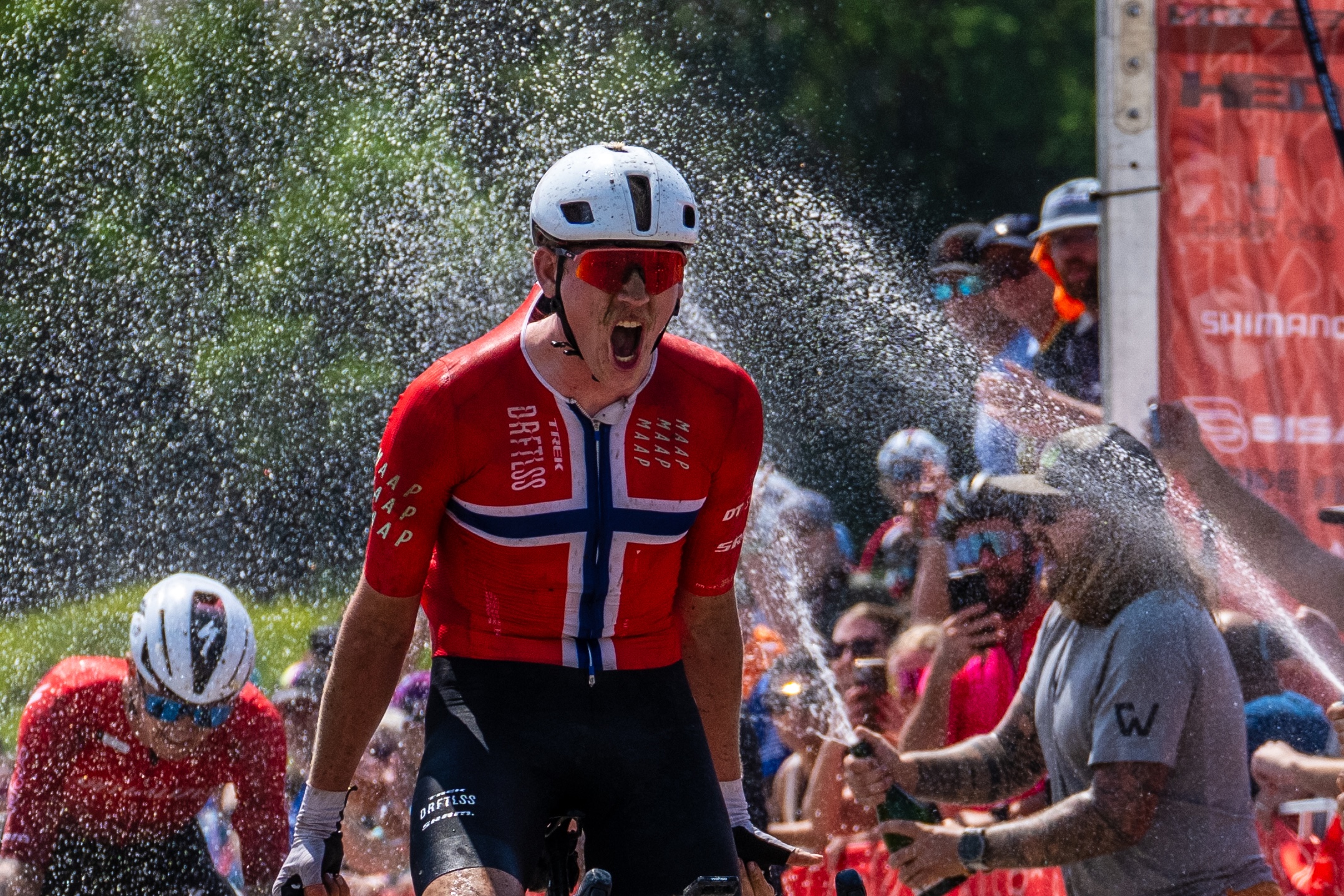
This was not some charity roll-around with a sausage sizzle at the finish. Lauf Gravel Worlds was properly quick. Overnight storms forced organisers to rejig the course and remove some boggy minimum maintenance roads, cutting the elite route to 148 miles. Even so, Torbjørn Røed won the men’s race in 6:05:22 from a three-up sprint against Keegan Swenson and Julien Gagné. Geerike Schreurs took the women’s race in 7:19:37 after a photo finish against Rosa Klöser. Charlotte Clarke, an Australian, was third. Courtney Sherwell was 13th. Tiffany Cromwell was 19th. There is your local angle, if you need one: Australians are not spectators in this dirt circus.
The race also carried a $150,000 prize purse split evenly across the elite fields. That matters, because it kills the old line that gravel is just beer, dust and vibes. At the sharp end, it is now professional sport. Teams are forming. Tactics are real. Livestreams are normal. Course changes become performance variables. A wrong corner can cost the bunch. A crash can end the day. The romance is still there, but it is wearing a heart-rate strap.
Which is exactly why Macuiba’s start line choice was not a gimmick. It was a stress test. Gravel likes to pretend it is open to anyone, but the front of the race increasingly looks like road cycling moved to a paddock and changed its shoes. Macuiba did not prove you can win elite gravel on anything. She proved you can enter the arena before your life, wallet and bike build are perfectly optimised. That is far more useful.
The used bike is not a loophole. It is the bike industry’s uncomfortable mirror.
For a marketplace like ours, the cheap-bike moral is tempting. Buy second-hand, stick it to the superbike cartel, ride into the sunset. Lovely. Also incomplete. A used bike can be brilliant, but it is not magic. If you buy a bargain gravel rig and ignore cracked tyres, tired bearings, cooked brake pads, seized bolts and a chain that looks like it was stored in the ocean, you are not frugal. You are auditioning for a roadside sit-down.
- Buy fit before fantasy. A correctly sized $900 bike beats a dream frame that puts your back in court.
- Spend first on tyres, brakes and contact points. That is where confidence lives.
- Check gearing honestly. Gravel climbs do not care about your pride.
- Service the bike before you upgrade it. Fresh cables can feel more miraculous than carbon bottle cages.
- Stop waiting for the perfect build. It is a bike race, not a kitchen renovation.
Australian riders should pay attention because our gravel scene is at the exact point where it can either stay welcoming or become another arms race in Akubra cosplay. Events here already have the ingredients: long roads, heat, bad surfaces, small towns that actually benefit from riders showing up, and enough competitive weirdos to make it spicy. What we do not need is the idea that you must arrive with a mortgage-grade bike and a support ecosystem before you are allowed to pin on a number.
Courage is not a component group
There is an ugly little consumer reflex in cycling that confuses preparedness with purchasing. Riders say they are “not ready” when they often mean their bike is not aspirational enough for Instagram. Shops are not blameless, media is definitely not blameless, and riders are absolutely not blameless. We all enjoy shiny things. I enjoy shiny things. I have also watched a bloke on an ancient aluminium hardtail ride away from carbon pilgrims on a climb because he knew how to suffer and they knew how to finance.
Macuiba’s DNF does not make the $500 Marin a hero bike. It makes it a permission slip. Start imperfect. Learn publicly. Break something cheap before you pretend you are too refined for cheap things. Then, when you do upgrade, you will know why. Not because a launch video told you. Not because a pro’s mechanic torqued it in slow motion. Because a race showed you where the bike ended and the rider began.
That is the line gravel needs to remember. The sport is getting faster, richer and more professional, and that is not automatically bad. Prize money is good. Broadcasts are good. Elite fields are good. Australians mixing it at the pointy end is very good. But if gravel becomes just another discipline where riders feel financially disqualified before they feel physically challenged, it will have traded its soul for a cleaner cable port.
So no, do not copy Macuiba blindly. Do not buy the cheapest bike you can find and assume bravery will index your gears. But do copy the part that matters. Enter the thing. Fix what must be fixed. Accept that embarrassment is sometimes just growth wearing a race number. The perfect bike can wait. The start line usually will not.