
32-Inch Gravel Wheels Are Here. Check The Standover Before You Clap.
The bike industry has found its new shiny object: 32-inch gravel wheels. Fine, let them roll, but do not pretend a bigger hoop is progress if half the bunch cannot fit the bike.
The Vuelta starts tomorrow, the transfer market is doing its usual soap-opera routine, and yet the most consequential cycling story of the week may be a bicycle that looks like someone inflated a normal gravel bike with a track pump and forgot to stop.
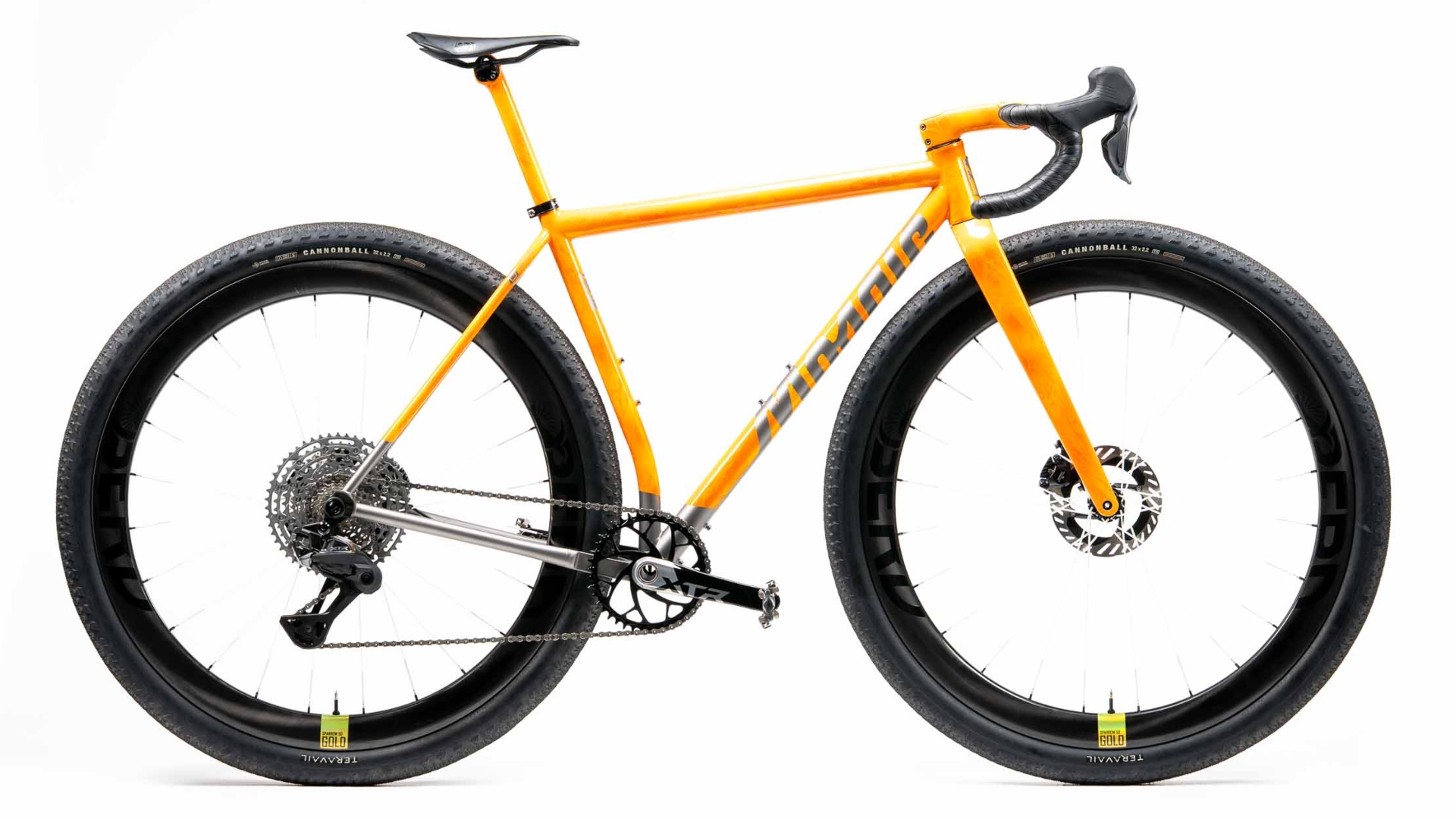
Mosaic has rolled out the GT i55 32, a made-to-order titanium gravel bike built around 32-inch wheels. Not a show prop, not a one-off for a pro who sleeps in an altitude tent, not another concept bike destined to disappear after a trade stand and a LinkedIn post. You can order it. That matters. Once a wheel size leaves the prototype zoo and enters the customer order book, the argument changes from “is this interesting?” to “who is this actually for?”
The big wheel hype has finally found a cash register
The 32-inch push has been gathering speed all season. Sea Otter had the usual murmur of brands sniffing for a new standard. Scott put Cam Jones and Robin Gemperle on 32-inch RC Gravel prototypes at Unbound. Salsa, Stinner and BTCHN have all been part of the conversation. Rene Herse then added a very telling bit of plumbing this week: a 32-inch TPU tube that fits 45 to 68mm tyres, weighs a claimed 66 grams and uses a 70mm Presta valve. That is not glamorous. It is more important than glamour. Standards become real when the boring spares arrive.
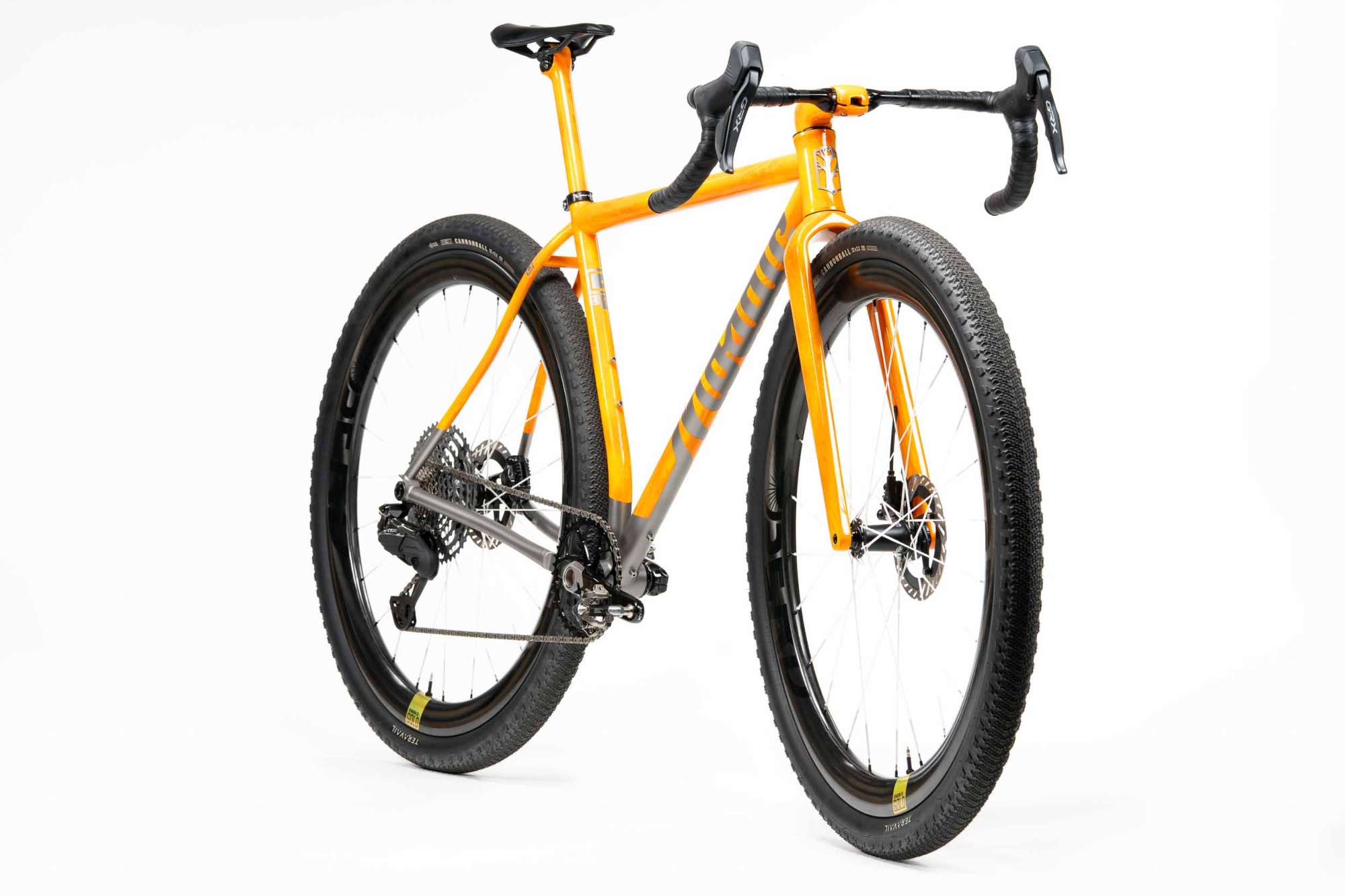
Mosaic’s move is the headline because it puts a price and geometry promise behind the dream. The GT i55 32 is built from the ground up for the bigger wheel, with custom geometry, a bent seat tube, compact 440 to 445mm chainstays, a 3D-printed titanium yoke, clearance for up to 55mm tyres, a 148x12mm rear axle and a 110x15mm front. The semi-integrated version starts at US$5,000. The fully integrated version starts at US$8,250. In other words, this is not gravel for the masses. This is gravel for people who already own a torque wrench, a spare wheelset and a story about why titanium “rides different”.
A new wheel size is not innovation just because it makes the press photos look like a monster truck rally for dentists.
Bigger probably is faster. That is not the whole argument.
Let us be honest. The theory is seductive. A larger diameter wheel has a shallower angle of attack over holes, ledges, embedded rock and corrugated garbage. It should carry momentum beautifully. On rough gravel, especially the kind that makes your fillings hum and your bottle cages sound like cutlery drawers, I absolutely believe a well-designed 32-inch platform can be quick. Anyone who lived through the 26 to 29er mountain bike war knows this tune. At first the big wheels were awkward, then they were dominant, then everyone pretended they had always known.
But gravel is not mountain biking with drop bars, despite what the worst product managers keep trying to sell us. Gravel bikes still need to fit small riders. They still need to handle in bunches. They still need to be shouldered, boxed, raced, serviced and stocked by shops that are already drowning in standards. They still need to make sense for a rider who is 158cm tall, not just a six-foot bloke with a saddle-to-bar drop and a podcast microphone.
The fit problem is not woke hand-wringing. It is geometry.
Here is the nasty bit the marketing deck will skate past. Bigger wheels raise stack, stretch wheelbase, complicate chainstay length and invite toe overlap like a bad housemate. The smaller the frame, the worse the mess gets. You can shorten the fork, push offset, bend tubes, use custom geometry and start drawing clever little titanium bits until the CAD file smells expensive. Mosaic appears to have done more real engineering than most, which deserves credit. But the problem does not vanish because a beautiful orange bike makes it look tidy in profile.
This is where cycling has to grow up. The industry cannot spend five years telling women, shorter riders and Asian markets that it cares about inclusion, then fall over itself for a wheel size that may work best for tall riders with custom budgets. If 32-inch becomes another premium performance badge, fine. Sell it honestly. Do not turn it into a moral crusade about progress. Progress that only fits the tall and cashed-up is just boutique exclusion with better photography.
- Independent speed testing on real gravel, not vibes from a sponsored rider after a tailwind sector.
- Clear size ranges that do not punish smaller riders with circus-bike handling.
- A supply chain for tyres, tubes, rims and replacement wheels that does not strand customers in regional bike shops.
- Race evidence across different courses, not just one hardman event where the strongest rider probably wins on a gate.
- Honest pricing, because a US$8,250 frameset dream does not define the future for the rest of us.
Australia should pay attention before Nannup becomes the showroom
The Australian angle is not hypothetical. The UCI Gravel World Championships land in Nannup on 10 and 11 October, the first time the event is held outside Europe. The elite men face 140.7km with 3,625m of climbing. The elite women get 123.1km with 3,100m. The courses are at least 80 percent gravel, full of short, steep repeats and very little free recovery. If there is a place where a bigger wheel could make an argument, Western Australia’s lumpy South West is it.
So yes, I want to see the 32s at Nannup. Bring them. Let the prototypes, customs and oddball giants rattle through the pea gravel and see whether the stopwatch cares. Gravel should be weird enough to test ideas in public. What it should not do is instantly crown every new standard as destiny because a few brands need a fresh reason to make your current bike feel obsolete.
Verdict: exciting, useful, dangerous
The 32-inch wheel is not a scam. That is the annoying part. There is a strong engineering case for bigger rollover on ugly gravel, and Mosaic’s GT i55 32 looks like one of the more serious attempts to solve the packaging headaches rather than simply bulldoze through them. Rene Herse making a proper emergency tube is another sign the ecosystem is forming. This could become a legitimate tool for the right rider on the right terrain.
But cycling has a habit of mistaking tools for religions. We did it with aero everything, internal routing, hookless rims, gravel suspension, 1x drivetrains and tyres so wide half the bunch needed new frames. The smart take on 32-inch wheels is not “future” or “fad”. It is “prove it, then size it properly”. Until then, clap politely, check the geometry chart, and keep one hand on your wallet.